


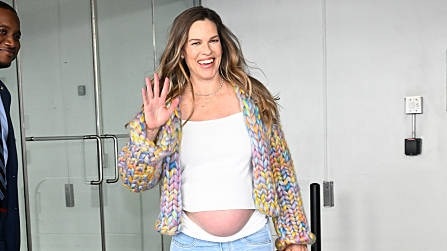
When Hilary Swank announced that she is expecting her third child at 52, the news was met with excitement and widespread surprise. The two-time Oscar winner, who welcomed twins with her husband Philip Schneider in April 2023 at the age of 48, shared the announcement on Instagram, noting that the baby is due in December.
Swank has previously spoken about freezing her eggs at 37, which helped her keep open the possibility of becoming a mother later in life. However, she has not disclosed how she conceived her current pregnancy, and experts note it would be wrong to automatically assume the process involved specific methods like IVF or donor eggs.
The announcement raises questions that extend far beyond celebrity motherhood. With medical advances in fertility treatment making pregnancy possible later in life, healthcare professionals emphasize the importance of understanding the medical realities involved in having a baby in your 50s.
Medical experts explain that natural conception becomes increasingly unlikely as women age due to a decline in both the number and quality of their eggs. While menopause marks the end of natural ovulation, it does not necessarily mean the uterus cannot carry a pregnancy if assisted reproductive technology is utilized.
Assisted reproductive technology can involve previously frozen eggs, embryos, or donor eggs. While these methods offer pathways to conception, treatment does not guarantee success, and a woman's overall health must be thoroughly evaluated before proceeding with any medical intervention.
Pregnancy past the age of 50 demands careful medical supervision due to heightened risks, including high blood pressure, pre-eclampsia, gestational diabetes, premature birth, and restricted fetal growth. The likelihood of requiring a caesarean delivery and neonatal intensive care is also notably higher, requiring multidisciplinary teams and tertiary care support.
Carrying a child places substantial additional demands on the heart, blood vessels, and other organs, which can be particularly challenging if a woman has underlying health conditions like hypertension or cardiovascular disease. While age alone cannot predict an individual outcome, recovery and physical discomfort can be more pronounced for older mothers.
Specialists also point out that celebrity announcements can create unrealistic expectations when the extensive medical support, financial costs, and underlying uncertainties are left unaddressed. While milestones like Swank's pregnancy can feel inspiring, medical professionals stress the necessity of maintaining realistic expectations, undergoing proper counseling, and receiving individualized medical guidance rather than viewing high-profile pregnancies as a standard yardstick.