


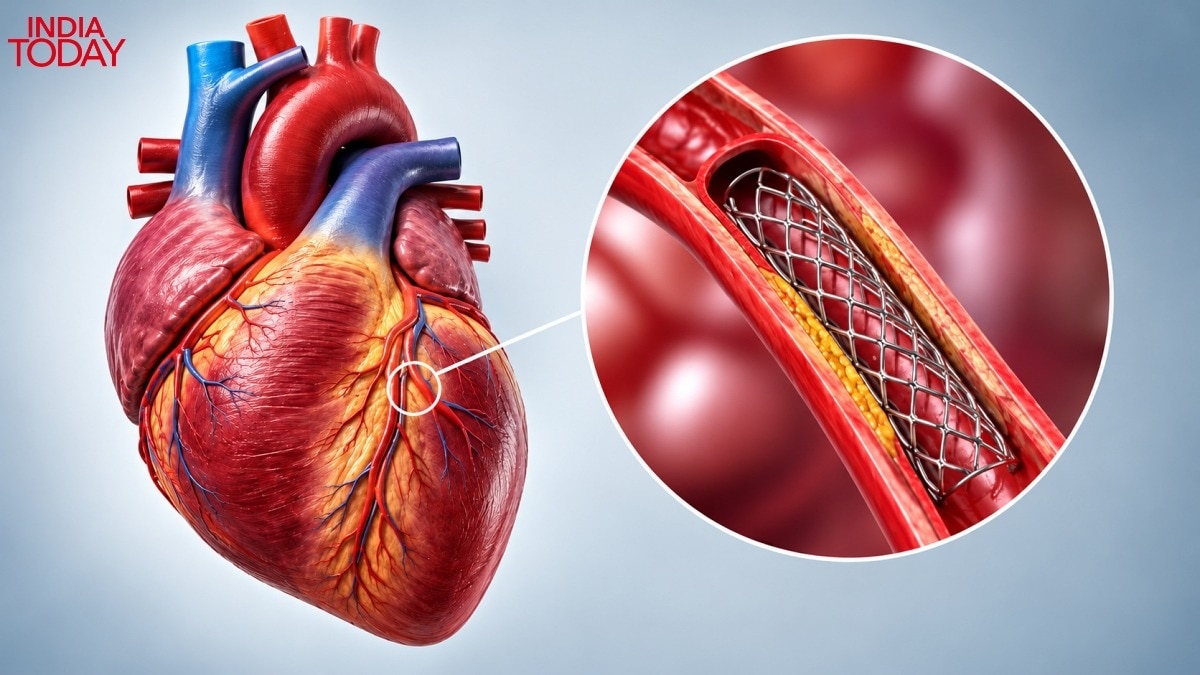
New Delhi: Thousands of heart patients could one day undergo treatment for blocked arteries without having a permanent metal stent implanted in their blood vessels, according to a major study that suggests drug-coated balloons may offer an effective alternative.
Researchers from the University of East Anglia in the United Kingdom analysed data from 10 randomised clinical trials involving 7,832 patients diagnosed with coronary artery disease. They determined that treatment using drug-coated balloons performed comparably to conventional stents in preventing heart attacks and deaths caused by cardiovascular disease.
The findings, published in The Lancet's eClinicalMedicine journal, could strengthen the argument for a leave-nothing-behind strategy in managing coronary artery disease. Nevertheless, investigators cautioned that certain patients receiving the balloon treatment might face a higher probability of needing an additional procedure to reopen their arteries.
Coronary artery disease develops when blood vessels supplying the heart become narrowed due to the accumulation of fatty deposits along their walls, restricting blood flow and raising the risk of heart attacks. The standard intervention for many patients involves angioplasty, where clinicians use a balloon to widen the constricted vessel, followed by the insertion of a drug-eluting stent to keep the artery open and prevent re-narrowing.
Drug-coated balloons function differently by inflating inside the narrowed artery and delivering medication directly to the vessel wall to deter the tissue growth that causes re-obstruction. The balloon is subsequently removed, ensuring that no permanent foreign object remains inside the patient.
Lead investigator Dr Natasha Corballis from the Norwich Medical School at the University of East Anglia stated that the analysis revealed no significant variance between the two methods regarding major health outcomes. Patients managed with drug-coated balloons showed no elevated risk of dying from cardiovascular issues, and heart attack rates remained virtually identical.
Despite these promising results, the evaluation highlighted a potential limitation when the intervention was applied to larger coronary arteries. Patients in that category who received drug-coated balloons appeared to have a greater requirement for repeat revascularisation procedures.
However, the study team pointed out that there was considerable variation across the evaluated studies and indicated that this specific outcome seemed heavily influenced by a single clinical trial.
Senior author Professor Vassilios Vassiliou remarked that the alternative method could mitigate specific long-term complications linked to permanent stents while keeping future treatment pathways open for patients.
The investigators emphasised that further extensive clinical trials with extended follow-up periods are required, particularly for individuals presenting with larger blood vessels and more intricate coronary blockages. The research, performed alongside the Norfolk and Norwich University Hospital NHS Foundation Trust, indicates that drug-coated balloons may broaden therapeutic choices for cardiac patients, even though they do not yet serve as a complete substitute for traditional stents.