


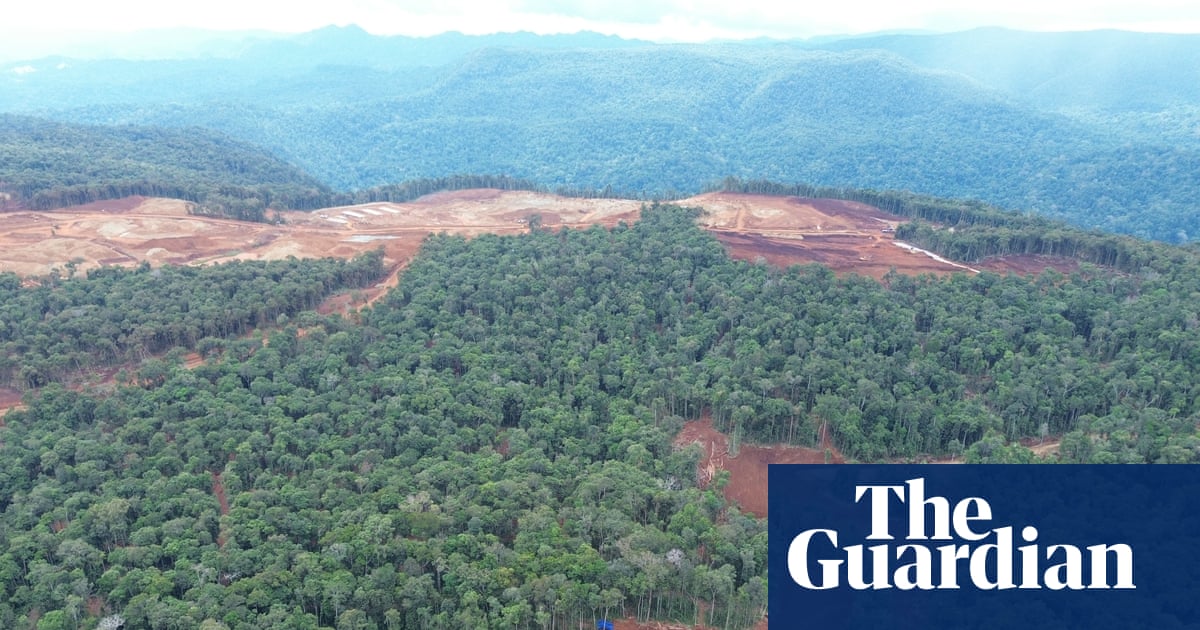
Volkswagen, Ford, and Tesla are among several prominent electric vehicle manufacturers whose batteries may incorporate nickel tied to the deforestation of indigenous woodlands, underscoring ongoing challenges in establishing environmentally sustainable supply chains. Corporate disclosures and international trade data spanning the past two years indicate that mines feeding the automotive industry's battery networks are connected to significant tree loss on Sulawesi, an Indonesian wildlife sanctuary holding the globe's largest nickel reserves. This metal is heavily utilized in battery cathodes to enhance energy density and extend driving range.
Material originating from the Cahaya and Hengjaya mining operations was traced through regional smelting facilities and Chinese processing plants managed by Zhejiang Huayou Cobalt, a cathode producer that supplies CATL, the world's leading battery manufacturer. Corporate documentation from Huayou identifies major European and American automotive brands as end-users, while additional trade data outlines an alternative pathway from Huayou to the South Korean conglomerate LG, which likewise provides battery components to top-tier carmakers via Poland.
Satellite evaluations indicate that these mining sites have driven extensive clearing of primary rainforest within nickel-rich territories traditionally inhabited by the Tolaki indigenous community. Local residents have voiced deep concern over the destruction of their ancestral environment, emphasizing the vital cultural and physical reliance their community places on the surrounding woodlands.
While electric vehicles produce fewer operational emissions than traditional combustion-engine vehicles, global automotive companies have faced persistent difficulties in cleaning up the upstream sourcing of critical minerals across Africa, Asia, and South America. Environmental advocates caution that the rising popularity of larger, material-intensive sport utility vehicles is further compounding the ecological footprint by driving up raw mineral extraction volumes.
Extracted ore from the two Indonesian mining concessions is transported to a nickel refining facility located within an industrial zone on Morowali's eastern coast, managed by a local subsidiary of Huayou. There, limonite is converted into mixed hydroxide precipitate, the primary precursor for battery cathodes. Substantial shipments of this processed material were exported from the Morowali complex to Chinese ports during recent years, where the cargo was moved overland to Huayou cathode production facilities near Shanghai and the Vietnamese border.
Although public filings do not itemize exact sales volumes and delivery schedules between Huayou and CATL to establish a direct link to individual car batteries, Huayou has acknowledged group-level supplies to CATL during regulatory disclosures. Downstream subsidiaries have similarly confirmed the delivery of substantial quantities to the battery manufacturer.
Investigators tracked these supply chains from Indonesian mines and refineries to China, and subsequently from cathode and battery plants to automotive assembly facilities in the US and Europe. For instance, trade platform records show that a Volkswagen facility in Germany received shipments of battery cell modules linked through these trade channels.
Global demand for nickel is projected to climb significantly in the coming decades, largely driven by extraction in Indonesia and subsequent refinement in China. Researchers note that the associated carbon footprint from poorly managed mining operations can be exceptionally high due to the clearing of forested land within concessions designated for production forestry, where regulatory oversight has frequently been relaxed to accommodate surging commercial demand.
Spatial assessments suggest that nickel mining activity accounts for a substantial majority of recent forest loss within the Cahaya and Hengjaya concessions. Operating companies have faced administrative penalties for clearing forest areas beyond their permitted operational boundaries, even as massive quantities of limonite ore continue to be delivered to local smelting operations.