


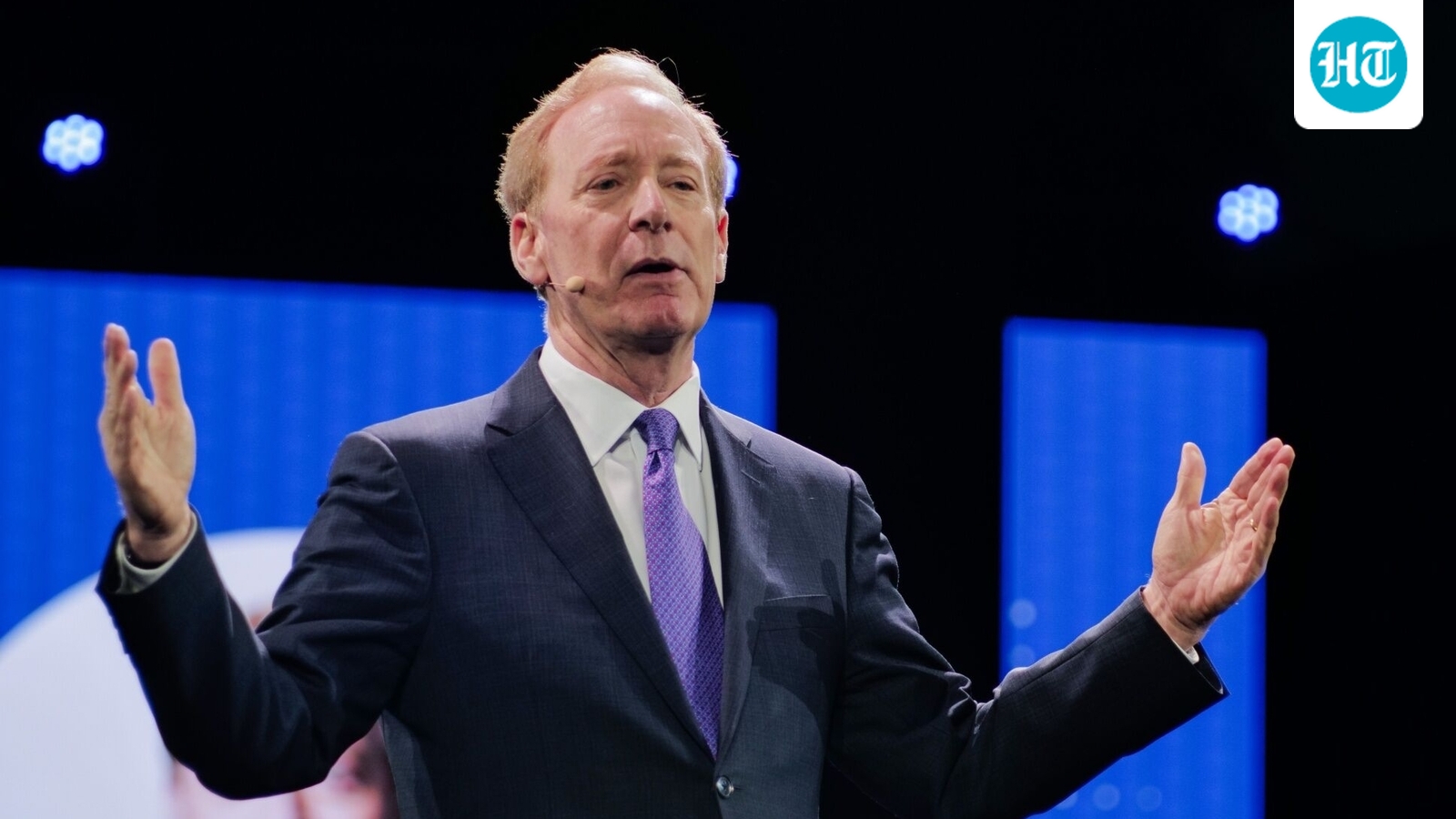
Microsoft President Brad Smith has warned the administration that restricting skilled immigrants’ pathways to permanent residency could weaken the United States technology sector and push top-tier talent toward rival nations. The remarks follow recent government actions to block Microsoft and several other major corporations from seeking green cards for foreign workers.
Speaking in an interview during the International AI Summit in Dublin, Ireland, Smith pushed back against allegations from Vice President JD Vance claiming that Microsoft misused the H-1B visa program to undercut American wages. Smith described the accusations as completely unfounded and suggested that the vice president had been given inaccurate employment and immigration data.
Smith explained that the vast majority of Microsoft's green card applications involve long-tenured employees waiting out the extensive backlog in the American permanent residency system rather than newly recruited workers. He also disputed assertions that foreign-born staff receive lower compensation, noting that the corporation maintains uniform salary structures regardless of immigration status. Furthermore, he highlighted that the company hired more than 9,000 domestic workers during the previous year.
Warning against policies that could deter global professionals, Smith stressed that sending signals that drive the next wave of software and artificial intelligence engineers to other countries poses a serious risk to national competitiveness. He pointed out that several distinguished Americans honored with technology and science medals were immigrants, and that those individuals alongside their enterprises account for a significant fraction of the S&P 500's total market value.
Despite sharp disagreements over employment-based immigration and the green card penalties, Smith expressed support for certain administration initiatives, such as specific export controls placed on advanced artificial intelligence models. The tension underscores a broader clash between the White House's tightening immigration agenda and the technology sector's reliance on specialized global labor.