


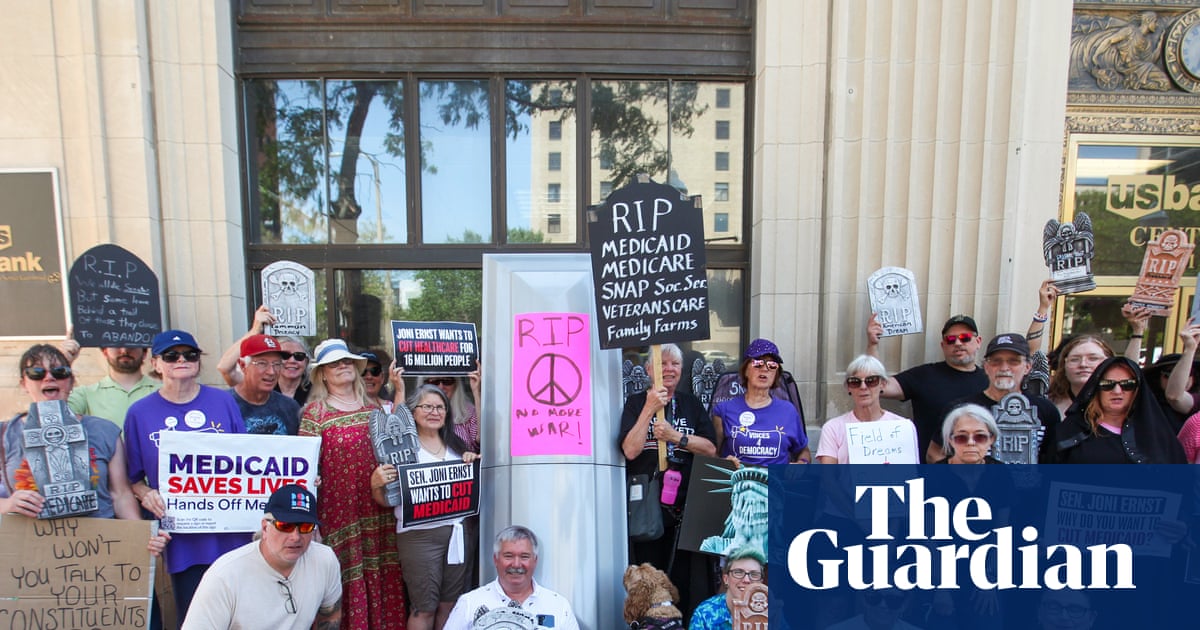
Some conservative states that have rejected hardship exemptions for upcoming Medicaid requirements may be choosing to do so for political reasons, according to healthcare policy experts. New federal work requirements, scheduled to take effect on January 1, will mandate that adults enrolled through the Affordable Care Act Medicaid expansion complete at least 80 hours a month of work, school, volunteering, or another qualifying activity to maintain their health coverage.
The legislation includes federal exemptions designed to help low-income individuals retain their benefits during medical hospitalizations, necessary travel for care, or when living in regions impacted by disasters or high unemployment. For instance, New York City recently adopted the high-unemployment exemption for the Bronx, shielding roughly 200,000 residents from the new mandates.
However, research from the healthcare policy nonprofit KFF shows that states like Missouri and Iowa are opting against implementing this specific exemption for their populations, even though certain counties within their borders qualify. Experts speaking with media outlets have pointed to a mix of ideological opposition and concerns over extra administrative responsibilities as primary drivers for these decisions.
Jennifer Tolbert, deputy director of KFF’s Program on Medicaid and the Uninsured, explained that officials who strongly support work requirements might believe the rules should apply uniformly regardless of local unemployment rates. She also noted the operational challenges, as adopting the exemption requires continuous data submissions to federal regulators and updates to state eligibility systems to automatically exempt residents based on geography.
Sarah H Gordon, an associate professor at the Boston University School of Public Health, emphasized that politics heavily influence these choices. She stated that conservative states typically align with the philosophy of tying health insurance to employment, creating a fragmented national landscape where some jurisdictions work aggressively to prevent coverage losses while others do not.
Joel Ferber, director of advocacy at Legal Services of Eastern Missouri, expressed frustration over his state's refusal to pursue exemptions that could safeguard residents. While state officials have cited concerns about creating bureaucratic burdens for participants, Ferber argued that no participant would choose losing healthcare over completing paperwork.
The implementation of these federal mandates is projected to cause millions of Americans to lose their health insurance. Analysts frequently point to Arkansas, which instituted Medicaid work requirements in 2018, resulting in more than 18,000 individuals losing coverage by the end of that year without showing any measurable boost in employment rates.
Jacob Wallace, an associate professor at the Yale School of Public Health and an expert on Medicaid, described the new mandates as deeply concerning. He noted that historical evidence shows such policies fail to boost employment while successfully generating administrative hurdles that push people out of the program, particularly when participants face confusing paperwork and insufficient support.