


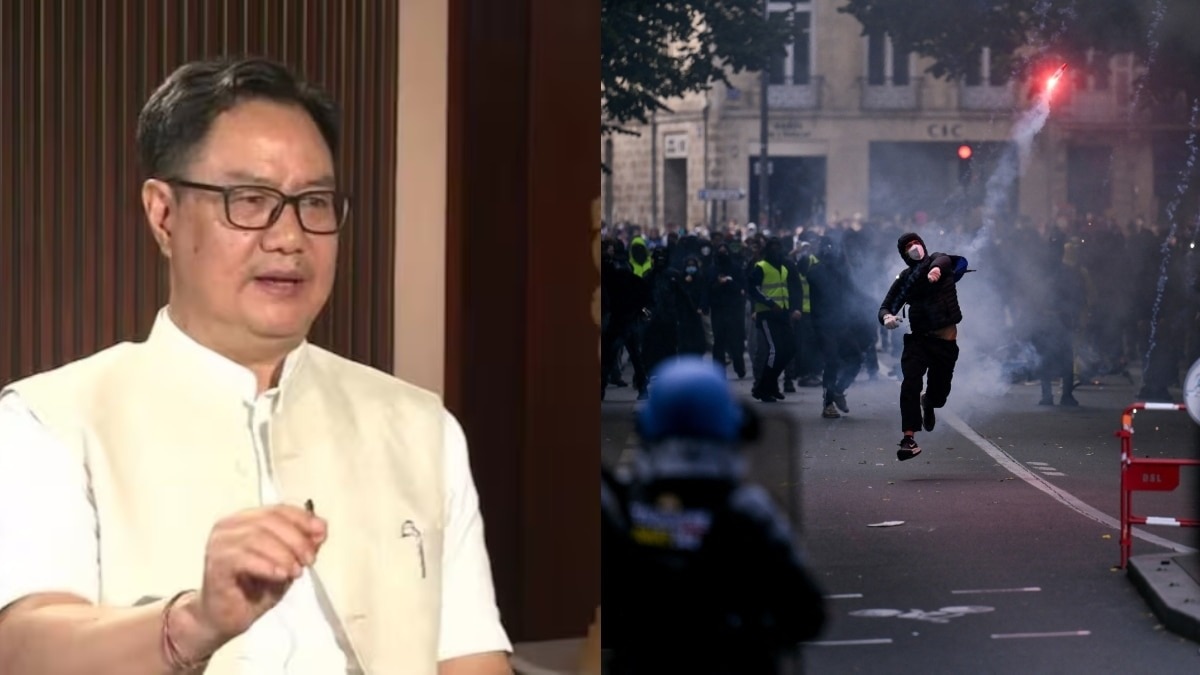
New Delhi: Union Parliamentary Affairs Minister Kiren Rijiju claimed on Sunday that anti-India groups and some politicians had plotted to incite youth-led street violence in India, drawing parallels with the unrest seen in Bangladesh, Nepal, and France.
In a post on social media, Rijiju stated that the alleged plan had failed, asserting that a change of government in India could take place exclusively through elections. He compared the situation to violent incidents, riots, arson, and looting in other nations, alleging that a similar conspiracy was hatched for India by anti-India gangs and collaborating politicians.
Rijiju further remarked that regime change in India is possible only through ballots and not through billionaire philanthropist George Soros. His comments came amid a rising political row sparked by statements from All India Students Association president Neha Bora and senior advocate Prashant Bhushan concerning the concept of regime change.
The Bharatiya Janata Party has cited remarks by Bhushan and Bora to accuse opposition leaders and activists of attempting to destabilize the government through street mobilization. Bhushan had earlier stated at a press conference in Delhi that regime change would certainly happen, while demonstrations took place over the special intensive revision of electoral rolls and demands for the resignation of the Chief Election Commissioner.
Meanwhile, Bora had credited Bangladesh's student uprising with inspiring young people in India to mobilize around democracy and voting rights during a video message to Bangladesh's Socialist Students Front. While the ruling party interpreted these statements as support for a Bangladesh-style change of government, critics have argued that political change and electoral reform remain legitimate democratic demands.
Rijiju invoked international examples, including the 2024 student-led protests in Bangladesh and youth-led uprisings in Nepal and France, to argue that attempts to replicate such developments in India would fail. His reference to external actors echoed wider ruling party allegations regarding foreign interests attempting to influence or destabilize Indian politics, although no specific evidence was provided to substantiate the conspiracy claim.