


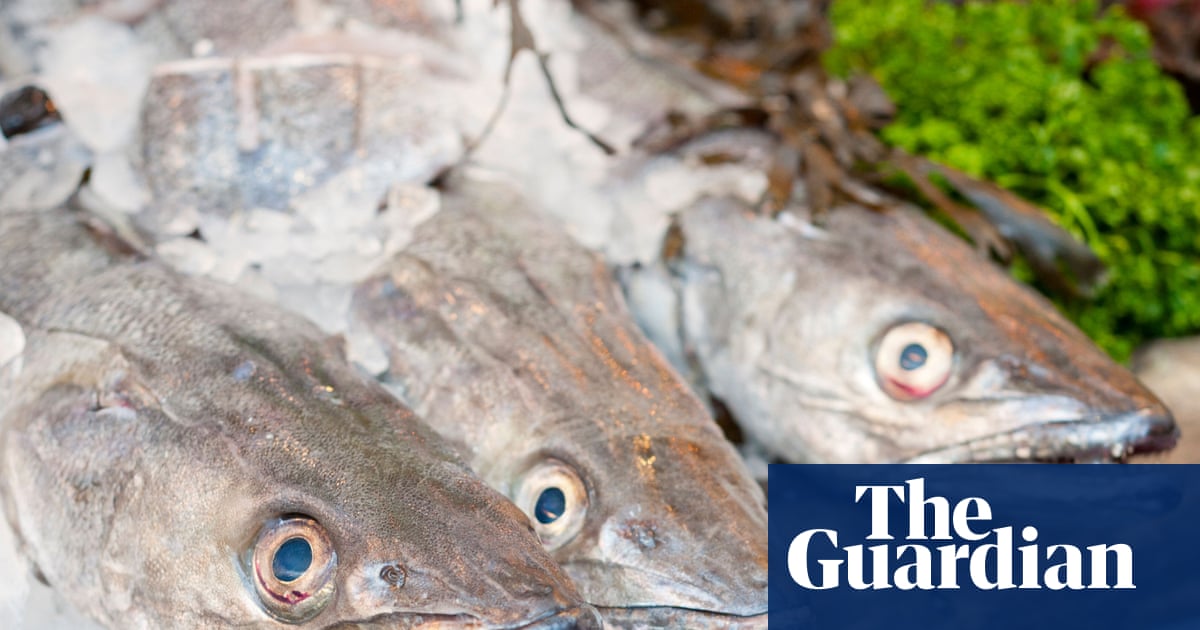
UK consumers who previously turned to European hake and coley as sustainable alternatives to declining cod populations are now being advised to scale back their consumption of those species as well. The Marine Conservation Society, an environmental charity, maintains its Good Fish Guide to evaluate seafood sustainability using a traffic-light rating system based on environmental impact and the health of fish stocks.
In the latest update, ratings for European hake caught in the North Sea, the Bay of Biscay, and the Celtic Seas dropped from green to amber due to rising fishing pressure and shrinking stocks. Meanwhile, the sustainability score for coley caught around the UK, including the North Sea, Rockall, Skagerrak, and the West of Scotland, worsened from amber to red, placing it on the list of fish to avoid. Out of ten coley fisheries evaluated by the guide, only two retain a green status while the remaining eight are rated amber.
Good Fish Guide manager Kerry Lyne noted that marine stock statuses fluctuate continually, meaning a seafood choice that was environmentally sound a few years ago may no longer be appropriate in all regions today. British seafood consumption heavily concentrates on five main species—cod, haddock, salmon, tuna, and prawns—which places intense pressure on a narrow range of wild populations. Cod stocks specifically have dropped since 2015 largely because of overfishing, alongside ecosystem shifts and rising sea temperatures that hinder breeding and young fish survival.
To alleviate pressure on threatened populations, the charity encourages consumers to diversify their seafood selections. As an alternative to cod, the organization points to wild-caught sea bass from UK waters, noting that its mild flavour and flaky texture make it a simple, direct substitute in recipes.
The guide undergoes updates twice a year, and the latest review features 29 downgrades alongside 11 upgrades across 727 total ratings. Among the positive developments, UK Atlantic bluefin tuna achieved a new green rating following significant population recovery. Chris Graham, the charity's head of sustainable seafood and ocean regeneration, attributed the resurgence partly to improved fisheries management measures implemented over two decades ago, though he emphasized that the species requires continued close monitoring.
Additionally, Lyme Bay disco-pot scallops entered the guide with an amber rating. These scallops are harvested using pots equipped with internal LED lights, an innovative technique that significantly reduces environmental damage to the seabed compared to traditional dredging methods.