


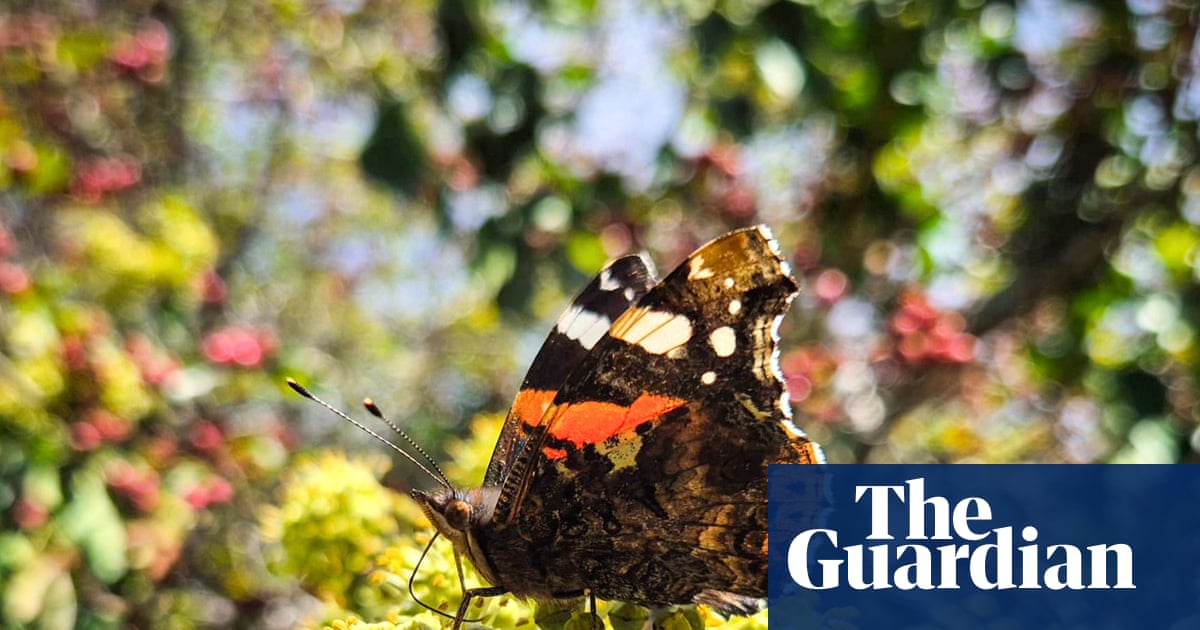
Ubiquitous urban plants that are frequently derided as weeds actually hold the greatest appeal for pollinating insects. According to an extensive eight-year study, the autumn blooms of common ivy are exceptionally rich in nectar and pollen, making them the most frequently visited flowers by insects such as butterflies and bees.
Following ivy, hogweed and bramble blossoms rank as the next most popular choices for pollinators. These are closely trailed by non-native buddleia plants, which have been shown to attract four times as many moths and butterflies compared to other high-scoring flora.
The vital importance of these plants—which many gardeners typically dig up or trim away—has been brought to light by the UK Pollinator Monitoring Scheme. Since 2017, citizen scientists participating in the program have documented insect visits during targeted 10-minute surveys.
During these observations, ivy recorded an average of 22 visits by flying insects per 10-minute count. Hogweed followed closely behind with 20 visits, while brambles, buddleias, thistles, and knapweeds each averaged about 14 visits.
Jo Milborrow, butterfly monitoring officer for Butterfly Conservation, noted that ivy is already recommended for supporting breeding holly blue butterflies and nectaring for red admirals and commas. Emphasizing that this easy-to-grow native species is also the top choice for overall pollinator visits, Milborrow encouraged people to start growing ivy.
The monitoring effort is operated jointly by the UK Centre for Ecology and Hydrology and the Joint Nature Conservation Committee. Over the past eight years of the project, researchers observed that hoverfly numbers declined by approximately a third across Britain in terms of both total abundance and species variety.
Conversely, the surveys offered more encouraging news for solitary bees, which showed an increase in at least one survey. Honeybees, beetles, and non-hoverfly flies also registered gains, predominantly in garden settings, indicating that these domestic spaces may serve as vital sanctuaries for certain pollinating species.
Martin Harvey, a volunteer coordinator at the UK Centre for Ecology and Hydrology, explained that volunteers can submit insect counts through the scheme's website during the survey season running from April to September. Harvey noted that participants frequently express how much they enjoy spending time tallying pollinators and observing the intricate relationships between flowers and insects.