


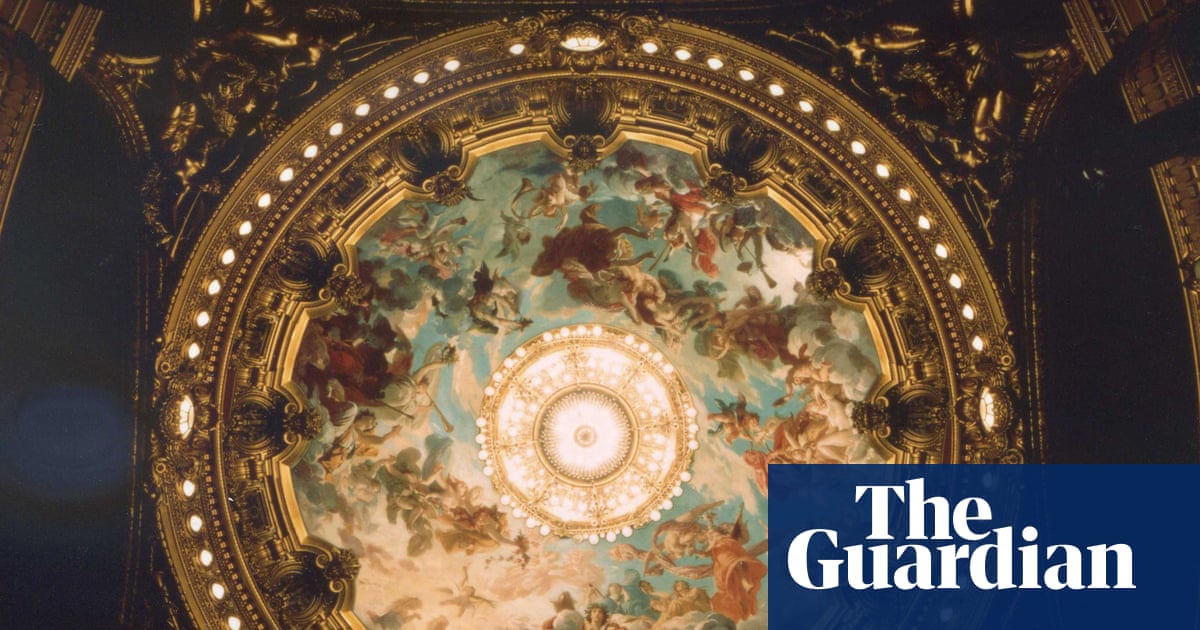
A long-standing cultural debate over the decorative ceiling of the Palais Garnier in Paris has flared up again as a descendant of the 19th-century painter Jules-Eugène Lenepveu prepares to take legal action. The dispute centers on 24 enormous, brightly colored canvases created by Marc Chagall in the 1960s, which were installed directly over Lenepveu's original classical fresco.
The saga began in 1962 when the French culture minister at the time, André Malraux, grew bored during a ballet performance and decided the opera house required a refresh. He commissioned his friend Chagall to create a modern replacement for the dome. Over a two-year period, Chagall produced the wedge-shaped canvases in secret and without payment. They were spliced together around the central chandelier to cover 220 square meters of the dome, featuring vibrant scenes of dancers, musicians, angels, and various composers.
Before the installation ever took place, the project sparked intense friction between traditionalists and modernists. Even the Royal Institute of British Architects in London intervened, writing to the French culture minister to argue that the building's architecture, paintings, and sculptures were designed to function in complete harmony. That appeal was ultimately disregarded.
Now, more than four decades after Chagall's passing, Arnaud Carayon is taking steps to have the original ceiling restored to view. Carayon, who leads the Friends of Lenepveu Society, stated that after three years of polite requests—including two letters sent to French President Emmanuel Macron—he has instructed a lawyer to pursue the matter in court. He emphasized that Lenepveu's work holds historic monument status, yet it has remained hidden from public sight for six decades, leaving its current condition completely unknown.
Lenepveu was originally chosen for the monumental task by the building's architect, Charles Garnier, following the commission by Napoleon III that led to the opera house's opening in January 1875. Lenepveu's allegorical oil painting, titled The Muses and the Hours of Day and Night, was given historic listing in 1923 but has since been largely overshadowed by history.
With the Palais Garnier scheduled to close for extensive renovations between 2027 and 2032, Carayon previously proposed alternating the display of the two ceilings every decade once the venue reopens. He noted that Chagall's installation was engineered to be removable without sustaining damage, but believes authorities lack the courage to alter it. Meanwhile, supporters of Chagall view his work as a cinematic masterpiece and a heartfelt tribute to France, while Paris Opera director Alexander Neef acknowledged that while the debate has persisted for over 60 years, it is entirely understandable for descendants to advocate for Lenepveu's legacy.