


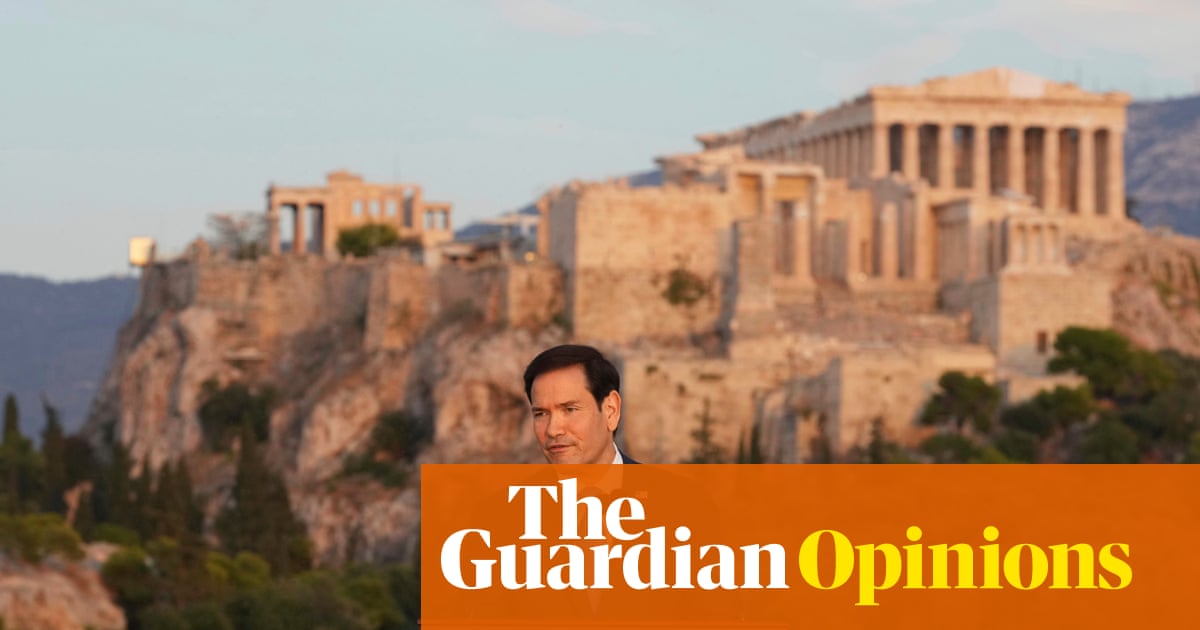
US Secretary of State Marco Rubio delivered a major address in Athens with the Acropolis as his backdrop, presenting a controversial vision for the future of the West. Speaking outdoors during the golden hour, Rubio argued that the United States and Europe must rediscover the values of exploration and conquest that historically drove centuries of expansion, warning that failure to do so would lead to decline and irrelevance.
Critics of the address point out that while America's founders studied ancient Greece and Rome, they did so largely to build a democracy of equals rather than an empire of conquest. Figures like Thomas Jefferson and Abraham Lincoln drew inspiration from classical thinkers to champion equal rights and the inviolable nature of equality. Furthermore, historians note that the concept of Western civilization is historically complex, shaped heavily by intellectual contributions and knowledge flows from eastern and other non-Western cultures, including ancient Sumer and the Arab world.
Rubio's speech heavily emphasized the theme of history being shaped by great men defying adversity and conquering other peoples. Observers drew parallels between this rhetoric and past presidential addresses by leaders like Theodore Roosevelt and John F. Kennedy. However, analysts emphasize that those historical leaders routinely balanced discussions of national strength with firm commitments to democratic ideals, human rights, and global cooperation.
Commentators also highlighted a contradiction between Rubio's rhetorical praise for artistic and scientific achievement and the current administration's actual policies. Critics point to significant federal funding cuts for scientific research, climate studies, and cultural institutions as evidence that the administration's actions undermine the very intellectual curiosity and pursuit of excellence that the secretary of state celebrated in his speech.