


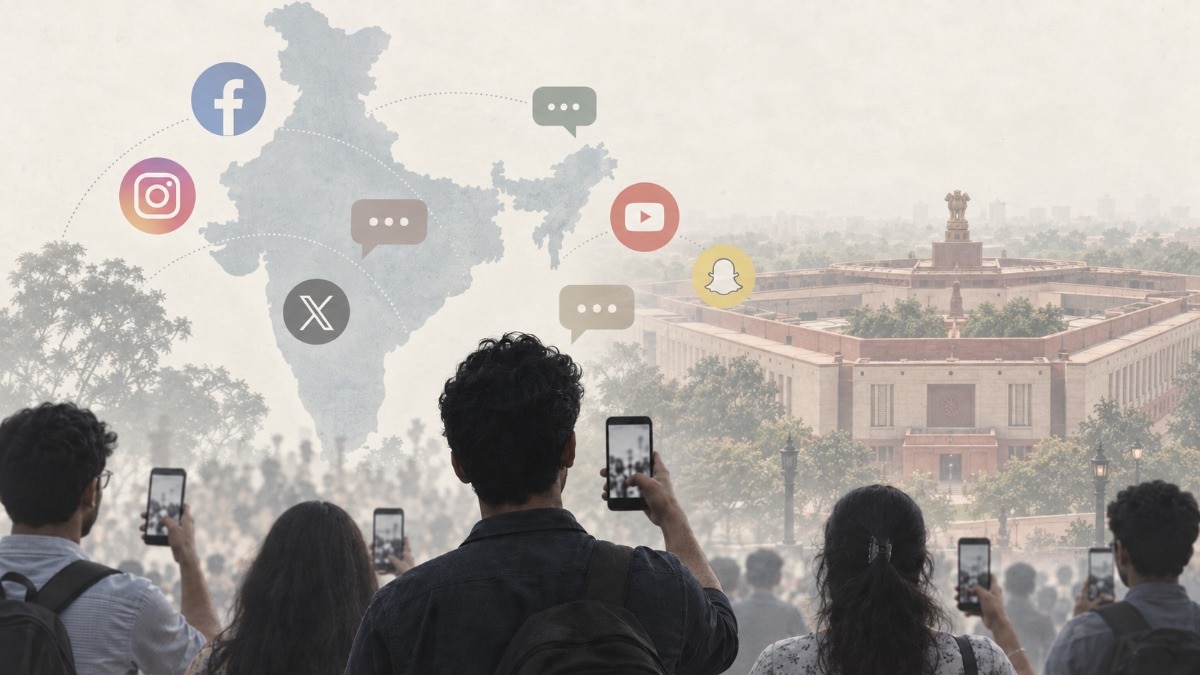
Nearly two in three Indian adults believe that social media has exerted a more positive than negative influence on democracy, positioning the nation among the most optimistic countries in a recent 37-nation study conducted by the Pew Research Center. The findings show that 66 percent of surveyed Indians view social media as good for democratic governance, a sentiment shared equally with South Africa and sitting well above the global survey median of 55 percent. Fewer than one in four Indian respondents characterized social media as harmful.
The research was based on face-to-face interviews with 3,566 Indian adults conducted between February 8 and April 27, though the data cannot account for potential shifts in public opinion following subsequent political events later in the year. Pew researchers also noted that historical comparisons for India are unavailable due to non-comparable figures from 2023, leaving open the question of whether public sentiment has trended upward or downward over time.
The data aligns with a broader global trend in which developing economies with lower gross domestic product per capita tend to report higher optimism regarding digital platforms. Nigeria recorded the highest positivity rate globally at roughly 80 percent, while wealthy Western nations typically expressed much greater skepticism. For instance, more than a quarter of respondents in the Netherlands and over a third in the United States stated that social media has damaged democracy, with majorities in seven wealthy countries expressing similar concerns.
Despite the high optimism in India, the survey highlighted a notable level of uncertainty among respondents. More than 10 percent of participants either declined to answer or stated they did not know, representing a share more than double the median across all surveyed countries. When evaluating specific societal impacts, Indian respondents were generally less inclined than citizens of typical countries to state that the internet and social media have heavily transformed public behavior.
While nearly two in three Indians agreed that digital tools keep people better informed, fewer than the global median believed platforms have driven deep political divisions or made populations more susceptible to false information. Specifically, just under two-thirds identified vulnerability to fake news as a major issue, marking the lowest proportion recorded across all 37 nations.
Age demographics revealed a sharp divide within India regarding social media's democratic value. Nearly 75 percent of adults aged 18 to 34 endorsed a positive view, compared with 50 percent of respondents aged 50 and older. This 24-point generational gap stands as one of the widest recorded across the surveyed countries, surpassed only by the United Kingdom.
Regarding platform usage among the general adult population, Facebook emerged as the most widely used network in India, accessed by over 40 percent of adults, though this figure remains below the global median. Other platforms such as Instagram and X also saw lower penetration rates in India compared to typical median countries, while Snapchat adoption matched global norms and TikTok has remained officially banned in the country since 2020.
Pew researchers emphasized that the survey captures general opinions rather than underlying motivations, omitting questions concerning individual political leanings. Furthermore, the geographic scope of the polling excluded several northeastern states including Manipur, Meghalaya, Mizoram, Nagaland, and Sikkim, alongside the island territories of Andaman and Nicobar and Lakshadweep.