


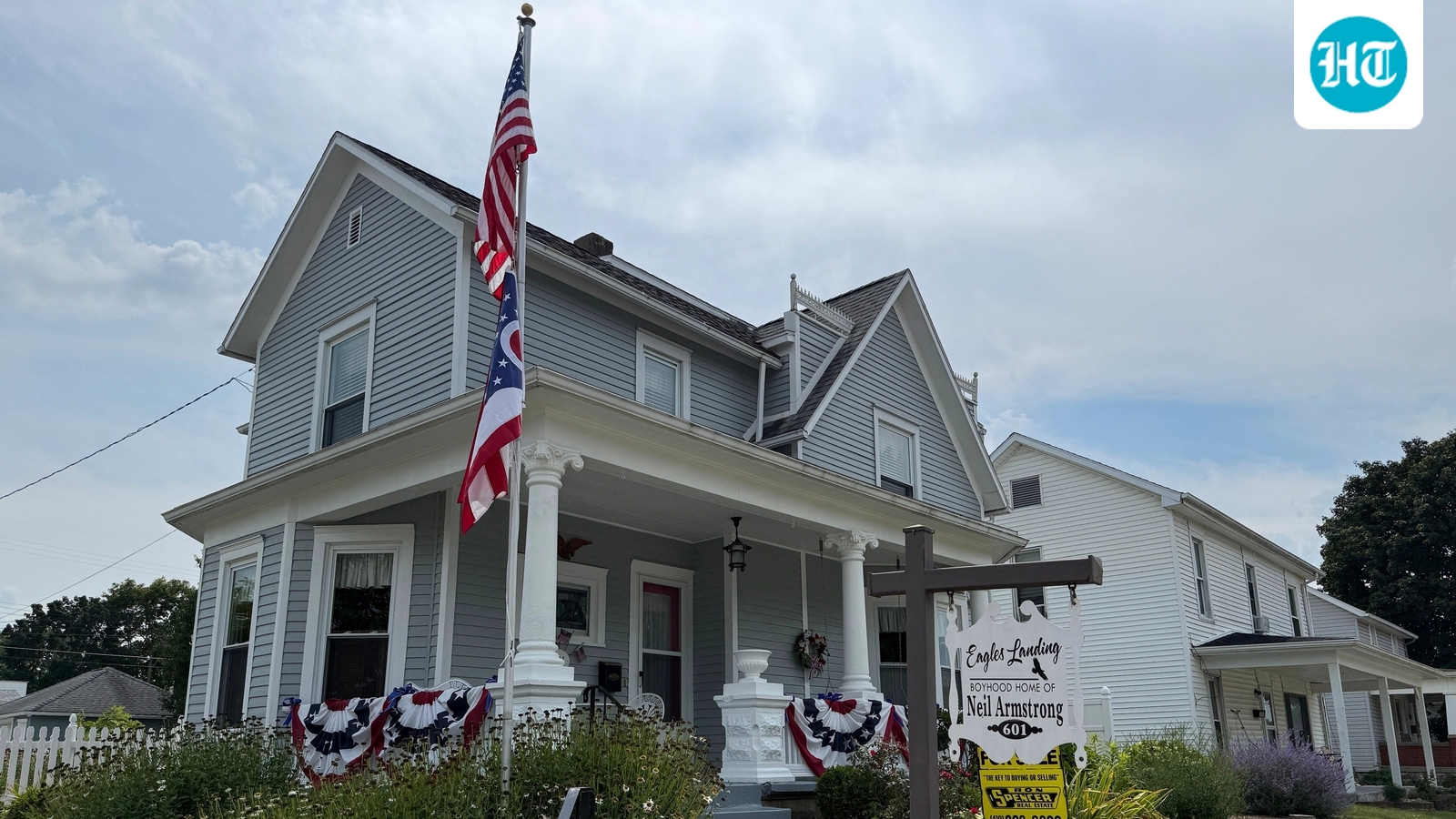
Wapakoneta, Ohio: Long before he became the first person to walk on the Moon during the historic Apollo 11 mission in 1969, Neil Armstrong was a teenager shaping his aviation ambitions inside a two-storey house in Ohio. It was here that he constructed balsa wood model aeroplanes, tested them in a homemade wind tunnel in the basement, and launched them out of his bedroom window to measure their flight distance.
Now, the property where Armstrong spent his formative teenage years is preparing to welcome visitors after a retired pilot contributed $400,000 to assist a local historical society in acquiring and preserving the site. Organizers intend to restore the house to its 1940s appearance and open it for public tours by the year 2030, which will mark the centenary of Armstrong’s birth.
Armstrong’s early life involved frequent relocations due to his father's employment as a government auditor, but the family ultimately settled in Wapakoneta in 1944. His passion for aviation had blossomed years earlier when he experienced his first airplane ride at age six. As a youth in the Ohio home, he dedicated his time to building models in the dining room, constructing a basement wind tunnel, and biking to a nearby airfield for lessons. He secured his student pilot's certificate on his sixteenth birthday, before he was legally old enough to drive.
The residence at 601 West Benton Street retains much of its original exterior and layout. Retired history teacher Karen Mikesell purchased the home in 1988 without initially knowing its connection to the astronaut. Upon discovering its history, she worked to maintain its character and eventually hosted nine astronauts, including Apollo 11 crewmate Buzz Aldrin.
Mikesell recalled that during a visit a few years after Armstrong's passing in 2012, tears filled Aldrin's eyes as he stood inside his late crewmate's former bedroom. The room now houses photographs, autographed memorabilia, a Moon rock fragment, and a piece of gold foil from the Apollo 11 capsule, preserving the legacy of the space program.
Armstrong's childhood passion ultimately paved the way for a remarkable career in aerospace. Following studies at Purdue University, he flew 78 combat missions as a US Navy pilot during the Korean War and later served as a civilian test pilot, flying experimental aircraft such as the X-15 rocket plane. His career included perilous moments, including surviving a 1968 crash of a lunar landing research simulator and managing a dangerous thruster malfunction during the Gemini 8 mission in 1966.
Despite achieving global fame, Armstrong remained intensely private throughout his life, famously avoiding the limelight and declining many interview requests. After leaving NASA in 1971, he taught aerospace engineering at the University of Cincinnati for eight years and served on corporate boards.
The effort to safeguard the Wapakoneta home ensures that future generations can explore the humble origins of the legendary astronaut. With the recent financial support from retired pilot Ken Schreiber, the Auglaize County historical preservation initiatives will soon allow the public to walk the same halls where humanity's greatest lunar explorer first dreamed of the skies.