


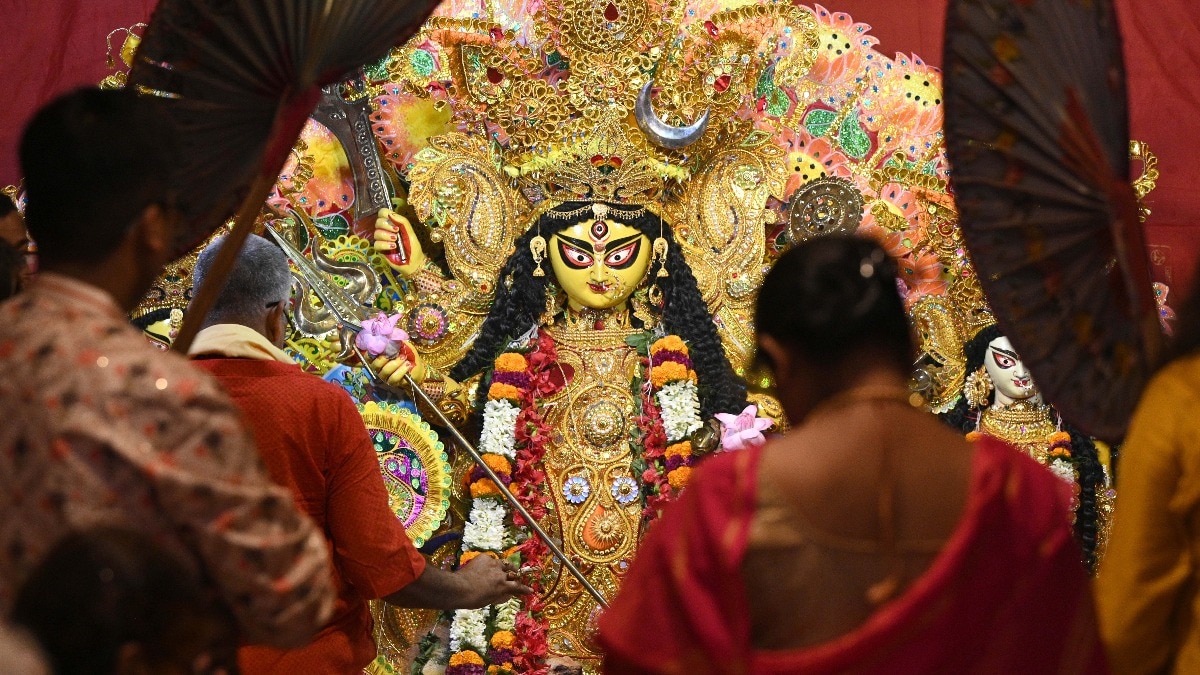
New Delhi: In West Bengal, Durga Puja brings the joy of pandal-hopping, dhunuchi dance, delicious food, and new clothes. But beyond these familiar festivities, another centuries-old tradition unfolds inside ancestral homes.
The “Dugga Dugga” chants echo all around, and the fragrance of shiuli fills the air as pandal-hopping plans take shape across the state. Every year, outings bring together a mix of seeking blessings, soaking in the festive spirit, admiring idols, and marvelling at the craftsmanship that turns neighbourhood pandals into worlds of their own. Yet, there is another way to experience Durga Puja, tucked away in the ancestral homes of West Bengal.
Known as Bonedi Barir Durga Puja, the tradition dates back several centuries. Bonedi bari loosely translates to an aristocratic or wealthy ancestral home in Bengal. Here, the goddess is welcomed with rituals, recipes, and customs passed down through generations. Celebrated by Bengal’s old aristocratic, zamindar, and merchant families, these festivities come with stories of their own, making the ancestral home as much a part of the experience as the rituals themselves.
Long before Kolkata’s elaborate themed pandals became attractions, wealthy households hosted grand celebrations in their thakur dalans, the pillared courtyards built specifically for worship. This tradition began when zamindars, merchants, and affluent Bengali households started hosting Durga Puja privately. During the colonial period, these homes welcomed foreign officials, traders, and travellers, also serving as venues for networking with the upper echelons of society.
Today, these celebrations stand as a heritage in their own right, with generations of families keeping the traditions alive. Every bari maintains its own distinct method of welcoming the goddess. While some are known for intricate idol craftsmanship, others stand out for ornate jewellery or distinctive bhog offerings. For instance, Darjipara Mitra Bari offers 108 aparajita flowers instead of the traditional lotuses typically associated with the ritual. Every home preserves unique customs that shape its celebrations.
From the homes of Mughal-era zamindars to estates with close ties to the British, these baris remain an integral part of Bengal’s celebrations. Many now feature on heritage walks and tourism itineraries, allowing visitors to explore ancestral courtyards and discover family histories.
Travellers interested in bonedi barir pujo hopping can book slots for guided heritage walks and bus tours that connect these ancestral homes while sharing stories about the families, architecture, and rituals. Options range from short neighbourhood walks to day-long bus tours, with prices varying by operator and inclusions.
Some of Kolkata’s iconic bonedi baris include Shobhabazar Rajbari, known for its grandeur and colonial connections; Sabarna Roy Choudhury Aatchala Bari in Barisha, celebrated for centuries-old traditions; Chhatu Babu-Latu Babu Bari, where Durga’s companions Jaya and Bijaya feature on the idol; and Shib Krishna Daw Bari in Jorasanko, famous for elaborate goddess adornments. These historic homes continue to bring families together every year to the sound of dhaak beats and the anticipation of the goddess's homecoming.