


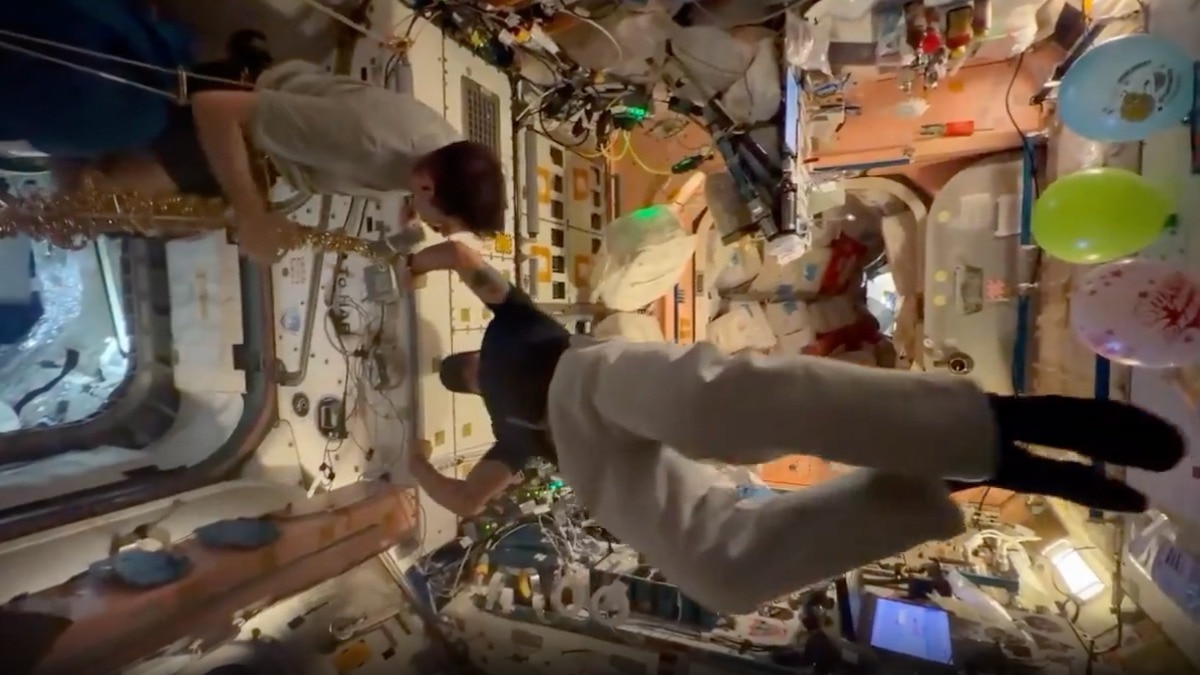
New Delhi: Indian-origin NASA astronaut Anil Menon has highlighted the rigorous physical demands of maintaining fitness in orbit, sharing a video of himself exercising aboard the International Space Station (ISS) to explain the heavy toll microgravity takes on the human body.
Emphasizing the intense focus and determination required to stay active in space, Menon shared footage of his training regime with the message that working out on the station demands grit. He noted that without consistent exercise, astronauts face severe physical deterioration during long-duration missions.
According to Menon, crew members can suffer a loss of approximately 3 percent of their bone mass every month in space. In addition, individuals can experience a 10 to 15 percent drop in muscle mass and overall body weight, alongside a decline of over 10 percent in VO2 max, which measures how efficiently the body utilizes oxygen during physical exertion.
These physiological shifts occur because microgravity removes the constant pull of Earth's gravity, meaning bones and muscles experience far less mechanical loading. Without intervention, this reduction in everyday physical stress leads directly to muscle atrophy, bone density reduction, and declining cardiovascular endurance.
To combat these effects, physical training remains a mandatory part of daily life aboard the ISS. Astronauts rely on specially engineered equipment meant to simulate resistance and cardiovascular strain in weightlessness, ensuring they retain their strength, structural health, and stamina.
Menon also credited fellow astronaut Navy Captain Jack Hathaway with supporting his fitness journey, describing him as a friend and coach who acted similarly to endurance athlete David Goggins in pushing him toward higher athletic standards.
Preserving physical conditioning in orbit goes far beyond personal fitness goals; it ensures that spacefarers can safely execute high-stakes operational duties and helps them readapt to Earth's gravitational pull upon their return. As space agencies look toward extended interplanetary voyages to the Moon and Mars, protecting crew health through countermeasures like exercise remains a paramount priority.