


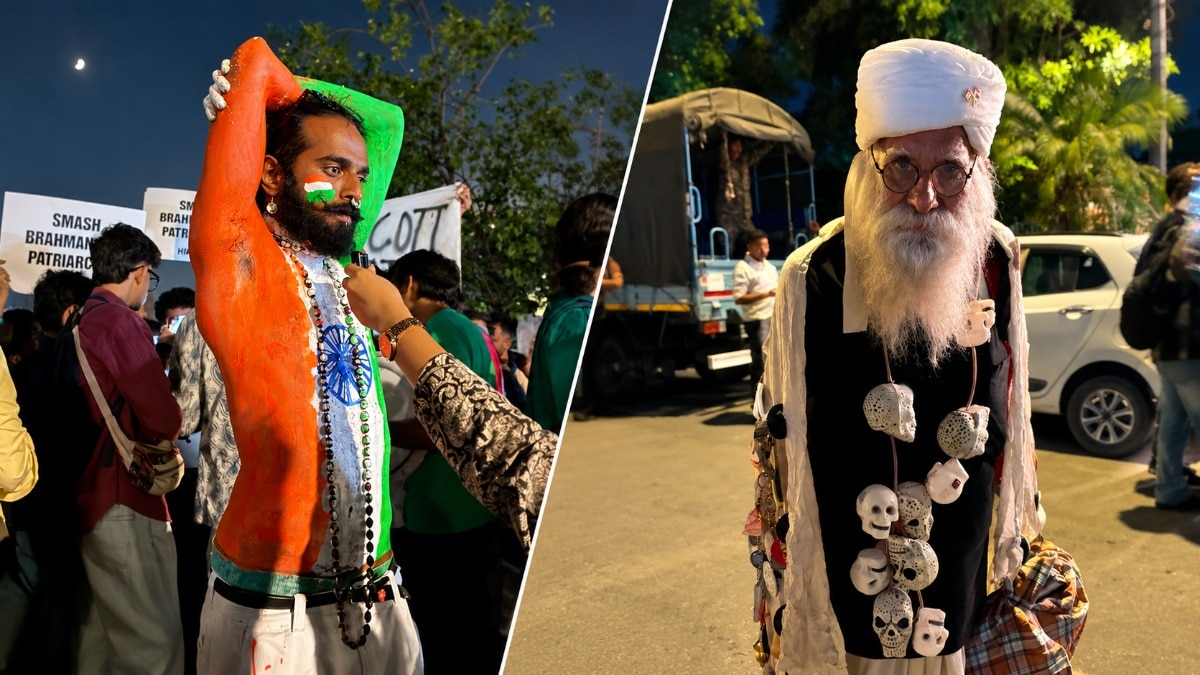
New Delhi: A demonstration called by the Cockroach Janta Party in central Delhi began as a scattering of small groups before swelling into a larger gathering in the inner circle of Connaught Place. Heavy security deployments across the area pointed toward expectations of a major confrontation, but the actual protest site presented a different picture featuring students, Left activists, and ordinary citizens without a visible chain of command or a designated leader directing the crowd.
The Tricolour march had been organized by CJP leader Abhijeet Dipke, who was detained by Delhi Police shortly before the event after being served a notice not to proceed. His fellow CJP leaders, Ashutosh Ranka and Saurav Das, were already under arrest, leaving the gathering without its primary leadership or a contingency plan. More than two hours after Dipke's detention, no CJP functionary was visible guiding the assembly.
Without an identifiable mobilization effort, the protest grew through the convergence of separate clusters. Around 100 protesters carrying the national flag started a circuit of the inner circle near Palika Market, while roughly 100 to 120 members of the Students' Federation of India gathered near Tolstoy Marg. Activists from the All India Students' Association also joined, though AISA leader Neha Bora was detained from Mandi House earlier in the evening. Slogans targeting Chief Election Commissioner Gyanesh Kumar and the government echoed through various pockets, while CPI(M) Rajya Sabha MP John Brittas arrived later in the evening as one of the few prominent political figures present.
The crowd drew a mix of committed participants, people with individual causes, and curious onlookers, some of whom noted plans to visit nearby commercial establishments later in the night. Participants expressed uncertainty about where to go or which group to join as sporadic marches continued across the area. By evening, hundreds of people had been detained by security forces, highlighting the central challenge for the movement: while individuals were willing to assemble despite heavy policing, translating that turnout into a coordinated demonstration proved elusive in the absence of leadership.