


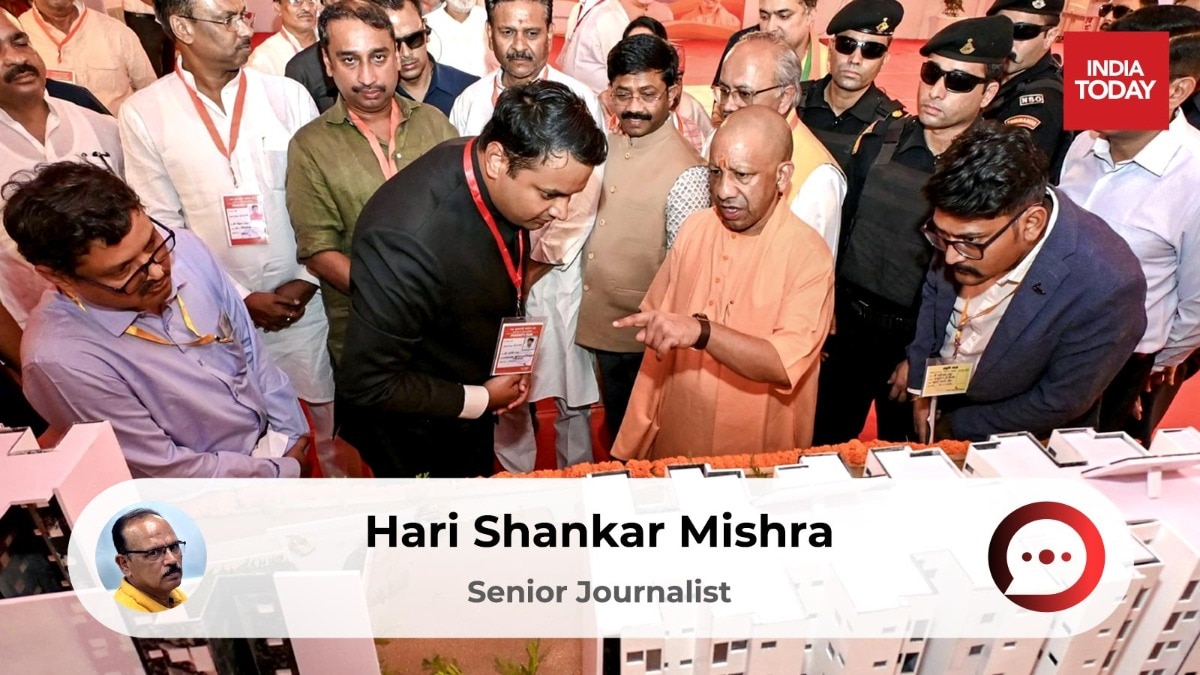
The proposed transformation of Kasari-Masari in Prayagraj reflects the Uttar Pradesh government's attempt to link action against alleged illegal occupation with housing for the poor and a change in the area's public image.
The name of a place often reflects its history, cultural associations, and the collective experiences of its residents. When a locality becomes associated with fear, crime, and the influence of powerful individuals, its reputation shapes how people perceive and experience it. Uttar Pradesh Chief Minister Yogi Adityanath's announcement to rename the Kasari-Masari area of Prayagraj as Krishnapuri can be viewed in this context. Alongside the plan to construct flats for the poor on land associated with former mafia figure Atiq Ahmed, the announcement seeks to convey a message about the state's approach to law and order.
For years, Kasari-Masari was associated with the influence of Atiq Ahmed, whose criminal activities and political connections made him a prominent figure in the state's history of organised crime. The locality came to be viewed through the prism of that influence. The chief minister's announcement of the proposed renaming, along with the bhoomi pujan for housing on land authorities say was illegally occupied, brings together enforcement against encroachments and the use of public land for welfare.
The name Krishnapuri carries symbolic meaning in Indian mythology, representing the triumph of justice over oppression. By invoking this association, the government seeks to present the change as a departure from a past linked to fear and criminal power. While this symbolism may help reshape the area's public image, its lasting significance will depend on whether residents experience sustained improvements in security and public services. This fits into the broader governance model pursued by the Adityanath government, which includes action against properties allegedly acquired illegally and redirecting that land toward economically weaker sections.
Prayagraj's Lukerganj area offers an earlier example, where land associated with Atiq Ahmed's alleged illegal occupation was cleared and flats were constructed under the Pradhan Ntri Awas Yojana. In Lucknow, land associated with former mafia figure Mukhtar Ansari was similarly freed, with housing planned on the site. These initiatives, together with the proposed development at Kasari-Masari, form part of a wider administrative strategy to put reclaimed land to public use while providing tangible benefits to families who receive homes.
Criminal networks often derive influence from the perception that they operate beyond the reach of the law. When authorities reclaim land through due legal processes and use it for public welfare, they challenge that perception. Over time, housing developments and public facilities can give localities an identity beyond their association with powerful figures, provided the administration ensures ongoing security and services.
The renaming also fits into a wider pattern of place-name changes under the Adityanath government, which has previously renamed Allahabad as Prayagraj, Faizabad district as Ayodhya, and Mughalsarai railway station. While the government presents these changes as efforts to restore cultural identity, critics question the priorities behind some decisions, arguing that renaming alone cannot resolve pressing developmental challenges.
Kasari-Masari presents a distinct context because the proposed name change is accompanied by a material housing initiative on land linked to alleged illegal occupation. The government is attempting to connect cultural symbolism with practical intervention, even though a name change cannot by itself resolve the broader social and economic problems faced by residents.
The larger question concerns how Uttar Pradesh is perceived regarding organised crime, political patronage, and law enforcement. The government's emphasis on confronting these issues is intended to address the state's historical legacy and signal a different approach to governance and public confidence.