


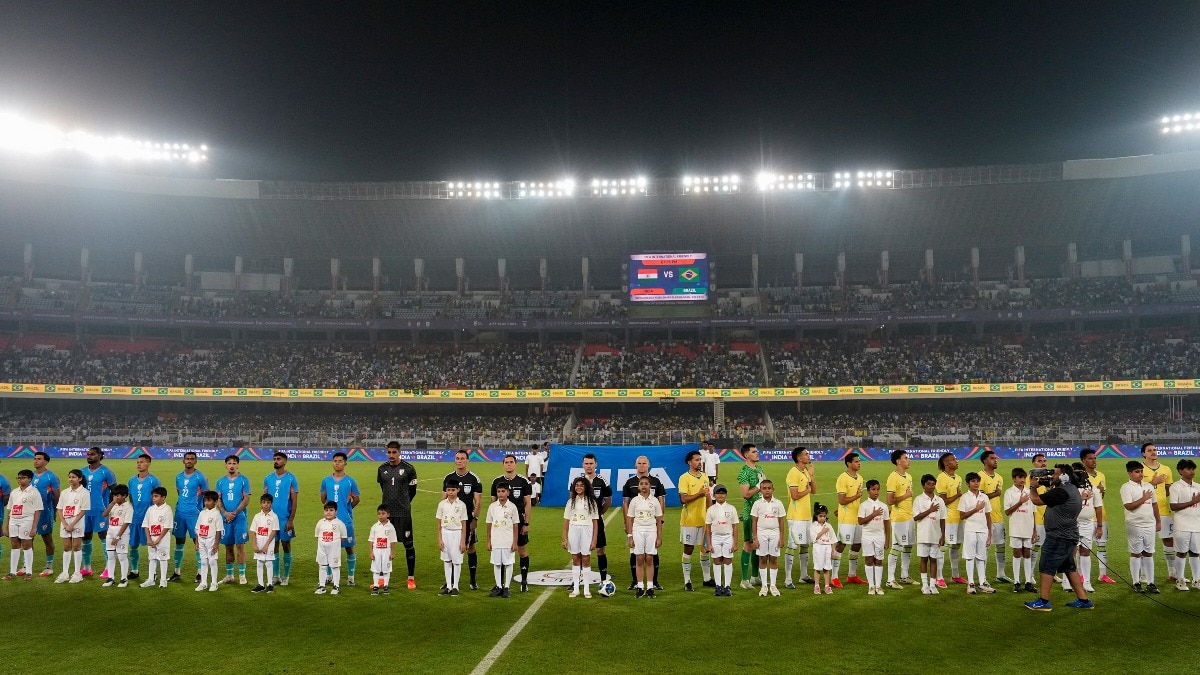
Nearly nine years after the FIFA Under-17 World Cup transformed Kolkata's Salt Lake Stadium into a buzzing global stage, a return to the historic venue brings back vivid memories alongside lingering questions about the true trajectory of Indian football. Back in October 2017, the venue dazzled with individual bucket seats, a natural-grass pitch, and upgraded facilities as it hosted powerhouse youth teams like Brazil, England, and Spain. That historic tournament drew over 1.34 million spectators across six Indian cities, offering a generation of young fans their first taste of a major international football event.
As time passed, however, the initial excitement faded and long-standing structural issues returned to the fore. Maintaining stadium infrastructure once a major event concludes has proven difficult, as evidenced by the extensive pitch restoration required ahead of India's international friendlies against Brazil and Uruguay. While the high-profile fixtures brought global attention back to Kolkata, they also underscored persistent challenges surrounding domestic structure, stadium upkeep, and the ability to translate single high-profile moments into long-term national development.
On the pitch, India's results during the recent friendlies illustrated the competitive gap the national side still faces. Following a 1-1 draw against Panama in Bengaluru, the team suffered a 4-0 defeat to Brazil and a 6-1 loss to Uruguay in Kolkata. Although Ryan Williams and Anirudh Thapa provided moments of encouragement with their goals, the heavy losses served as a sobering reminder of how far Indian football has to travel on the competitive front, putting the spotlight back on the systemic factors that shape player development.
Off the pitch, attendance figures and ticket accessibility raised separate concerns. While Brazil and Uruguay drew sizeable crowds of over 51,000 and 37,000 respectively at Salt Lake Stadium, empty seats were still visible in a city deeply passionate about the sport. Conversations with local supporters revealed that high ticket prices put the experience out of reach for many everyday fans, highlighting the ongoing tension between staging marquee global events and keeping the sport accessible to its core domestic audience.
The atmosphere inside the venue offered stark contrasts in scale. While regular domestic competitions like the Durand Cup often see sparsely populated media boxes, the friendlies against South American giants packed all three media tribunes with journalists from across India and abroad. Pre-training sessions alone drew nearly 300 media personnel, showcasing the immense pulling power of elite international names while leaving observers to ponder how Indian football can harness that temporary spotlight for lasting domestic progress once the big teams leave.