


Britain may have been only peripherally involved in the bombing campaign against Iran initiated by Donald Trump and Benjamin Netanyahu, but over the past fortnight it has become increasingly evident that Tehran seeks to project threats within the UK in retaliation.
In the wake of a confused security incident near RAF Fairford, western officials are weighing whether to issue public warnings that Iran now considers US military assets in Europe, such as the Gloucestershire air base, as potential targets. This comes even as British security circles maintain skepticism regarding Iran's operational capability to launch a drone strike against a heavily secured facility far from Tehran.
At the same time, MI5 acknowledges that Iran’s Islamic Revolutionary Guard Corps has actively sought to coordinate and promote the targeting of Jewish communities across the UK and Europe. This campaign began in March with a series of arson attacks directed against synagogues and related sites, representing a significant escalation from the regime's traditional tactics of assassination plots and threats against overseas dissidents, which the IRGC previously outsourced to criminal networks.
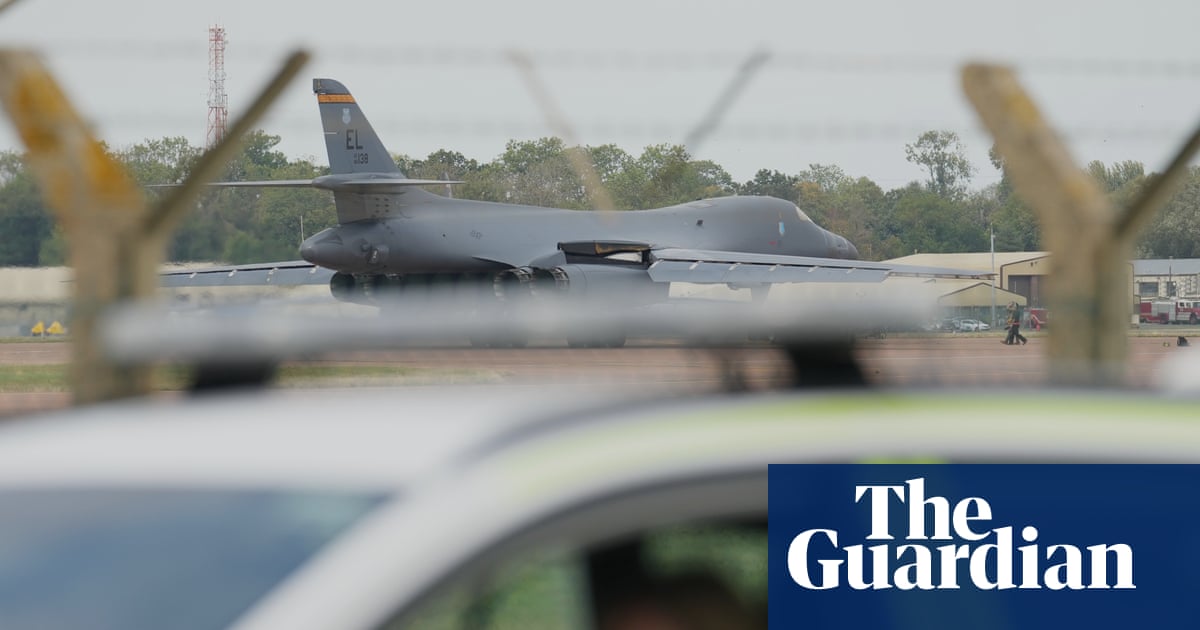
While the precise nature of the RAF Fairford incident remains murky, Iran may have extracted strategic value from it with minimal effort. Last Sunday, a cautious United States withdrew the 12 B-1 bombers stationed at the base, with leaked reports indicating fears of a Ukraine-style drone attack. The incident began shortly after midnight on September 27, when five men from London drove toward the base in three white vans, one of whom dialed 999. All five were apprehended in the neighboring village of Whelford and released on police bail the following day after no explosives or active plots were uncovered. Two additional men have since been arrested on terrorism-related offenses and also released on bail.
Prime Minister Andy Burnham noted strong indications of Iranian involvement, while Metropolitan Police Chief Mark Rowley signaled that further investigative progress would soon be made public. RAF Fairford remains an exposed location where aviation enthusiasts can easily photograph and track forward-deployed US bombers that launched strike sorties into Iran earlier in the year.
Former UK national security adviser Lord Ricketts noted that Iran has a documented history of targeting regime opponents in the UK, making it prudent to assume they would view US bomber bases as targets regardless of their direct role in the Fairford incident. Conversely, terrorism specialist Dr. Antonio Giustozzi of the Royal Institute for United Services suggested the vehicle approach might have been a feint designed to signal potential threats, while remaining doubtful that Tehran possesses the capability to mount a genuine military attack on Fairford or similar installations.
Operating first-person view drones requires extensive training, and mounting an assault on an air base would demand months of preparation. Giustozzi added that bringing military-grade explosives into the UK would present immense logistical hurdles, and a direct attack would likely be a one-way mission resulting in capture or death, severely limiting recruitment.
Despite these low operational risks, the US military chose to withdraw its $300m B-1 bombers as a precautionary measure to mitigate exposure. Meanwhile, recent congressional reporting indicates that numerous US aircraft and defense systems have been damaged or destroyed in the broader regional conflict, demonstrating that Iran's retaliatory capabilities were more substantial than initially acknowledged.
Against this backdrop, the broader Iranian threat inside the UK is viewed as elevated. Recently, two British-based individuals were charged with terror offenses for allegedly plotting to target the Manchester Jewish community using a homemade explosive device under the direction of an overseas third party.
Earlier in the year, US authorities indicted an Iranian-Iraqi dual national for allegedly coordinating 18 arson and low-level terror attacks against Jewish and US targets across the UK and Europe. Prosecutors maintain that the campaign functioned primarily as a form of psychological warfare, underscoring a persistent underlying security challenge for British authorities even as high-profile investigations continue.