


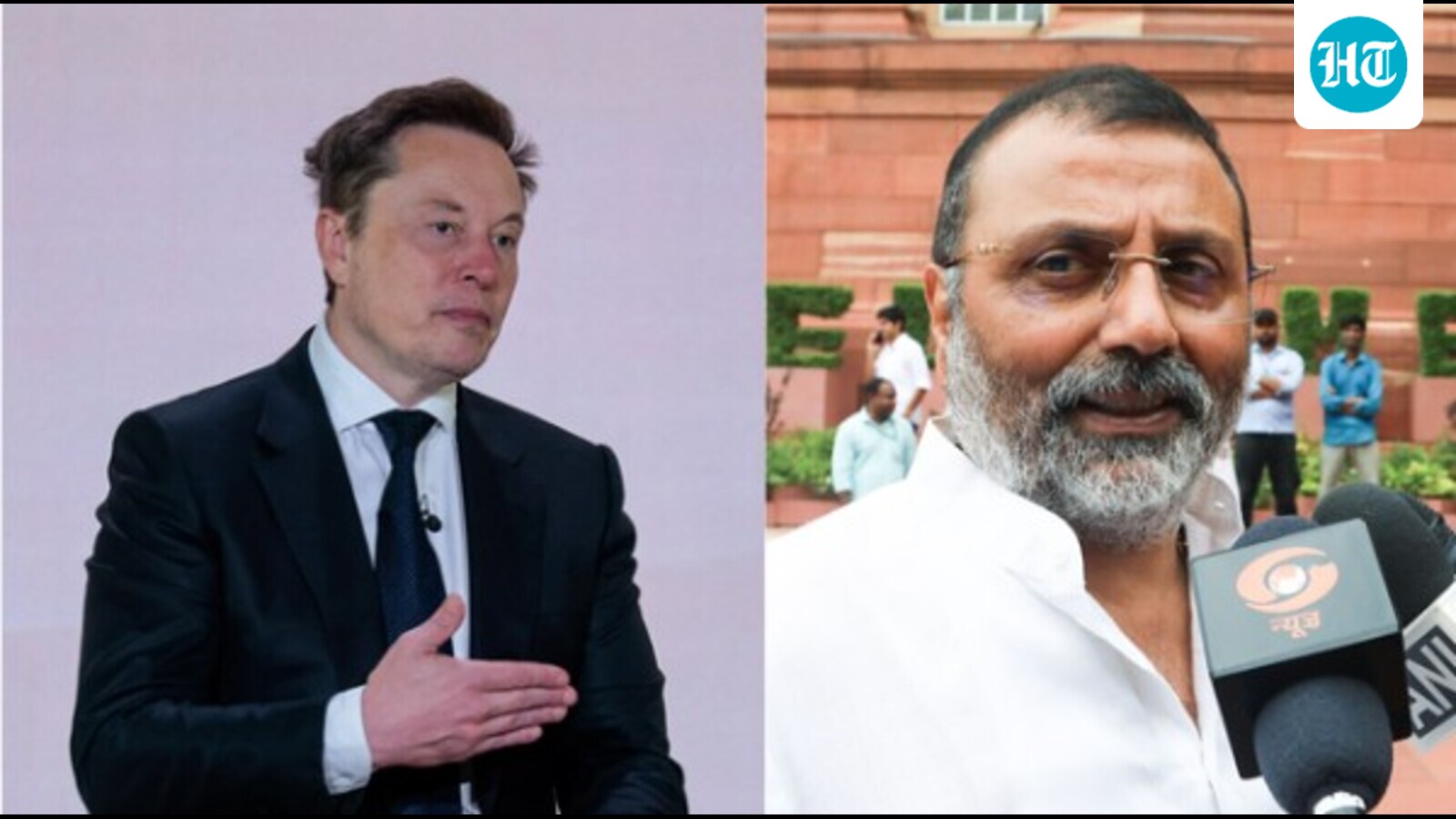
Bharatiya Janata Party MP Nishikant Dubey has hit back at Elon Musk over Starlink, saying India does not change its security policy under pressure after the billionaire accused Reliance Industries chairman Mukesh Ambani of running a monopoly that shuts out the satellite internet provider.
India is a healthy democratic, sovereign nation and does not alter its security stance under pressure or social media commentary, Dubey stated on X in response to Musk's remarks attacking Ambani and questioning India's resistance to Starlink's entry. Dubey noted that a parliamentary panel he chairs has studied the risks posed by the company, arguing that the Ministry of Defence, the Ministry of Home Affairs, and investigation agencies are being affected by what he described as dangerous games.
The public exchange has brought a long-running regulatory question into the open. Starlink, the satellite broadband arm of Musk's SpaceX, operates a constellation of low Earth orbit satellites that beam internet connectivity to small home terminals. While Starlink secured a satellite communication licence from the Department of Telecommunications and an authorisation from space regulator IN-SPACe in 2025, commercial service still depends on spectrum assignment and associated conditions.
The central dispute concerns how that spectrum should be allocated. Reliance Jio argued previously that satellite spectrum should be auctioned like mobile spectrum to ensure a level playing field, whereas Starlink and other global players pushed for administrative allocation. Security conditions form the second strand of the dispute, as satellite service licences typically require local gateways, traffic monitoring, and interception facilities for agencies. Dubey's remarks suggest ongoing concerns over whether such safeguards are sufficient.
Musk's initial remarks attacked Ambani's supporters, accusing them of contradicting themselves over how strong a competitor Starlink would be, and calling the arguments absurd hypocrisy and hyperbole. He argued that competition would benefit the average Indian citizen by offering more choices and noted that SpaceX would need to make pricing affordable for the market. Musk also sarcastically addressed the Reliance chairman before making an earnest appeal about connecting underserved regions to improve education and business opportunities.
Dubey rejected that framing, pointing to past communications with the Telecom Regulatory Authority of India during the UPA administration regarding potential threats. He challenged Musk's credentials as a champion of internet access, urging him to first provide affordable connections to the poor in America. Dubey also denied that financial influence shapes Indian policy and questioned Musk's political activities abroad.
Outside the political dispute, fintech commentator Sheel Mohnot questioned whether Starlink could attract enough paying customers in India given the country's existing fast and inexpensive internet coverage. Noting that local data plans offer significant affordability compared to Starlink's pricing in other developing markets, observers continue to debate the commercial viability alongside the regulatory hurdles.