


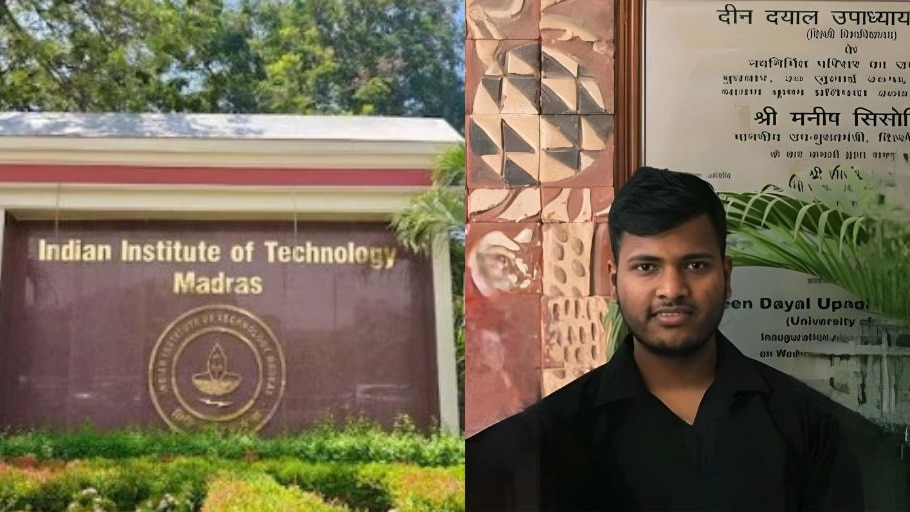
New Delhi: Sometimes, the willingness to learn matters more than what an individual already knows, a principle reflected in the academic trajectory of Shudhanshu Kumar Yadav. Beginning with a background in Physical Science and limited coding experience, the Indian Institute of Technology Madras Bachelor of Science student gradually constructed his technical competencies, thereby opening doors to prominent research opportunities both domestically and internationally.
During his academic progression, Yadav secured a paid research internship at Dhirubhai Ambani University located in Gandhinagar, in addition to earning opportunities at Jamia Millia Islamia and the Indian Institute of Management Bangalore. Furthermore, he achieved selection for the Matsuo and Iwasawa Laboratory at the University of Tokyo alongside GCI World 2026. His ongoing experience underscores how curiosity, steady effort, and a readiness to absorb new concepts can empower students to cultivate modern skills and investigate complex disciplines far removed from their original academic roots.
For Yadav, shifting toward data science and artificial intelligence involved mastering subjects that were entirely unfamiliar. Unlike peers who enter advanced technical tracks with extensive programming backgrounds, he constructed his technical comprehension entirely from the ground up. He noted that having studied Physical Science, domains such as programming, data science, and artificial intelligence were completely new to him. The structural framework of the IIT Madras BS curriculum offered a methodical environment that enabled him to build technical proficiency incrementally.
The degree program facilitated step-by-step mastery over these technical domains, establishing a robust foundation for his development. As his studies advanced, he began investigating methods to translate classroom theories into practical solutions, motivating him to pursue independent projects and formal research exposure.
This burgeoning interest in data science and artificial intelligence soon transcended the immediate academic environment. By securing a paid research position at Dhirubhai Ambani University alongside invitations from Jamia Millia Islamia and IIM Bangalore, Yadav gained valuable platforms to test theoretical concepts against tangible problems. He remarked that sustained learning naturally fostered greater confidence in applying classroom knowledge to real-world scenarios.
A major milestone in his academic progression materialized through his acceptance into the Matsuo and Iwasawa Laboratory at the University of Tokyo. Additionally, his selection for GCI World 2026 broadened his international exposure within the spheres of data science and artificial intelligence. For an undergraduate who commenced his higher education with sparse programming knowledge, these milestones represent a substantial leap toward executing advanced research outside the confines of his initial discipline.
Reflecting on his journey, Yadav pointed out that the most profound transformation has been the internal confidence cultivated along the way. Originating from a non-technical background, he learned over time to embrace experimentation, learn from missteps, and refine his abilities while actively uncovering personal academic interests. His trajectory from Physical Science toward advanced data science and artificial intelligence demonstrates that structured instruction, pragmatic application, and persistence can successfully guide students across unfamiliar intellectual frontiers.