


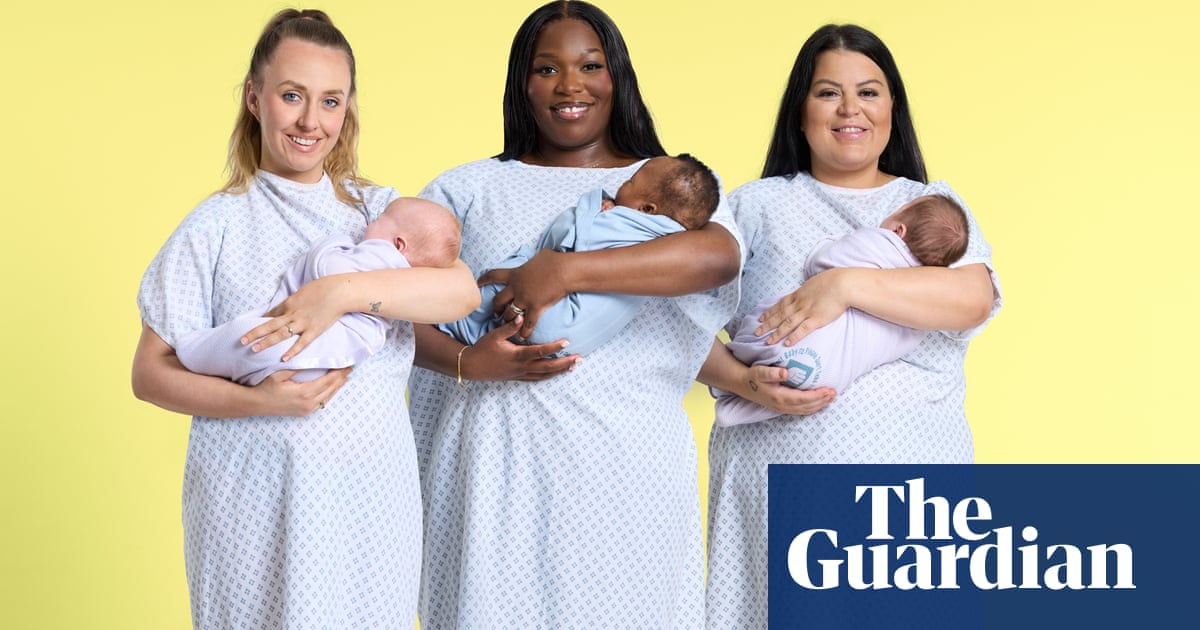
[PIX HERE: https://media.gutools.co.uk/search?query=One%20Born%20Every%20Minute&since=2026-10-19T23:00:00.000Z]When One Born Every Minute first aired in 2010, viewers loved its fly-on-the-wall take on life in a maternity unit, from midwives idly chatting about unusual pregnancy cravings to parents squabbling over whether to call their child Zeus.Almost two decades later, as the show is rebooted for a generation who spend their lives on social media, much has changed. Parents now share far more about their struggles with miscarriages, infertility and mental health; audiences have to be lured away from watching reels on their phones with more rigorous storytelling.“Quite a bit is different about the way that people have children,” said Will Rowson, executive producer at Dragonfly, which makes the show for Channel 4. “People are so used to sharing.
They expect to share, there is a willingness to share, and that is a generational thing.”Peace, who will be featured with her twin newborns, wants viewers to understand the importance of ‘not letting things out of your control get to you’. Photograph: Dragonfly/Channel 4The first episode of the show, which airs on Sunday night, tackles topics that have come to the foreground in the years since the Bafta-winning first run ended in 2018.
These include caesarean births – it notes that these have doubled over the past decade – as well as health anxiety and pregnancy loss.The series focuses on parents – a shift from medical staff being the prominent characters in the previous 11 series. Rowson said it would delve into an “enormously diverse range of stories” thanks to a wider approach to casting and a move away on TV from “eclectic, whimsical” scenes.
A tighter budget was also a factor.He said: “We’re recognising that people will get their miscellany and gentle anthropology elsewhere, so we make sure we’re giving the narratives, the backstories of the families, and understanding what the birth means to them. That’s the sort of context and richness you don’t get in a 30-second clip.”Like its predecessor, the show takes a visceral, no-holds-barred approach to what’s shown, from bellies being sliced open to a baby being pulled out smeared in faeces.
Set in St Mary’s hospital in Manchester, which specialises in maternity care, the series will feature more complicated pregnancies and surgical procedures. “It’s an extraordinary thing to witness, you go ‘oh my goodness, I can’t believe I get to see that’,” said Rowson.Faye, who is shown giving birth by C-section, said the show had given her a way to experience the birth of her son differently. “I remember shaking, and feeling this overwhelming feeling of being cold and quite scared. And actually, when I’ve seen it back, I’m in really safe hands, and I got to see my little boy being born.”‘I felt something was wrong with me’: Faye shares the heartbreak of multiple miscarriages – videoShe was also motivated to take part because – as an NHS clinical lead – she wanted viewers to see “what’s going on in the background, and how much hard work people do”.
She added: “You always hear the bad stuff and not the good stuff.”In the first episode, Faye shares the heartbreak of multiple miscarriages, leading her to believe she would not have children until a surprise pregnancy at the age of 38. She said she wanted to help people understand “how many women it happens to, and how difficult it is to experience”.“I just felt something was wrong with me.
I felt this lack of being a woman, and it fed into my [former] marriage, and everything broke down further from that,” she said. When she finally became pregnant, her earlier losses intensified her anxiety: “I said to [my partner] Will ‘if I experience it again, I think I’ll be broken’.”Faye and Will hug in One Born Every Minute.
She will share with Channel 4 viewers the heartbreak of multiple miscarriages. Photograph: Dragonfly/Channel 4Peace, who also features on the show, wanted to showcase the experience of having twins, from concerns over their growth, to the decision to have a C-section. “I would love to watch that,” she said, adding that she started watching the show as a child: “I love seeing normal women with normal bodies having normal pregnancies.”Through sharing her experience of miscarriage, the unexpectedness of having twins, and the health complications her daughter was born with, Peace wanted viewers to understand the importance of “not letting things out of your control get to you”.She added: “I didn’t want to do it at first, because I didn’t want to open up about [miscarriage], and because I feel it seems like a taboo topic to talk about, and you blame yourself.
There is this perception of having a perfect pregnancy.”Like many other parents who took part, her partner, Kwamdeen, felt the episode would be “a great memento” to show their children.The casting director, Nsofwa Nwannadi, said she was surprised by how open people were and was moved by the desire among those who experienced challenges for “people to understand that they are not alone, it’s not stigmatised, it’s not your fault”.Some participants applied to be on the show, with many responding to communications sent out by the hospital, Nwannadi said. Her team sought out a diverse range of participants and experiences by engaging with minority ethnic, LGBT and disability communities.Unlike reality TV, in which participants are cast for their personalities, “this is real life, we’re reflecting what’s actually there at the hospital”, she said.This included fathers ruminating on fatherhood and modern masculinity, mothers expressing fears about sublimating their identities to motherhood, and birthing partners discussing their decision to remain child-free.“It’s been lovely to have been privy to a myriad of different stories, backgrounds and journeys.
It’s not a one-size-fits-all situation, and that’s great, actually,” Nwannadi said.