


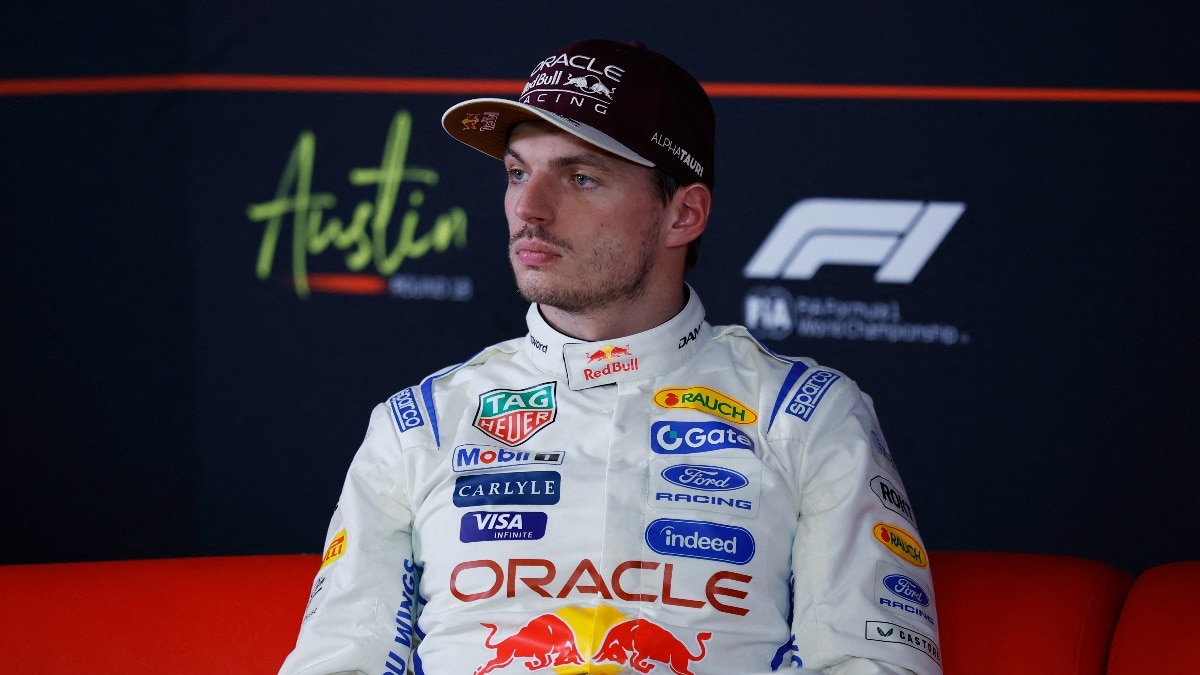
Max Verstappen has revealed worrying spinal damage after years of competing in Formula One, highlighting the physical toll of modern F1 cars. The Red Bull driver also raised concerns over the bumpy Circuit of the Americas and its impact on driver safety.Max Verstappen revealed he had sustained spinal damage after competing in F1.
Four-time Formula One world champion Max Verstappen has revealed the extent of the physical toll of competing at the highest level, saying medical examinations have uncovered concerning damage to the lower part of his spine after years of racing.The Red Bull driver raised the issue ahead of the United States Grand Prix at the Circuit of the Americas in Austin, where the track's bumpy surface has become a major concern for drivers. Verstappen explained that the forces generated by modern F1 cars, particularly when they hit uneven sections of the circuit, can place enormous stress on the body.The Dutchman also warned that continuing to accept such conditions could leave drivers dealing with more serious physical consequences in the future.SPINAL DAMAGE CONCERNSVerstappen highlighted the difference between the forces experienced while cornering and the vertical impacts drivers endure when their cars strike bumps in the track.
While cornering forces can reach around five to six times the force of gravity, the Dutchman said some impacts at Austin had subjected his spine to vertical loads exceeding nine times the force of gravity."Last year, for example, you pull around 5–6G in a corner. But I had some impacts, like vertical loads, which were over 9G on my spine, which I can tell you is really not fun," Verstappen said.
He added that the physical consequences become harder to ignore with age, particularly when medical checks begin to reveal the damage accumulated over years of competing."I can tell you from the checks I've had on my spine, the bottom end doesn't look that great," he said.Verstappen explained that the cars can hit the track particularly hard under braking, when changes in aerodynamic load and ride height make them more vulnerable to severe impacts over uneven surfaces.AUSTIN TRACK PROBLEMThe Circuit of the Americas has long been known for its challenging surface, with bumps proving difficult for drivers to avoid in several braking zones. Verstappen said the problem was not limited to ordinary wear and tear, pointing to movement in the soil beneath the circuit as a factor that makes some irregularities difficult to predict.The Red Bull driver acknowledged his appreciation for the Austin venue and its layout but argued that the condition of the track needed to be addressed more thoroughly.He suggested that cosmetic fixes would not be enough if the underlying ground was responsible for the problem, even if a more comprehensive solution required significant time and money.Verstappen's concerns also reflect a wider debate in F1 over the physical demands placed on drivers by modern machinery.DRIVERS RAISE ALARMThe introduction of ground-effect regulations in 2022 led teams to run their cars close to the ground, often with stiff suspension settings.
The resulting bouncing, known as porpoising, prompted complaints from drivers about discomfort and back pain, eventually leading to intervention from the FIA.Although F1 introduced a new set of technical regulations in 2026, Verstappen believes the physical consequences of the preceding years have not disappeared."I know that's part of racing. I know that can be part of sport, but it's also further damage from the cars we've had over the last few years," he said.Verstappen warned that drivers could face greater long-term consequences if the sport continues to treat such conditions as acceptable.McLaren's Lando Norris has also raised concerns about the Austin circuit, revealing that the bumps can cause headaches and force drivers' heads against their headrests.
Mercedes driver George Russell, meanwhile, has called attention to the need for more consistent track surfaces.For Verstappen, the issue goes beyond discomfort during a race weekend. His medical findings have underlined the potential long-term cost of the sport, strengthening his argument that driver safety must remain a priority as Formula One continues to evolve.- Ends