


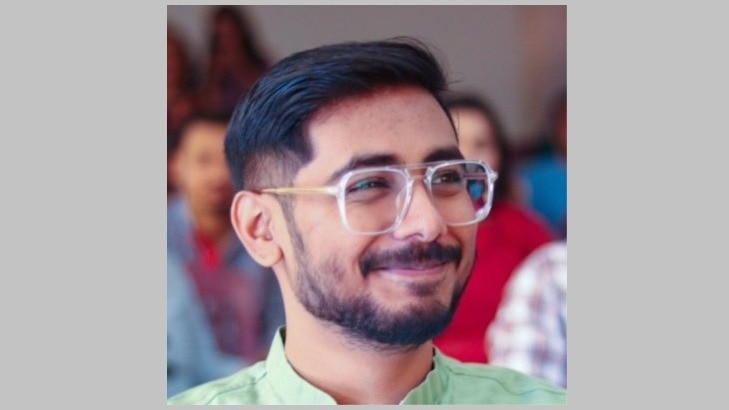
Jitesh Prasad's Udgam Labs released compact models for speech, reasoning, mathematics, images and conversation. Its transparent results examine whether useful artificial intelligence requires vast computing power and budgets.
There are individuals who enter technology by front door, with capital behind them and a company already waiting. Jitesh Prasad appears to have taken another road.He studied physics at the University of North Bengal and later went to IIM Lucknow for an MBA.
Somewhere between the two, the habit of asking how things work seems to have remained with him. Physics teaches one to distrust appearances.An MBA teaches one to think about scale, cost and execution.
Prasad has lately brought the two habits together in an unusual place: the making of small artificial intelligence models.His laboratory is Udgam Labs. It is not a large organisation.
Yet, in October 2026, it began producing work at a pace that made the size of the operation worth noticing. In a matter of days came models for speech, reasoning, mathematics, images and conversation, along with a public benchmark for comparing small models.
BEFORE THE MODELSThe interesting part of Prasad's story is not that he trained five models in a fortnight. It is the question of what brought him to the point where he could do so.A physics education is an unlikely preparation for the present fashion in artificial intelligence, but perhaps that is the point.
The discipline begins with first principles. One learns to measure before making a claim, and to accept an inconvenient result when the experiment gives one.
That temper can be seen in the work Prasad now publishes.Udgam does not present every experiment as a victory. One of its recent English models, for instance, missed its stated performance target.
The result was published nevertheless, together with the training material, evaluation and limitations.This is perhaps the more important thread in Prasad's work: not merely building models, but making the workings visible.THE SMALL QUESTIONHis recent releases have been built around a question that large AI companies rarely need to ask in quite the same way: what can be achieved when money and computing power are limited?Laghu, a 152-million-parameter chat model, was trained from scratch with a main run costing $146. The entire project came to about $194.
The training took 13 hours on eight A100 GPUs. The figures, code, checkpoints and evaluations were made public.Shruti approached the question differently.
The speech-to-text model is only 29.5 MB and was tested against Hindi, Hinglish and English speech.On the Hindi material used in the comparison, it recorded fewer errors than Whisper large-v3; on English, the larger model remained ahead. Prasad's own account does not hide that distinction.Then came Gargi, a 384-million-parameter language model trained on about 17 billion tokens.
Against Qwen2.5-0.5B, which used roughly 18 trillion tokens, Gargi came within two points on several reasoning tests. On knowledge tests, however, it fell well behind.
That result too remains in the record.There is a temptation, with work like this, to call it a challenge to the great laboratories. That would miss something.Prasad is not claiming to have beaten the largest machines at their own game.
He is asking whether useful AI must always begin with enormous machines, enormous datasets and enormous cheques.The answer, so far, is not yet settled.But a physics graduate, an MBA and a small laboratory have put the question in public view.Udgam's Hugging Face page now carries a growing family of models, while Prasad has also released a benchmark comparing 27 small language models under 400 million parameters. His own models are included, and they do not always come first.That may be the most revealing thing about the man behind them.- Ends