


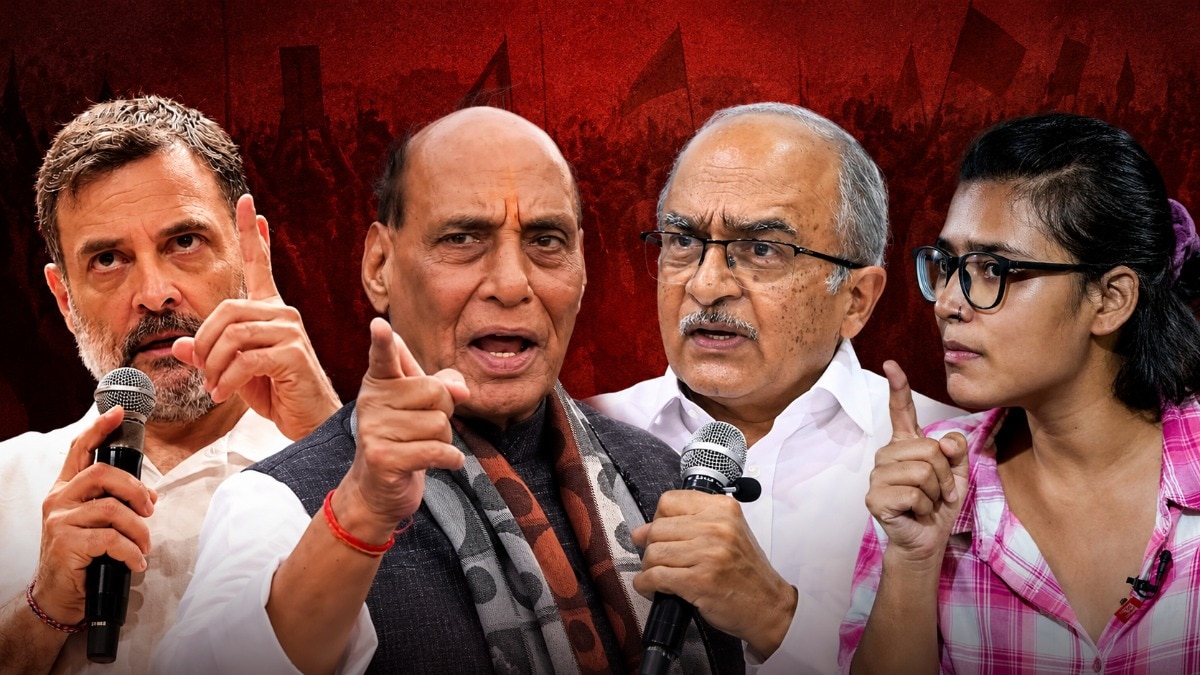
New Delhi: Talk of regime change has entered India's political discourse as protests over alleged electoral irregularities and demands for the removal of Chief Election Commissioner Gyanesh Kumar bring demonstrators to the streets of Delhi. The demonstrations, involving left-wing student groups, civil society organizations, and the Congress party's campaign against alleged vote theft, have prompted a scathing response from the ruling Bharatiya Janata Party.
The BJP has accused the Congress and its allies of misleading the youth and orchestrating anarchy to force a regime change, drawing parallels to the 2024 mass protests in Bangladesh that forced Prime Minister Sheikh Hasina out of power. The ruling party's concerns were intensified by public remarks from AISA chief Neha Bora, who praised the anti-Hasina movement in Bangladesh, and senior advocate Prashant Bhushan, who publicly endorsed the concept of regime change.
The controversy escalated following a press conference at the Press Club of India where Bhushan appeared alongside activists, student leaders, and political figures to address electoral disputes and police actions against protesters. Defending the right to dissent, Bhushan stated that pushing for a regime change is a democratic right of every citizen if government policies and actions warrant it. His remarks were swiftly seized upon by BJP leaders, including Defence Minister Rajnath Singh, who accused the opposition of encouraging street-level mobilizations similar to the events in neighboring Bangladesh.
The comparison to Bangladesh gained traction earlier when Neha Bora praised the youth-led movement in that country during a video message, remarking that Bangladesh had shown the way for revolutionary change. BJP spokespersons quickly shared the footage, labeling the statements as an open admission of intent to destabilize the democratically elected government in New Delhi.
Meanwhile, opposition figures have pushed back against the ruling party's allegations. Congress leaders defended their actions by asserting that seeking political change through democratic elections is a legitimate constitutional process, comparing current opposition movements to historical precedents. As police actions, electoral roll disputes, and street mobilizations continue, the political battle lines are sharply drawn between the government and its critics over the true intentions of the ongoing protests.