


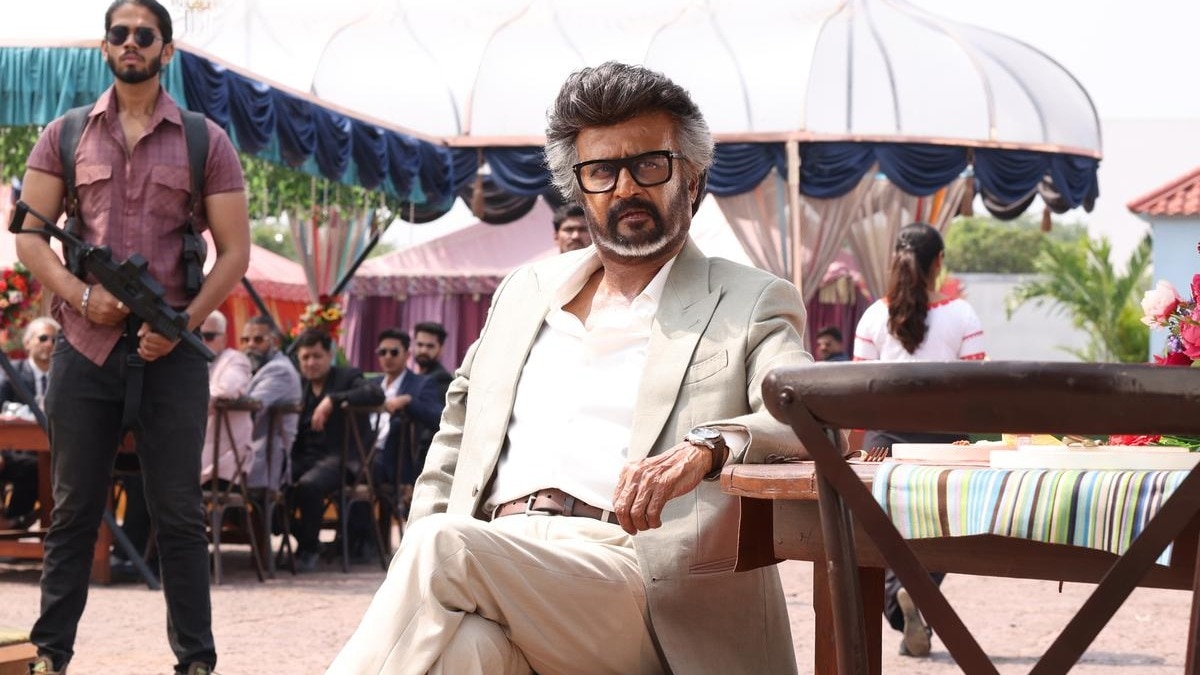
Noida: Arriving at a popular mall screening for a first-day-first-show of a Rajinikanth film highlights a cultural phenomenon where age becomes completely irrelevant. Even security checkpoints seeing families surrender outside food and drink items without a single protest to avoid missing the opening title card illustrate the unique pull of the veteran actor. Approaching his late seventies, Rajinikanth has spent half a century transforming himself from an actor into a living myth who commands entire theatres without needing to exert physical force.
Director Nelson Dilipkumar has leaned heavily into this reality, crafting an action sequel where the superstar throws almost no punches yet still manages to bring the house down. In Jailer 2, Tiger Muthuvel Pandian, now going by the name Muthu, is lying low after the events of the first film. Working quietly at a supermarket while hunting down an idol-smuggling network, his trail leads him to a pompous local councillor and fruit shop owner named Moorthy, whose inflated sense of importance sets up an absurd dynamic.
Muthu takes on the role of Moorthy's driver, eventually confronting a group of middlemen on a bridge to warn them out of town. When the thugs laugh off the unknown councillor and draw their sickles, hidden snipers quickly neutralize the threat. Rather than engaging in a brutal hand-to-hand brawl, Muthu simply removes his spectacles and looks toward the camera, setting off a sequence where missiles obliterate the opponents' vehicles. Backed by Anirudh's booming background score, Muthu walks away in slow motion without ever raising his voice or throwing a single punch.
The first half of the film thrives on this minimalist approach, casting the hero as a humble driver washing cars and buying tea while local doubters remain unaware of his true identity. Rather than featuring exhausting sequences of a hundred henchmen being beaten at once, the narrative builds tension through character dynamics and deliberate pacing, culminating in payoffs that rely purely on screen presence and swagger. The pre-interval stretch features Rajinikanth standing tall and delivering dialogue while villains tremble in fear.
The second half offers nostalgic nods to past classics, serving up a treat for longtime worshippers of the actor with sequences that evoke memories of his iconic past performances. This minimalist framework succeeds precisely because Rajinikanth spent decades earning his status. Entering Tamil cinema in the 1970s as an outsider, he had to make himself impossible to ignore through distinctive mannerisms, signature cigarette tricks, and a commanding screen language that eventually turned him into an enduring cinematic institution.