


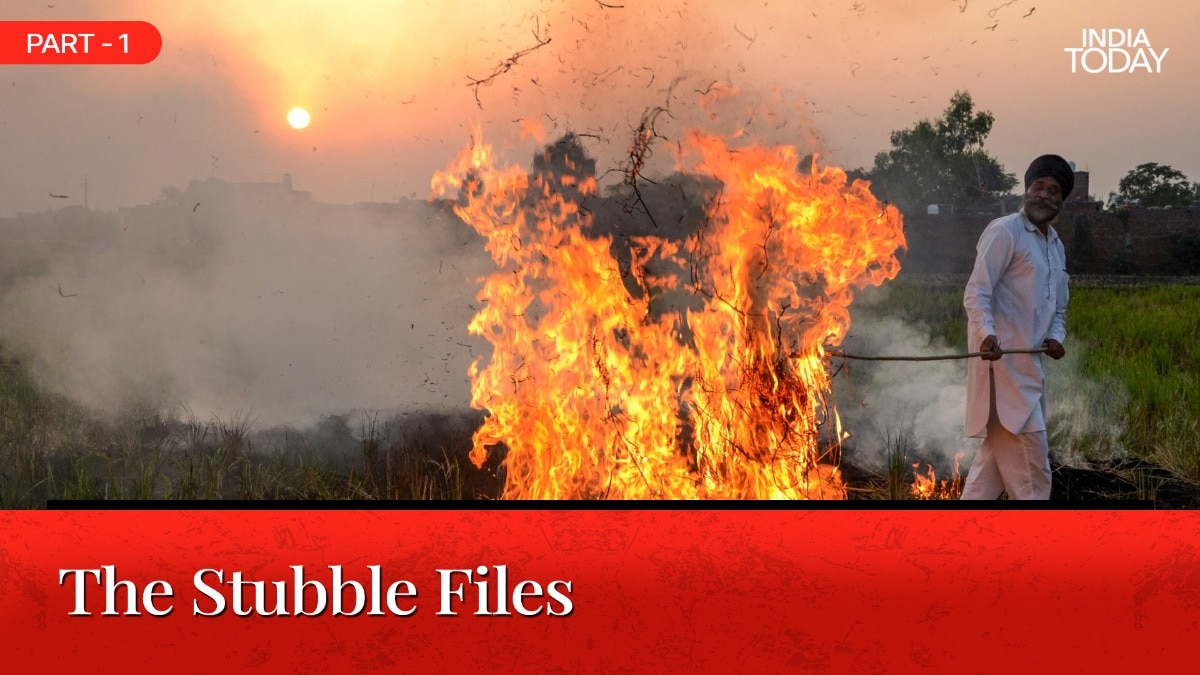
Every October, as the monsoon retreats and the light turns amber, north India's fields keep an old appointment with fire. It begins at dusk with a single orange thread, then another, stitched across the dark horizon like the first stars of a constellation. By morning, the threads have become a veil that drifts towards cities bracing for winter. While public discourse often reduces the issue to a simple choice made by the farmer, the reality is far more tangled.
Stubble is what remains in a paddy field after the grain has been cut: stiff, dry stalks standing a foot or more tall, along with loose straw. Paddy is the main monsoon-season crop of north India, and burning the stalks has historically been the quickest way to clear the field for the subsequent crop. Satellite monitoring groups at the Indian Agricultural Research Institute have already counted hundreds of paddy residue fires in the early weeks of the season, with regions like Madhya Pradesh, Punjab, and Uttar Pradesh seeing active burning. Experts note that shifting crop patterns, driven by extreme weather, are expanding the geography of these fires.
There was a time when fields cleared themselves naturally. Farmers cut paddy by hand close to the root, carrying it to threshing floors where the grain was separated. The straw became cattle fodder, and remaining organic matter was ploughed into the earth with nearly two months of breathing room between harvests. However, the introduction of the combine harvester in the mid-1990s fundamentally changed this cycle. While the machine reaps and threshes in a single hour an acre, it leaves about a foot of stalk behind that must be dealt with.
Faced with these leftover stalks, a farmer essentially has three options. They can clear the land by hand and retain the straw for animals, which requires minimal financial investment but demands immense time and labor. They can purchase or hire specialized machinery that chops the straw and sows wheat directly through it, saving time at a high cost. Or they can light a match, which is both fast and virtually free. Advanced equipment can cost between Rs 1.5 lakh and Rs 2.5 lakh, with heavy-duty tractors adding significantly to the expense, putting such technology out of reach for smallholders who manage just a few acres.
The broader structural challenge, however, is time. Following the Green Revolution of the 1960s, Punjab and Haryana became major grain producers, leading to intensive paddy cultivation that severely depleted local water tables. To combat this, the Punjab Preservation of Subsoil Water Act of 2009 prohibited farmers from sowing paddy nurseries or transplanting seedlings before specified dates to prevent early groundwater depletion. While this policy successfully preserved aquifers, it pushed the harvest schedule later into the year.
Paddy now comes off the fields toward the end of October, while winter wheat needs to be in the soil by mid-November. This leaves a punishing window of barely 25 days for harvesting, field clearing, and resowing. Wheat planted too late risks encountering early spring warmth that leaves grains half-filled. With India generating tens of millions of tonnes of paddy straw annually, experts note that a massive portion goes up in smoke simply because farmers lack viable economic alternatives to meet their strict planting deadlines.
Natural decomposition of the straw is similarly constrained by soil science. Paddy straw breaks down slowly due to resistant lignin and silica, a high carbon-to-nitrogen ratio, insufficient moisture, and low temperatures during the transition months. Because burning raises soil temperatures and harms the microbes that naturally recycle organic matter, the agricultural ecosystem finds itself trapped in a recurring cycle of tight schedules, high machinery costs, and annual autumn fires.