


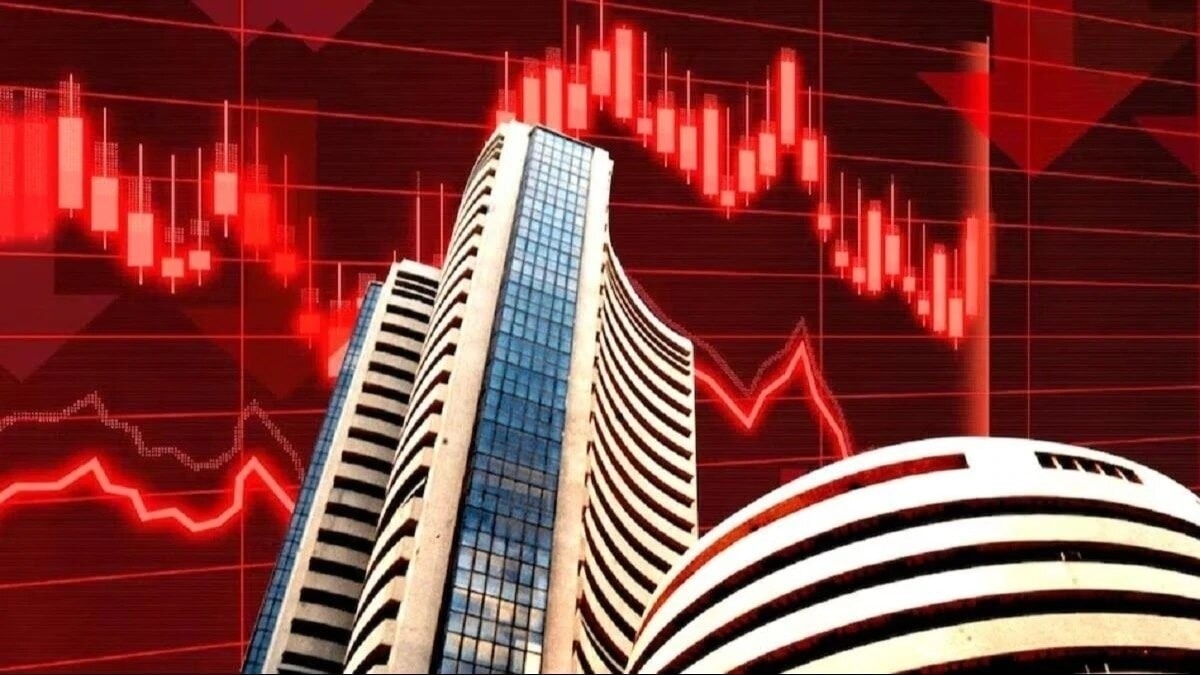
Indian equities turned sharply lower during the afternoon trading session as benchmark indices fell more than 1% on Monday. The BSE Sensex tumbled nearly 930 points due to a heavy sell-off in private sector banking stocks, led by heavyweights such as Axis Bank and HDFC Bank. Investor sentiment remained cautious following the release of September-quarter financial results from major lenders, while elevated crude oil prices amid geopolitical tensions near the Strait of Hormuz amplified worries surrounding inflation and foreign institutional capital flows.
At midday, the BSE Sensex traded down 929.19 points, or 1.24%, at 73,800.08. Simultaneously, the NSE Nifty 50 declined 275.05 points, or 1.19%, bringing the index down to 22,871.10. The sharp downturn followed a strong rally by Indian equities during the previous week, but Monday's losses demonstrated that market participants remain wary regarding bank margins, high oil prices, and the ultimate durability of foreign portfolio inflows.
Private sector banks emerged as the primary drag on the broader market as investors dissected the latest quarterly disclosures. Axis Bank shares dropped 4.15%, and HDFC Bank declined 2.72%. Additional losses were recorded by Yes Bank, which fell 2.63%, Kotak Mahindra Bank, down 1.87%, and Bandhan Bank, slipping 1.34%. Other financial entities such as ICICI Bank, Bajaj Finance, and Bajaj Finserv also traded lower.
HDFC Bank reported a 4.7% year-on-year increase in its September-quarter net profit, reaching Rs 19,510 crore. However, this growth was partially tempered by lower other income, higher operating expenses, and increased provisions, which caused its net interest margin to narrow. Axis Bank reported a standalone net profit that fell slightly short of analyst projections, impacted by higher operating costs and weaker non-interest income. These results underscored a broader market focus on margins, asset quality, and operational expenses rather than headline profit figures alone.
Foreign institutional investors continued to draw scrutiny regarding capital flows. While data showed FIIs made net purchases in the cash market ahead of the weekend, prior sessions experienced substantial net selling. Market observers noted that intermittent buying does not necessarily indicate a definitive reversal of the persistent selling trend seen across Indian equities through much of the year. Domestic institutional investors also showed fluctuating activity across recent sessions, reflecting broader institutional volatility.
Crude oil prices presented an additional macroeconomic headwind for the market. Brent crude hovered above $107 a barrel, while US West Texas Intermediate traded near $99.58. Escalating tensions around the Strait of Hormuz intensified fears of supply disruptions and higher costs. For an energy-importing nation like India, sustained high crude prices threaten to expand the import bill, weaken the rupee, compress corporate margins, and complicate the domestic inflation trajectory.
The downward pressure extended beyond major benchmarks to affect the broader market. Indices tracking mid-cap, small-cap, and various sectoral segments recorded widespread losses, with private banking, financial services, FMCG, and IT indices trading firmly in the red. Conversely, public sector banks managed to buck the broader market trend with modest gains, while market volatility gauges ticked upward.
Market analysts suggest that while corporate earnings and attractive valuations offer some underlying resilience, external pressures such as geopolitical risks and elevated energy prices will continue to act as significant headwinds. Investors are expected to monitor incoming corporate results, bank margin trajectories, and the consistency of foreign capital flows closely in the upcoming sessions.