


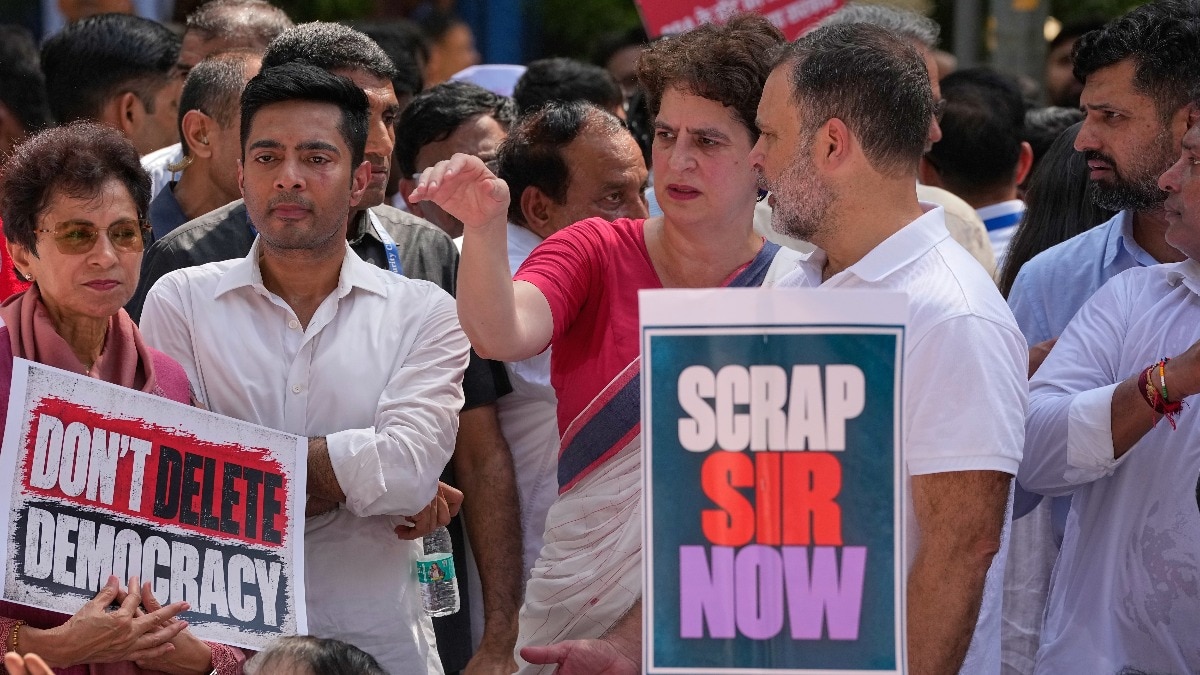
Amid massive protests over its Special Intensive Revision exercise, the Election Commission has altered its stance on two key issues that previously drew intense opposition criticism. Over the course of 24 hours, the election authority announced a Special Summary Revision of electoral rolls across 17 states and Union Territories to enroll new voters, alongside a commitment to provide political parties with readable PDF copies of the final electoral lists, reversing its long-held policy.
Both matters have been repeatedly raised by opposition parties, particularly the Congress, in recent years. The decision to provide machine-readable voter lists drew the most attention, given that the poll body had previously resisted the move due to privacy concerns after the Congress approached the Supreme Court in 2018. The timing of the announcement coincides with intensifying demonstrations against the poll panel and Chief Election Commissioner Gyanesh Kumar over alleged irregularities in the intensive revision process, which led to the removal of over 13 million voters and widespread disruption.
Because of the intensive revision, the Election Commission had previously paused the standard summary revision mechanism through which newly eligible citizens, including those turning 18, are registered. This delay prevented Gen Z voters from signing up since the 2024-2025 revision cycle, sparking public outcry. Unlike the exhaustive intensive revision that requires citizenship documents or mapping to previous rolls, the summary revision is a routine annual procedure used to update lists and add new voters without requiring historical data mapping.
Reports indicated that internal disagreements had also surfaced within the poll panel, with election commissioners urging the Chief Election Commissioner to resume the annual cycle to ensure newly eligible citizens were not left out. The Election Commission is now returning to this annual schedule, with special drives and summary revisions planned for 17 states and Union Territories, including the poll-bound regions of Uttarakhand, Uttar Pradesh, and Punjab. However, this new round does not automatically restore the millions of names previously purged during the intensive revision.
The announcement drew sharp criticism from opposition leaders such as Congress lawmaker P. Chidambaram, who questioned the double expenditure involved in removing names only to conduct a subsequent inclusion exercise. Meanwhile, the second major policy shift involves supplying all political parties with searchable, readable PDF formats of draft and final electoral rolls for every polling station, accompanied by lists of additions, deletions, and modifications.
Previously, the election authority only furnished scanned, image-only PDFs that prevented text searching or copying. The Congress first sought searchable lists in 2018 ahead of Madhya Pradesh elections, a request opposed by the poll body at the time on data privacy and data mining grounds, a position initially upheld by the Supreme Court. The demand was revived in 2025 by opposition leaders who accused the commission of deliberately withholding searchable formats to obscure duplicate or fraudulent entries. Despite past resistance, the commission has now reversed its approach amid ongoing criticism, prompting further questions from political opponents regarding the factors behind the sudden policy shift.