


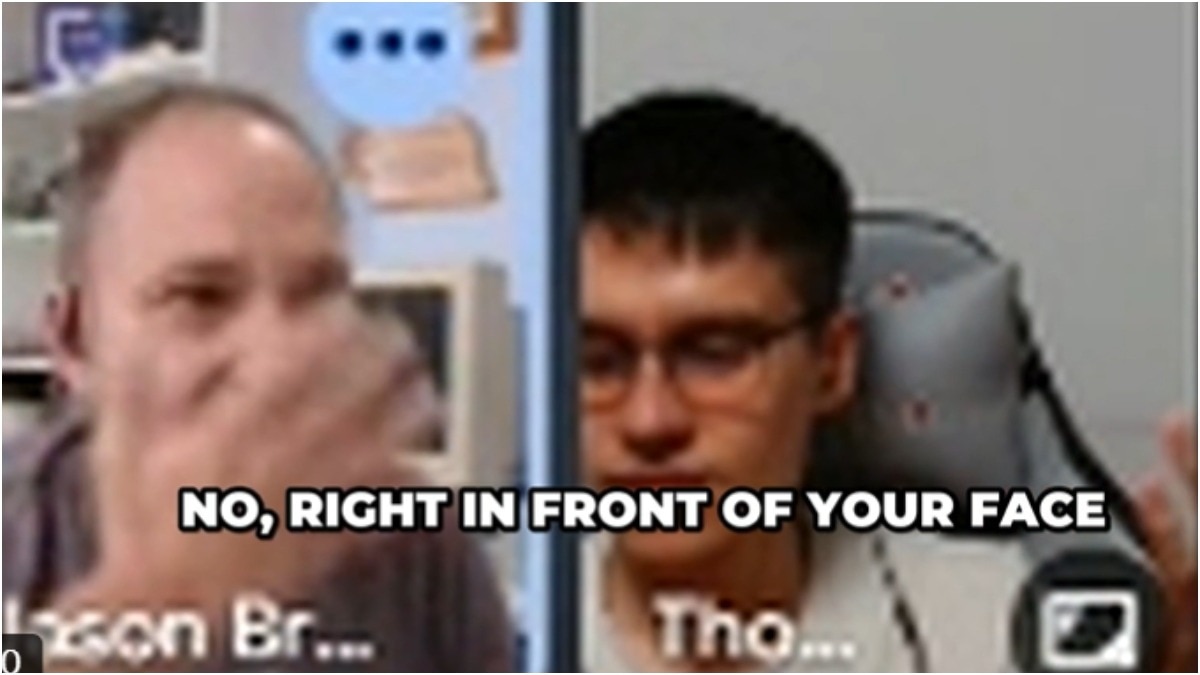
New Delhi: Remote job interviews may have a new complication as hiring professionals encounter candidates who might not be showing their real faces. A recruiter based out of Michigan in the United States, named Jason, said he encountered what he believed was a live face filter during an interview after noticing strange distortions around the candidate's face. To confirm his suspicions, he resorted to invoking WWE star John Cena's iconic move.
Jason shared a recording of the interaction on social media, describing it as the first time he had interviewed a deepfake candidate. The video quickly generated widespread attention, sparking broader discussions about the growing challenges of verifying identities during remote hiring processes.
Recounting the incident, Jason explained that a colleague was the first to spot something unusual about the applicant's appearance. The coworker noticed that the candidate's glasses looked incorrect and that there was a second ghost frame smeared across his cheeks, indicating he had been running a live face filter throughout the conversation.
The digital artifacts prompted Jason to test his suspicions in real time. During the meeting, he asked the candidate to wave his hand in front of his face, demonstrating the gesture himself while referencing the famous John Cena routine. However, the candidate held his hand beside his face rather than directly in front of it. When Jason repeated the request, the applicant still failed to perform the movement as instructed.
Further adding to the recruiter's doubts, the individual looked somewhat different from the photographs displayed on his LinkedIn and GitHub profiles. Jason chose not to share the applicant's profile links publicly.
Reflecting on the experience, Jason noted that hiring and interviewing have become increasingly complicated. He suggested that the rise of artificial intelligence could force recruiters to exercise greater caution and potentially return to in-person interviews to accurately verify applicants' identities.
The bizarre episode drew hundreds of thousands of views and created a significant online buzz. While some users urged the recruiter to publicly identify the candidate, the individual's details were kept private, underscoring a broader modern concern for recruiters navigating remote hiring environments and attempting to distinguish genuine applicants from those using digital disguise tools.