


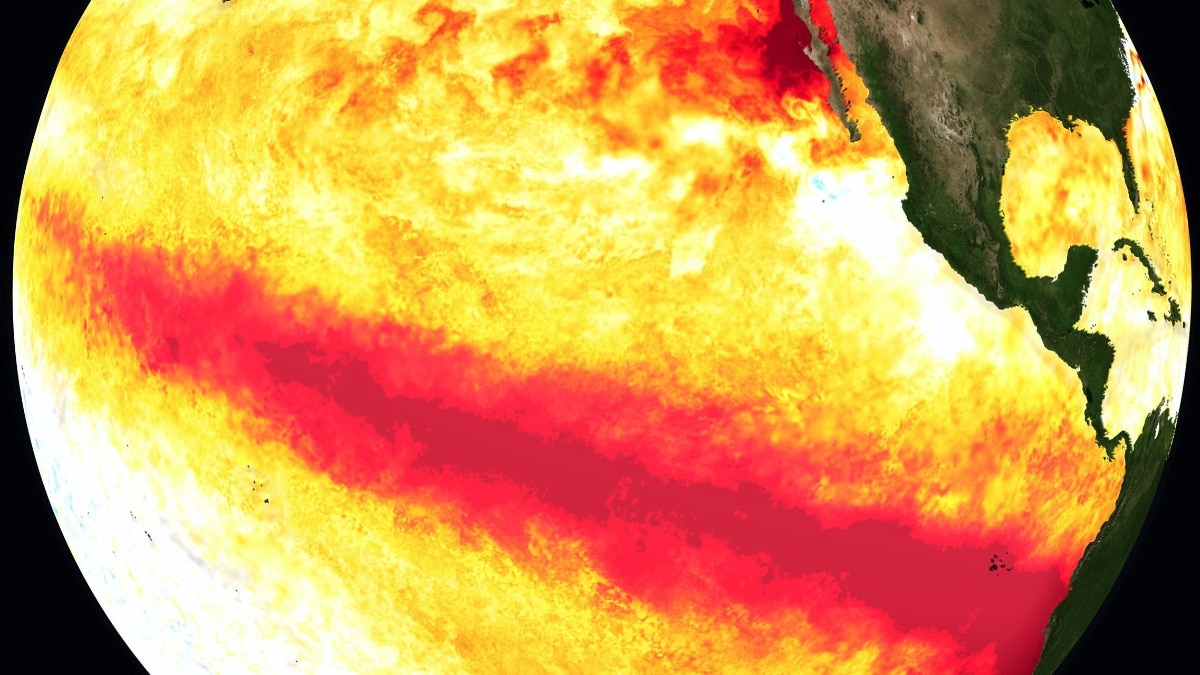
The Pacific Ocean has crossed a major temperature threshold as an unusually strong El Nino continues to intensify, raising concerns about its impact on weather patterns across the world, including India.
On October 22, 2026, sea surface temperatures in the central equatorial Pacific, the region scientists closely monitor to track El Nino, reached around 30°C, according to data from the US National Oceanic and Atmospheric Administration. This milestone crosses a mark not seen in available records as the climate event continues to strengthen, threatening to ripple into the next year.
The World Meteorological Organisation has noted that temperatures across the central and eastern tropical Pacific are expected to reach record levels during the October to December period, with El Nino likely to peak around December.
El Nino is a natural climate pattern in which surface waters across the central and eastern tropical Pacific become unusually warm. This warming affects winds and the movement of rain clouds, changing weather patterns far beyond the ocean itself. The current event, however, is particularly strong.
According to the WMO, the average sea surface temperature anomaly in the region known as Nino 3.4 rose from 1.6°C above normal in June to 2.5°C in August. Forecasts suggest it could reach around 3.7°C above normal during October through December, exceeding the previous record of 2.6°C recorded during November 2015 to January 2016. These figures measure how much warmer the ocean is than its long-term average, rather than its actual temperature.
For India, the developing El Nino brings concerns over rainfall and rising temperatures. The southwest monsoon ended with rainfall about 13% below normal in 2026, according to the India Meteorological Department. The WMO's October outlook also points to above-normal temperatures across much of South Asia during the coming months.
Rainfall prospects vary across the region, with below-normal precipitation more likely over much of central and southern peninsular South Asia during the final quarter of the year. El Nino does not determine India's weather on its own, as other climate patterns and local conditions also influence rainfall and temperatures. However, unusually warm Pacific waters can increase the risk of disruptive weather, including heat and shifts in rainfall.
With the event expected to remain strong into early 2027, scientists will continue monitoring the Pacific for clues about how its effects may unfold over the coming months.