


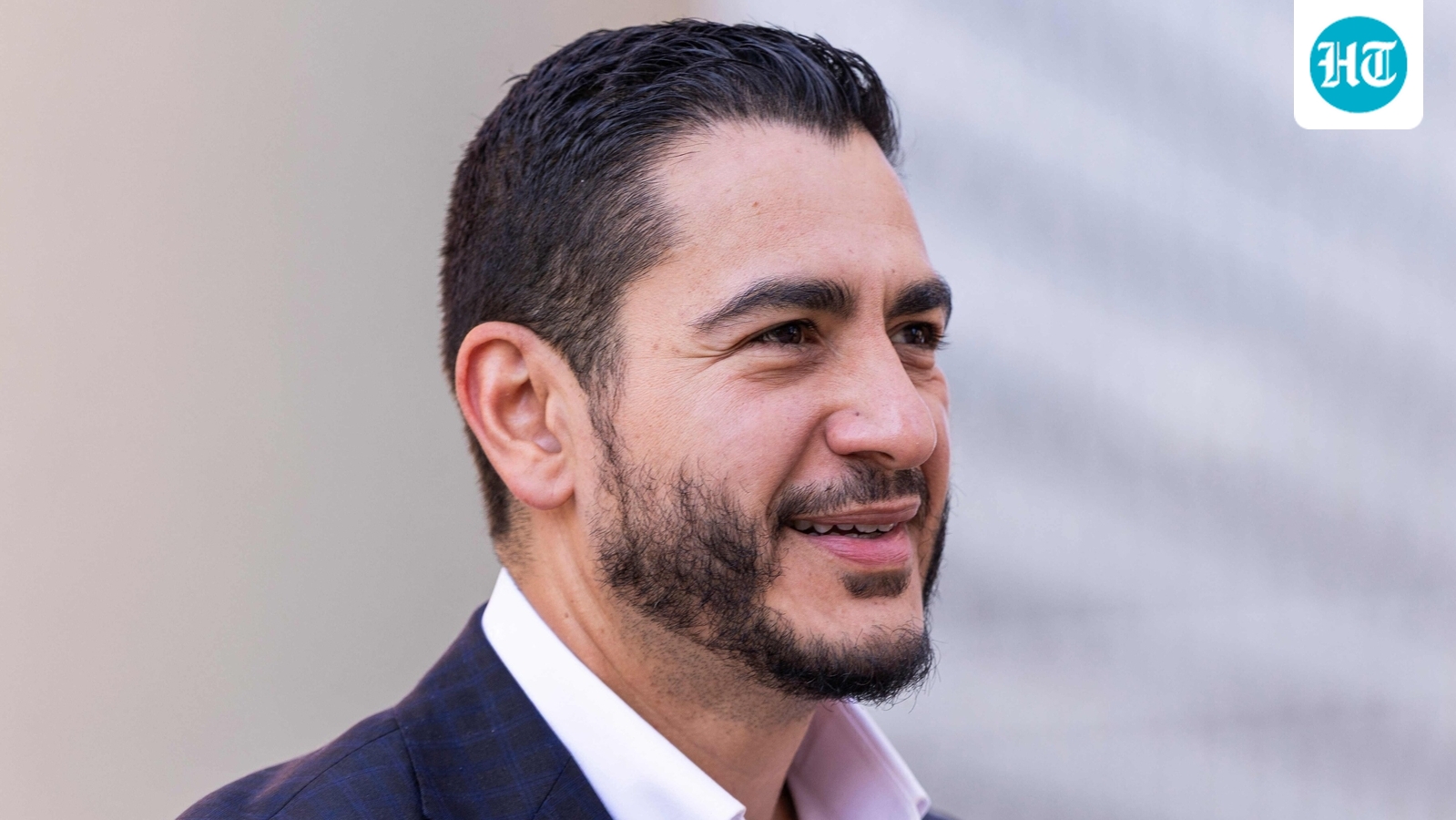
Abdul El-Sayed is running as a Democratic nominee in Michigan’s US Senate election where he will be competing against Republican Mike Rogers for an open seat. El-Sayed won the Democratic primary in August, defeating US Representative Haley Stevens and securing the nomination with support from progressive leaders, including Bernie Sanders.
His campaign has focused on healthcare affordability, Medicare for All and campaign finance reform.Abdul El-Sayed ran for Michigan governor in 2018. (Getty Images via AFP)El-Sayed entered electoral politics in 2018 where he ran for the governor of Michigan. He lost the primary to Gretchen Whitmer by roughly 21% votes.
In 2025, he launched his campaign for the US Senate after Democratic Senator Gary Peters announced he would not seek re-election. If elected, El-Sayed would become the first Muslim ever to serve in the US Senate.El-Sayed's life before politicsAbdulrahman Mohamed El-Sayed was born on October 31, 1984, in Rochester Hills, Michigan.
His parents were Egyptian immigrants. His father, Mohamed El-Sayed, moved to the US to pursue higher education at Wayne State University, while his biological mother, Fatten Elkomy, works as a psychiatric nurse practitioner.
His parents separated when he was three. He was raised by his father and stepmother Jacqueline Johnson in the Detroit area.El-Sayed attended Bloomfield Hills Andover High School and graduated from the University of Michigan in 2007 with a degree in biology and political science.
He received a Rhodes Scholarship to study at the University of Oxford where he completed a doctorate in public health in 2011. He later earned his medical degree from Columbia University in 2014.
El-Sayed is married to Indian American psychiatrist Sarah Jukaku whom he met while studying at the University of Michigan. They live in Ann Arbor, Michigan, with their two daughters named Emmalee and Serene.Also Read | America's $10 trillion AI data centre boom faces delays, rising costs and investor concernsMajor issues and policiesEl-Sayed supports a Medicare for All system that would provide universal healthcare coverage.
He has advocated for reducing medical costs, expanding access to prescription drugs and limiting the influence of private insurance companies. As Wayne County’s health department director, he also helped launch a program aimed at eliminating up to $700 million in medical debt for approximately 300,000 residents.
In addition to it, he supports expanding access to affordable housing and homeownership, including increasing assistance for first-time homebuyers and improving access to housing programs for low-income families.El-Sayed has criticized US military support for Israel and called for an end to the military aid. He has described Israel’s actions in Gaza as genocide and called for US foreign policy to prioritize diplomacy and human rights.
Additionally, he also advocated for making higher education more affordable, improving school infrastructure and expanding access to nutritious school meals. As per his campaign website, he has pledged to build a government that works for the citizens, “not Elon Musk, Donald Trump, or their billionaire friends”.El-Sayed on immigration, jobs, trade and tariffsEl-Sayed supports abolishing Immigration and Customs Enforcement (ICE) and advocates for laws that protect human dignity.
In an interview he can be heard saying, “we owe it to the world to open our doors”. He has argued that immigration enforcement should operate within the rule of law and provide a fair process for migrants.
Republican nominee Mike Rogers has criticized El-Sayed’s immigration policies, accusing him of supporting open borders. He linked El-Sayed’s remarks about opening US borders to the 2024 killing of Ruby Garcia and described his policies as “too extreme”.El-Sayed has made workers’ rights and higher wages a key part of his campaign.
He supports raising the minimum wage, strengthening collective bargaining rights and passing the Protecting the Right to Organize (PRO) Act, which would expand protections for workers seeking to form unions. His campaign has received endorsements from major labor organizations, including the United Auto Workers (UAW), Michigan AFL-CIO and several other unions representing healthcare, construction and public sector workers.El-Sayed has heavily criticized President Donald Trump’s tariff policies, arguing that the tariffs on Canada have impacted Michigan’s automotive industry.
He called for ending the tariff war with Canada, citing that tariffs should protect and strengthen domestic industries rather than raising costs for businesses and consumers. El-Sayed even criticized some trade agreements made in the past, including the North American Free Trade Agreement (NAFTA), arguing that they contributed to job losses and factory closures in Michigan.On Iran war and AI technologyEl-Sayed has called for an end to the war with Iran, calling it “illegal, unjustifiable, wrong” and argued that the US should pursue diplomacy instead of military intervention.
During an October 2026 debate with Republican Senate candidate Mike Rogers, El-Sayed argued that the war has led to rising gasoline prices and economic uncertainty. He criticized the Trump administration’s decision to enter the conflict and questioned whether the war had made Americans safer.Moreover, El-Sayed has advocated that the development of artificial intelligence should serve the public interest rather than benefiting technology companies and wealthy investors.
To make this happen, he introduced a plan called “AI Under Democracy” in June 2026, which puts the general public in charge of tech companies, creates independent safety groups to watch over them and bans AI from spying on citizens. His campaign has linked the rapid expansion of AI and data centers to concerns about electricity costs, environmental impacts and potential effects on workers.Also Read | El-Sayed tries to sell himself as mainstream to Michigan votersMajor controversies and disputesIn May 2026, El-Sayed faced criticism over his use of the title “physician” during his Senate campaign.
Reports highlighted that he had earned a medical degree from Columbia University but had not completed a residency or obtained a state medical license. Rogers challenged El-Sayed saying, “he’s not really a doctor”.
El-Sayed defended his credentials by pointing to his medical degree, and explained that he chose a career in public health rather than clinical practice.Another significant case involved El-Sayed being questioned about the Muslim Brotherhood during a town hall in Caro, Michigan, on October 17. An attendee asked him, “will you disavow the Muslim Brotherhood?” El-Sayed replied, “sure, yeah, absolutely.” He then questioned why his Muslim faith was being linked to questions about his loyalty to the US Constitution. “I’m not running to be a Muslim senator.
I’m running for the US Senate and happen to be Muslim”, he said. Republican opponent Mike Rogers criticized his response, saying, “he didn’t disavow it”, and called El-Sayed’s explanation “word salad”.
El-Sayed later said he had “clearly condemned” the organization.Personal wealth and moreAccording to his financial disclosures reviewed by Fox News, Abdul El-Sayed’s estimated household net worth ranged between $870,000 and $2.1 million, including assets held jointly with his wife, Sarah Jukaku. The disclosures listed rental properties in Ann Arbor, Michigan, Bangalore and Dubai, along with a liability to a Dubai based real estate developer.The 2026 Senate election marks an important moment in El-Sayed’s political career as he seeks to represent Michigan in Washington.
His campaign has focused on healthcare reform, workers’ rights and the cost of living. As he faces Republican nominee Mike Rogers, his policies and political record remain central to his campaign.-By Tanisha Sharma