


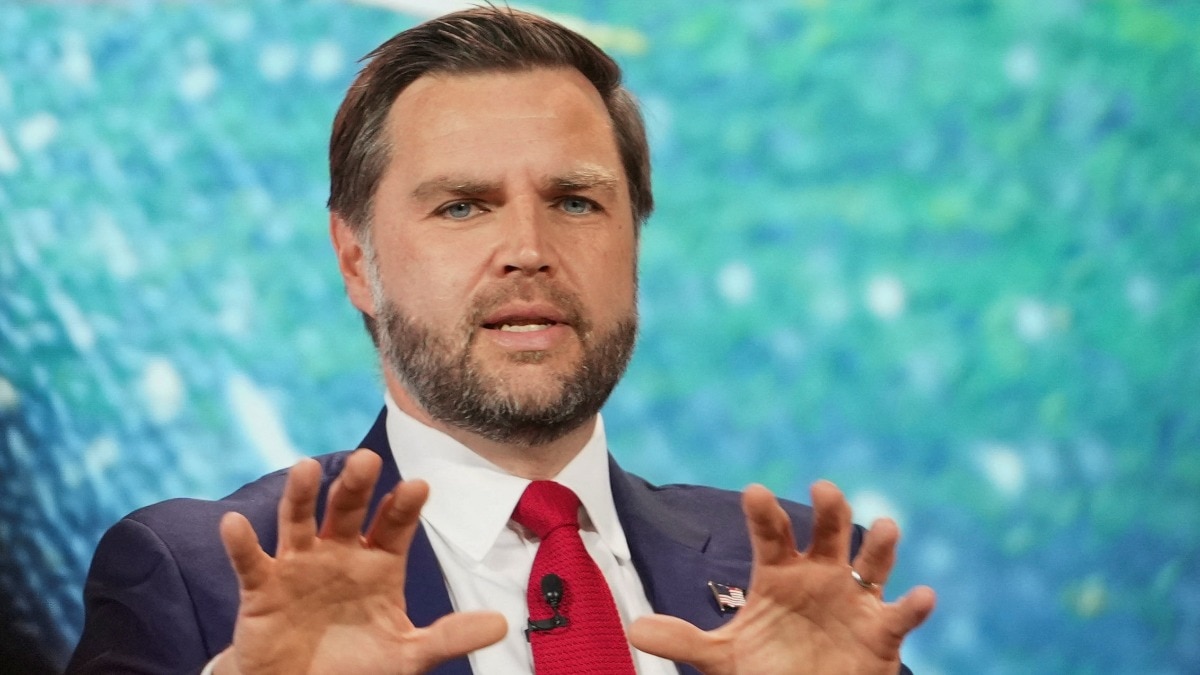
New Delhi: US Vice-President JD Vance has invoked his South Indian in-laws while clarifying his "indentured servants" remark on foreign workers, days after India condemned it as "unwarranted and deeply offensive". He also defended his immigration stance, calling for a balance between welcoming skilled immigrants and protecting American jobs.
Vance's remarks come amid a row over the Donald Trump administration's restrictions on green card-related filings by several major companies, including Indian IT firms. Acknowledging that his rhetoric may have been imperfect, Vance defended his position on immigration, saying the United States needed to strike a balance between welcoming foreign workers and protecting the interests of American employees.
He stated that he loves his mother-in-law and father-in-law who immigrated from South India, noting that their daughter, the second lady, was born in the United States and that he is very proud of her. The controversy has put the spotlight on the role of Indian professionals in the US workforce and Washington's push to prioritise domestic workers.
Earlier, Vance had urged American companies to hire more domestic workers, asking them to stop importing indentured servants to do jobs that Americans would happily do. The Trump administration subsequently suspended several companies, including Microsoft, Cognizant, Infosys, Tata Consultancy Services, Wipro, HCL and Capgemini, from the Permanent Labour Certification programme, which initiates the employment-based green card process.
The Vice President's initial choice of words drew criticism for historical implications regarding contract-bound workers who endured exploitative conditions. The term carries particular weight in India due to the historical dispatch of hundreds of thousands of Indians to British colonies during the 19th and early 20th centuries.
Explaining his stance further, Vance argued that the system must avoid situations where corporations replace an existing payroll employee with a foreign worker under the guise of labour shortages. He emphasized that his goal is to maintain a baseline of social cohesion and community, expressing the view that citizens desire neighborhoods sharing common cultural bonds without necessarily criticizing anyone involved.
India had previously criticized the description of foreign professionals as unwarranted, stating it ignored their significant contributions to the US economy and innovation ecosystem. New Delhi also raised concerns regarding the freeze on green card filings, arguing the restrictions counter shared bilateral ambitions.