


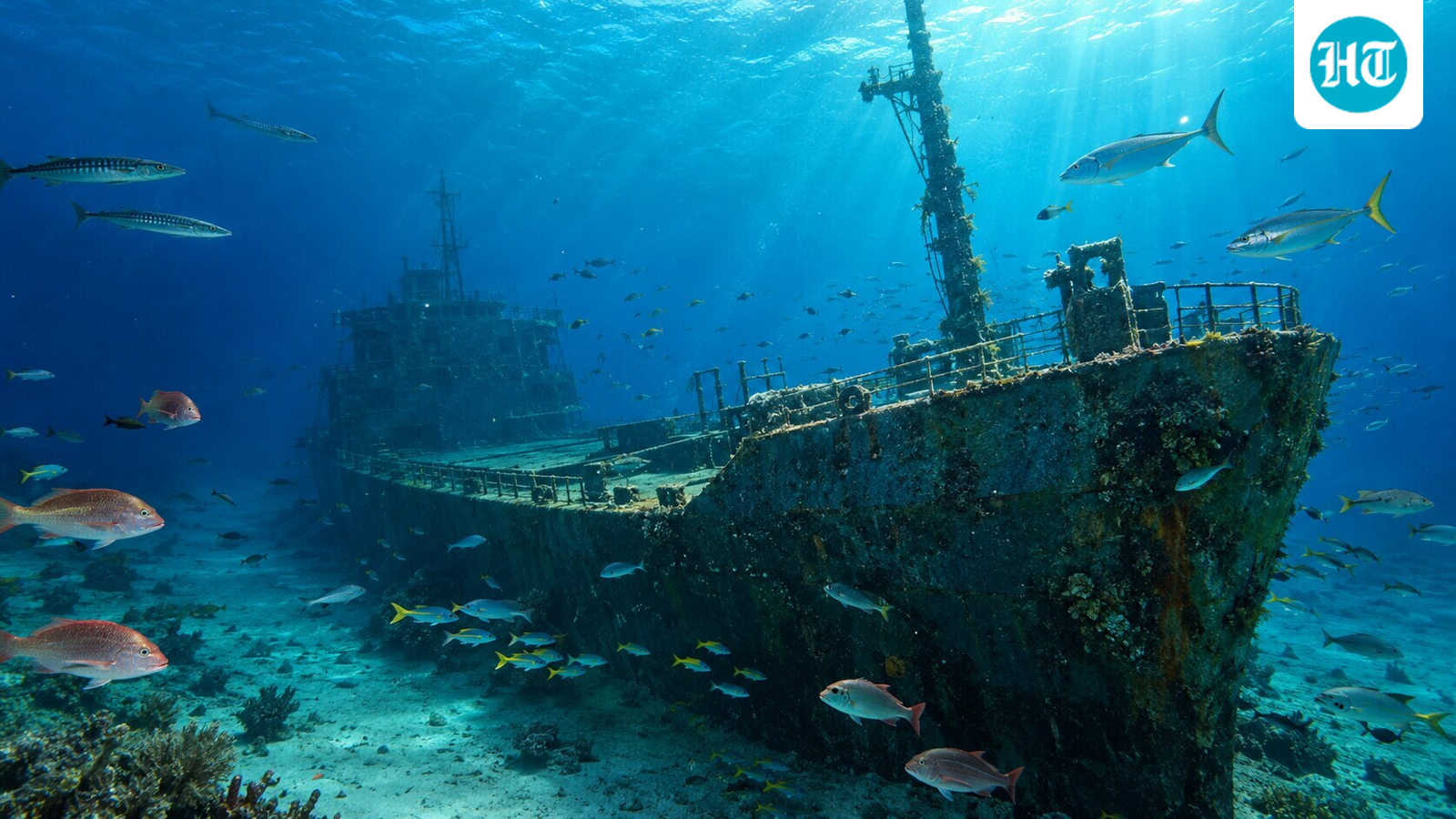
That was the plan. According to a Texas Parks and Wildlife Department news release, the vessel was deliberately sunk 67 miles off the coast of Galveston by the department's Artificial Reef Program.
The ship was called the Kraken, after the mythical squid-like sea monster popularized in film and literature. The idea was simple: give a retired ship a new life as a home for marine life.Where an old cargo ship now serves as a home for sea life in the Gulf. (AI-generated/ChatGPT)A long trip and a careful cleanupThe story of the Kraken started in May 2016.
The ship was towed from Trinidad to Brownsville, Texas, where it was prepared to become a reef. But before that could happen, it had to be cleaned.
Cahaba Disaster Recovery LLC contractors worked with the reef program to take out all fuel, oil, and hazardous materials. They followed the Environmental Protection Agency’s best management practices.
This step was essential. A ship cannot help the ocean if it leaks pollutants into it.
It was only after the cleanup that the vessel was ready to be sunk in the Gulf, where it now rests at a depth of about 140 feet.Why the Gulf needs more reefsSinking a ship to help nature might sound strange, but program leader J. Dale Shively explained the reason.
He said the Gulf has only a few naturally occurring reefs. Each new structure, like the Kraken, adds habitat and can support more species in the area.
He added that the entire marine ecosystem gains from projects like this.Red snapper were the focus of a 2012 study on how artificial reefs and fish age are linked. (Wikimedia Commons)In time, the sunken ship is expected to attract fish and other marine life, including invertebrates and coral, as well as divers and anglers. A reef doesn’t just happen overnight.
Marine life must first find the wreck and then settle in. The Kraken is also in the same region of the Gulf as the Flower Garden Banks National Marine Sanctuary, another top dive spot in the Gulf, and the department says this adds to the wreck’s appeal for divers.What science says about reefs like thisScientists have long debated one big question: do artificial reefs produce more fish, or do they just attract fish that are already there?
A 2012 study in Fishery Bulletin by Syc and Szedlmayer looked at red snapper on artificial reefs off Alabama. The northern Gulf is mostly mud and sand with few natural reefs, researchers pointed out.
They compared the age of red snapper to the age of the reefs they lived on. Reefs were deployed in 2006, 2009, and 2010.
Fish living on older reefs tended to be older. The authors say this lends support to the idea that artificial reefs increase red snapper production.
They also say that attraction is easier to prove than production. So the debate is not closed.
This study did not look at the Kraken, but it provides background on how reefs can work.Who paid for the project?The sinking was part of the Ships-to-Reefs program. It was funded by donations and Deepwater Horizon oil spill natural resource damage settlement funds.
The money came from a number of natural resource trustee agencies in Texas. These include the Texas Parks and Wildlife Department, the Texas Commission on Environmental Quality, and the Texas General Land Office.
The department also posted a video of the sinking on its YouTube page.For divers and anglers, the Kraken offers a new site to explore. For everyone else, it’s a reminder that old things can be given new purpose.
One ship is not going to solve all the problems in the Gulf. But it does show how a retired vessel, with careful clean-up and smart planning, can become a useful habitat.The Hindustan Times US Desk brings you the latest news and developments from across the United States.
The team covers everything from breaking news and politics to sports, business, entertainment and stories that are trending across the country. Our coverage includes the White House, Congress, US elections, immigration and visa updates, H-1B, green cards, Social Security, education, jobs, layoffs, the economy, technology and major policy changes.
We also closely follow stories that matter to Indian and South Asian communities in the US. The desk covers major US sports, including the NFL, NBA, MLB and NHL, along with player news, injuries, schedules, results and major events.
Entertainment coverage includes Hollywood, celebrities, television, streaming, music and pop culture. We also report on breaking developments, major incidents, weather, public safety, court cases and other stories making headlines across the country.
When a major policy or news development affects people's everyday lives, the team works to explain what happened, what it means and what readers need to know. Alongside breaking news, the US Desk produces explainers and practical stories on topics such as immigration, Social Security, taxes, education, employment and government programmes.
The team also works on science, tech, business and AI stories analyzing the impact they may have on people. The team follows developments throughout the day, keeping an eye on official announcements, public records, reliable news sources and what people are talking about across the US.Read More