


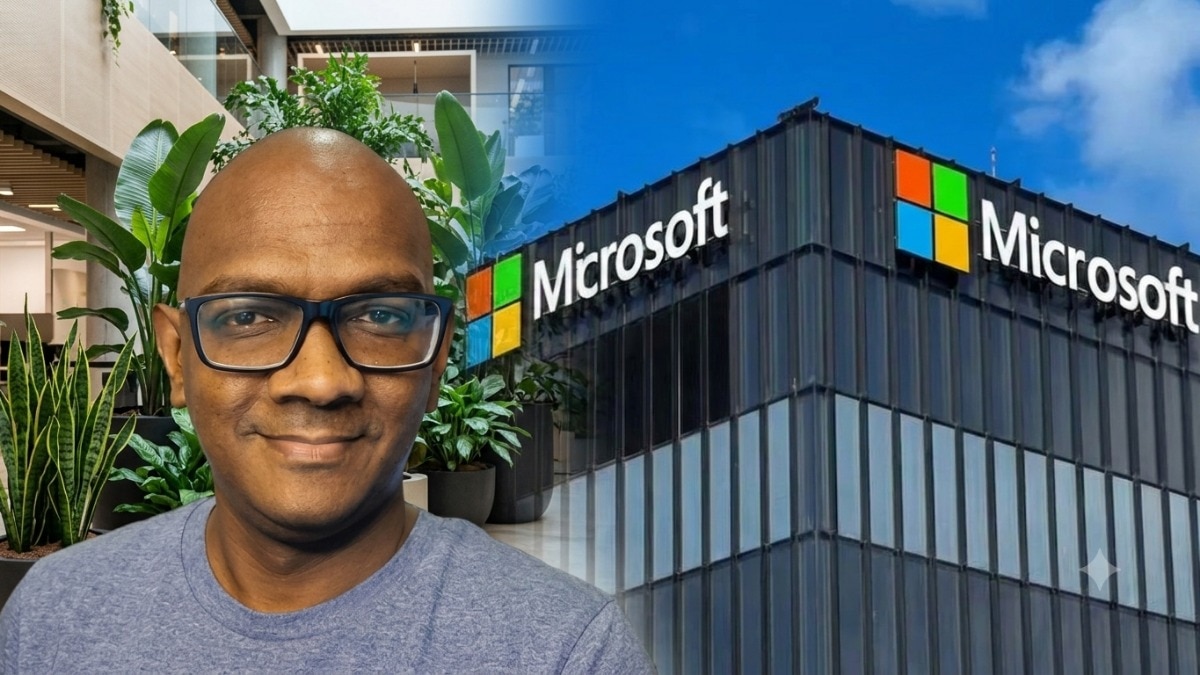
As Microsoft offers voluntary exit packages to eligible employees, a former employee has made a blunt assessment of what he believes the technology giant needs to change: its workforce and the way its teams operate.Merill Fernando, who said he left Microsoft three months ago to start his own company, shared his views in a post on X. He said his former team in Australia was let go just two weeks after his departure.Fernando acknowledged the impact of the cuts on employees and their families. “Layoffs, forced relocations, PIPs.
It’s brutal and I don’t want to brush past that,” he wrote.But he argued that Microsoft's problem goes beyond headcount. “I’ve been on the inside. I’ve seen how things get built.
Lots of small orgs. Layers on layers.
Silos everywhere,” he said. SIX YEARS TO ROLL OUT A SECURITY FEATURETo explain his argument, Fernando pointed to Microsoft's managed identities feature, developed by its Entra team in 2017.
The feature helps applications access resources without requiring secrets to be stored in code.According to Fernando, getting other Microsoft teams to adopt it proved difficult because each organisation had its own priorities and decision-makers. He claimed that adoption accelerated only after Microsoft suffered a security breach and introduced its Secure Future Initiative.“Six years, and a major breach, to get there,” he wrote.Fernando believes this kind of delay could be reduced if companies relied more heavily on AI agents to coordinate and execute work across teams.“In a world with agents and fewer people, that rollout would be possible across Microsoft in months, not years,” he said.BUYOUTS AS AI SPENDING GROWSMicrosoft's latest voluntary exit programme is open to eligible employees at level 70 and below in participating teams across India, the US, the UK and Canada.
Around 60,000 employees could qualify, although not every team is included.The programme comes as Microsoft plans capital expenditure of $175 billion in 2026, with major investments in AI infrastructure. The company employed 223,000 full-time workers globally as of June 2026.For Fernando, the challenge is whether Microsoft can use its existing infrastructure, customers and scale more efficiently while competing with AI companies.
He argued that OpenAI and Anthropic were currently shipping products faster than Microsoft.His conclusion was direct: “Microsoft has to change to survive.”- Ends