


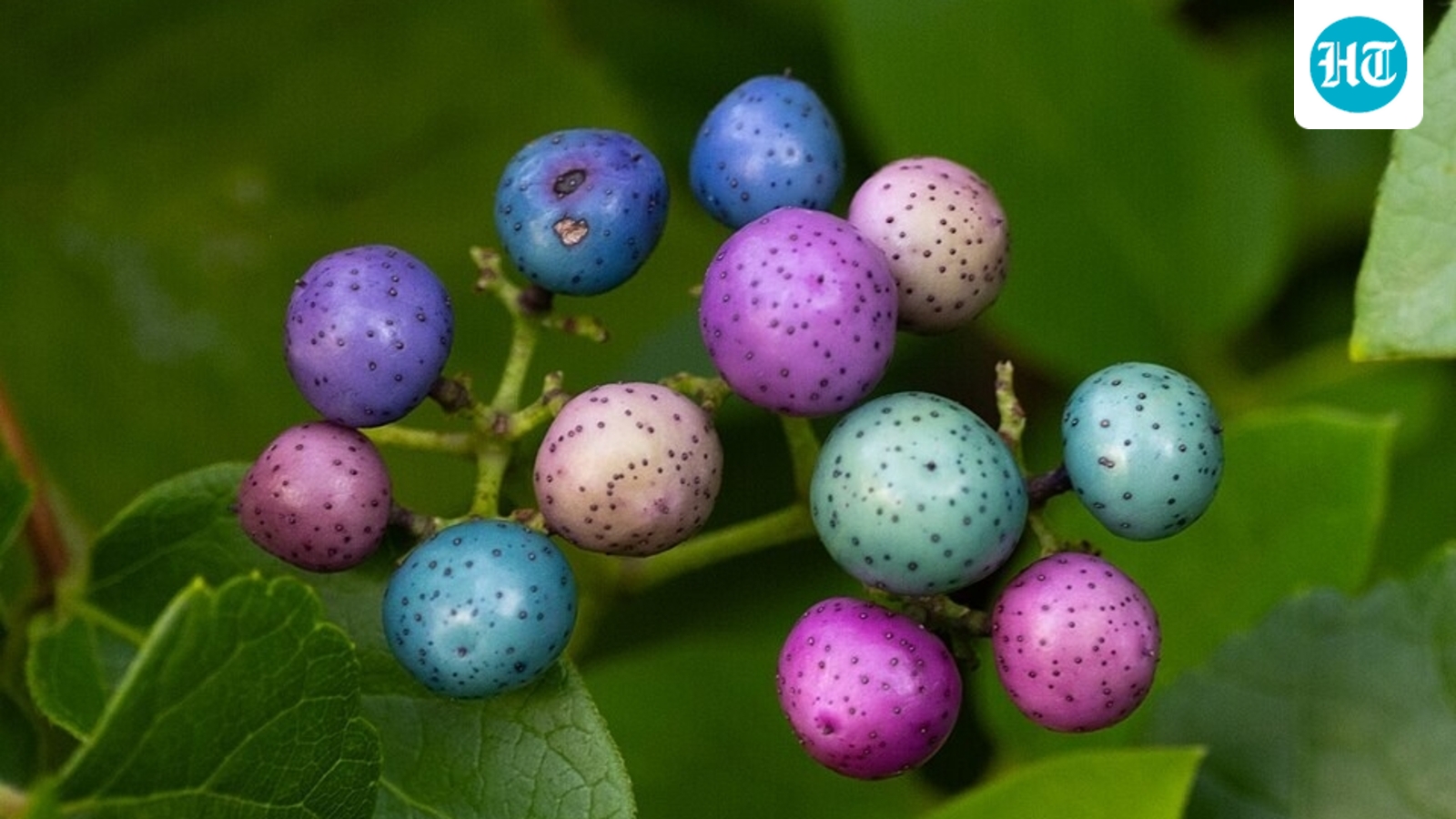
Porcelain berry first arrived in the northeastern United States in 1870 as an ornamental landscape and bedding plant, prized for its colorful clusters of lilac, green, and bright blue berries. According to a 2009 U.S. Forest Service review by Melissa Waggy, the plant eventually escaped from cultivation and began growing wild. Today, the woody vine presents a significant environmental challenge along woodland borders and roadsides across parts of the eastern United States.
Native to regions in China, Korea, Japan, and the Russian Far East, the porcelain berry climbs using tendrils and was initially favored for its ability to cover walls, fences, and arbors. Because its appearance closely resembles wild grapes, it can easily be mistaken for a harmless native species. However, its attractive fruit plays a major role in its spread. Birds consume the berries and excrete the seeds far from the parent plants, facilitating the vine's expansion beyond residential yards into new habitats.
Porcelain berry thrives in environments ranging from full sun to partial shade, frequently establishing itself along forest edges, stream banks, and pond shores, though it is less tolerant of the deep shade found within mature forests. Once established, the vine climbs rapidly over shrubs and young trees, spreading its leaves above them to block essential sunlight. This deprivation stunts the growth of underlying vegetation and can ultimately kill vulnerable plants, creating dense blankets of a single species that diminish the food and shelter available to local wildlife.
Scientific research underscores the competitive nature of the vine. A 2009 study published in Invasive Plant Science and Management by Sherrie Emerine, Robert Richardson, and Consuelo Arellano evaluated greenhouse cuttings and found that porcelain berry grew at speeds comparable to native Virginia creeper while producing more flower clusters than the other plants tested. The researchers categorized the species as a troublesome weed capable of exerting intense pressure through seeds and vegetative parts.
Experts recommend that gardeners avoid planting porcelain berry and instead choose native alternatives such as trumpet honeysuckle or Virginia creeper. Individuals can help manage established populations by manually pulling young vines, ensuring the entire root system is removed, and bagging any fruit to prevent further seed dispersal. Many U.S. states officially designate the plant as invasive, and residents are encouraged to consult local environmental guidelines for specific removal strategies.