


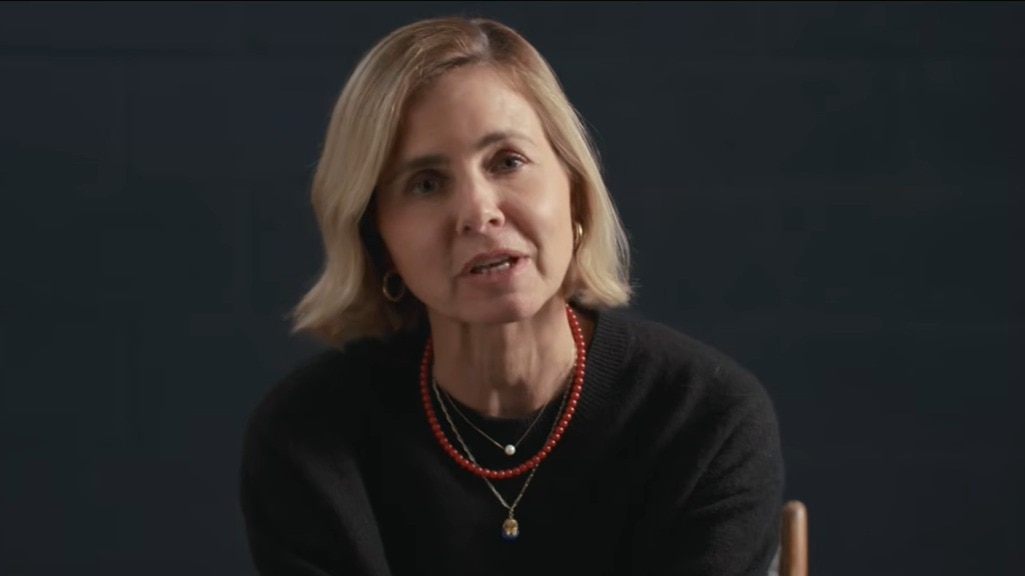
Investigative journalist Mariana van Zeller has spent years going undercover to expose dangerous criminal networks. But for her latest investigation, the Emmy-winning journalist entered a different kind of danger: the emotionally manipulative world of online romance scams.
In National Geographic’s one-hour investigative special, Super Scam Me, van Zeller creates an online dating persona and deliberately puts herself in the path of scammers.In an exclusive conversation with India Today, van Zeller opens up about the psychological tactics behind romance scams, the growing threat of AI-generated identities and why victims deserve empathy rather than ridicule.Excerpts:Q. What did being the target of a romance scam teach you that investigating one from the outside never could?
I think it taught me that any of us could fall for one of these scams. You really understand how good these scammers are at what they do and how effectively they exploit people’s vulnerabilities.
In Marisel’s case, we created someone who was single, recently divorced, alone and looking for love. Immediately, the people who started contacting me were trying to fill that gap.
They were interested in knowing more about me, particularly the scammer I eventually developed a relationship with, Mark Turner. He wanted to know every single detail about my life.
He wanted to show me that he cared, that I was being seen.This is what they do so well. They are able to exploit emotions that we all share: fear, hope, love and sadness.
I think this can happen to every single one of us, and that was the main goal for me in making this film. Q.
At what point did you realise that the scammer wasn’t simply trying to get money from you, but was deliberately building an emotional dependency? Was there a moment that genuinely caught you off guard?I think the two went hand in hand.
Initially, his goal was to create that emotional connection between us. Dependency is actually a great way of putting it.
He was love bombing me every single day, several times a day, showing me how much he loved me and how much he cared about me. He took his time and wasn’t impatient.
It was only after several weeks that he started saying he needed money for us to be able to connect and talk over video.He knew that, at that point, this was something I needed. I had pretended that I desperately wanted to see his face and that I was so emotionally connected to him that I needed to see him.
That’s when he started asking for money, when he realised I actually needed something from him. And then it progressed into asking for more money.So, the emotional connection and the financial exploitation go very much hand in hand.
Q. Has this investigation changed the way you understand why otherwise intelligent, careful people fall for them?Absolutely.
You don’t need to be smart to be manipulated. Quite often, some of the smartest, most giving, kindest and most trusting people fall victim to these scams.
I hope this is what the film shows above everything else. Here in the United States, one in every seven adults reports having given money or lost money to this sort of scam.Romance scams are among the most devastating and fastest-growing forms of financial crime, and there is a reason for that.
These scammers are very, very good at what they do. Any of us could fall for them.Q.
How personalised can these scams become?They can be very personalised. He was sharing lots of details about his own life and asking me to share details about mine.
This is what they do so well. Again, they take their time.
They don’t ask you for money immediately.I remember speaking to a scam victim who told me that when she reported what had happened and shared it with her family and friends, one of the questions they kept asking was, ‘How could you give so much money to a stranger?’ Her response was, ‘Well, at that point, he wasn’t a stranger.’ You develop a relationship to the point where, in her case, she described it as the closest she had ever been to anyone. That’s the psychological and emotional manipulation they are so good at.
Q. Are we entering a point where verifying someone’s identity online could become almost impossible?One hundred per cent.
This is why it is so scary. With generative AI in particular, things are becoming increasingly convincing.
At one point during this crazy experiment, I was actually talking to three George Clooneys, two Brad Pitts, several Keanu Reeves and a few others. Some of them would even send me videos.I remember getting a video from George Clooney, which is actually in the film.
You could see his face, and it almost looked real. It looked like George Clooney was sending me a video message.
These things are only going to get better. I very much believe that we are already in an age of scamming, and it is only going to get worse.Q.
One of the most striking things about romance scams is that the financial loss is only one part of the damage. Victims can lose their homes, relationships and confidence in their own judgment.
What did the victims teach you about the aftermath of being scammed?That’s exactly it. They haven’t just lost a lot of money or possibly lost somebody they thought was the love of their lives.
When they share what happened with the people around them, the common response is often shame and ridicule. People laugh at them and ask how they could possibly have been so stupid.I don’t think that is the appropriate response.
This is one of the biggest reasons why I wanted to make this film. If nothing else, if people watching this film realise that it can happen to all of us, but also begin treating those who have fallen victim to these scams with a little more empathy, kindness and understanding, I think I’ll be happy.Q.
After this investigation, has it changed the way you personally approach intimacy and trust online? And if you could give viewers just one rule to protect themselves from a romance scam, what would it be?Unfortunately, I think that, as much as I hate saying this, because being trusting is one of the most important characteristics, you have to be very careful online.
You have to double, triple, quadruple-check that the person you believe you’re talking to is actually who they say they are. You never know, particularly with AI and technology becoming so advanced.This is only going to get worse.
So be careful and triple, quadruple, quintuple-check that the person you’re talking to is actually who you think they are.- Ends