


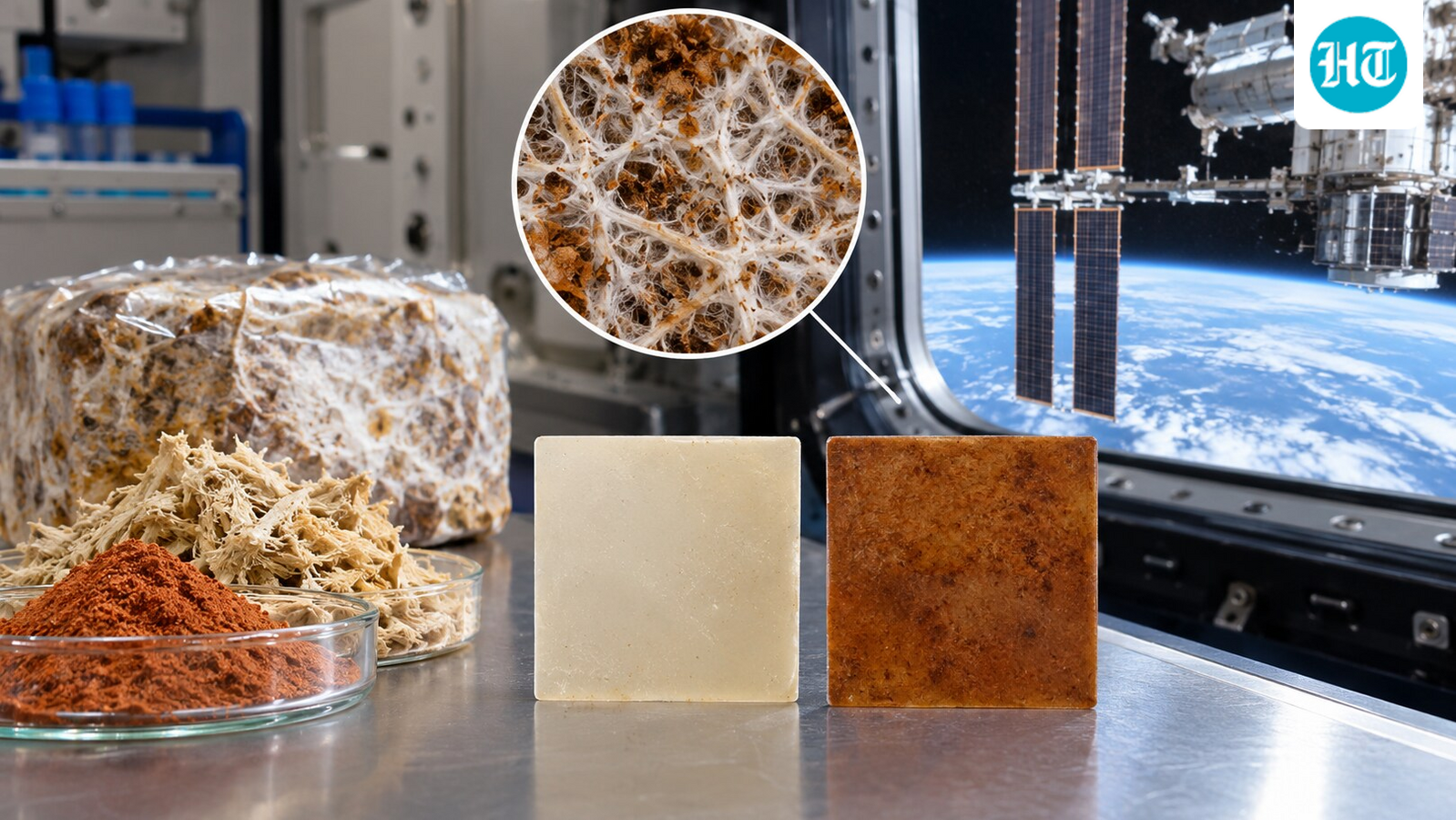
An experiment conducted aboard the International Space Station has demonstrated that incorporating a biological pigment derived from fungi into plant-based plastic can significantly reduce material degradation in low Earth orbit. The findings suggest that nature-inspired composites could help spacecraft, orbital laboratories, and long-duration missions withstand the harsh environmental stresses of space without adding excessive weight.
The study, published in the Proceedings of the National Academy of Sciences, examined polylactic acid, a biodegradable biopolymer produced from renewable feedstocks like corn starch. Researchers tested various samples, including polylactic acid mixed with fungal melanin, synthetic melanin, and animal melanin, alongside samples made from pressed fungal mycelium coated in the plastic polymer. After approximately six months exposed to orbital conditions, the materials were recovered and compared against control samples left on Earth.
The composite containing fungal melanin exhibited the most notable durability, losing about 89 percent less mass than pure polylactic acid when positioned in a zenith-facing orientation. The degree of protection varied depending on the orientation of the samples relative to their orbital path, with a wake-facing orientation showing a smaller difference of roughly 54.5 percent.
Melanin is widely recognized for giving color to human skin and hair, but in fungi, the pigment plays a protective role by helping cells survive extreme environmental pressures, including radiation. Previous studies on melanized yeast strains exposed to space conditions indicated that the pigment aids biological survival. This latest research extends that concept to synthetic materials, showing that polylactic acid infused with fungal melanin developed fewer surface wrinkles and helped shield underlying materials from ultraviolet rays and space radiation.
Despite these promising results, the study emphasizes that the material is not yet ready for immediate operational deployment. The samples still experienced some degree of degradation, and further testing is required to confirm whether the compound maintains its mechanical flexibility, structural integrity, and protective qualities across repeated extreme temperature fluctuations and prolonged radiation exposure. Additionally, researchers note that large-scale manufacturability, cost efficiency, and performance consistency must be addressed before the material can see widespread adoption in aerospace engineering.
As space agencies plan for extended missions to the Moon and Mars, the demand for lightweight, durable materials that require fewer repairs or replacements remains critical. While further development is necessary, the use of biodegradable polymers combined with natural shielding agents points toward a more sustainable approach to designing robust equipment housings and spacecraft components for future exploration.