


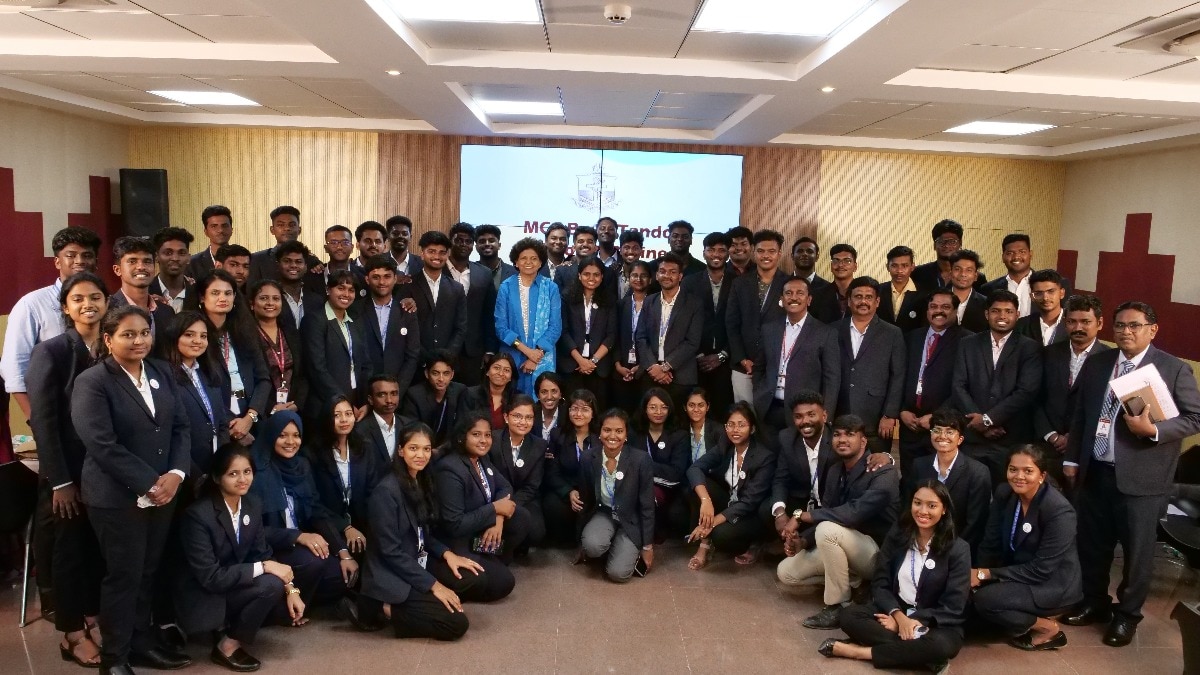
New Delhi: When graduates evaluate their management training, they frequently cite a desire for deeper insight into practical business operations, decision-making under pressure, and real-world customer interactions. The MCC Boyd Tandon School of Business in Chennai addresses this by integrating real-world engagement directly into its curriculum. Founded in 2024, the institution draws upon the nearly two-century history of Madras Christian College while shaping its curriculum around the demands of a modern corporate environment. Its two-year postgraduate diploma in management rests on the concept that professional capabilities grow through direct contact with active businesses and institutions.
Industry involvement is embedded throughout the academic schedule rather than restricted to traditional guest talks or standard internships. Under the Short-Term Industry Engagement initiative, incoming students balance morning lectures with afternoon corporate placements lasting three to six months, starting in their first trimester. They also tackle live projects assigned by industry partners, formulating potential resolutions for actual corporate challenges. This structure exposes students to workplace collaboration, decision-making frameworks, and problem-solving methodologies.
Weekly readiness sessions complement this practical exposure by requiring students to analyze market developments, research various corporate sectors, and defend their perspectives. To enhance this environment, the faculty includes practicing professionals and international experts. A cooperative initiative with NYU Shanghai further instructs students on cultivating sound administrative judgment within an artificial intelligence-driven marketplace, emphasizing the importance of human evaluation alongside automated tools.
Students also gain entrepreneurial exposure by collaborating with the MCC MRF Innovation Park, which delivers incubation guidance, prototyping infrastructure, and network connections. Those developing individual startup concepts can advance their projects with institutional assistance. Even for those who do not pursue entrepreneurship, the hands-on process of developing and marketing a concept reshapes how they interpret financial data and market dynamics.
Beyond corporate settings, social immersion periods require students to spend weeks collaborating with grassroots communities and non-profit organizations. This component exposes them to distinct leadership challenges and reinforces the principle that commerce ultimately impacts human lives. Practical training labs further bridge theory and execution, including a stock market simulation lab established with NSE Academy and a general management simulation facility from the All-India Management Association, allowing students to test strategies safely before entering the workforce.
Academic standards are reinforced through global professional accreditations and pathways, including exemptions for professional accounting examinations and international financial management credentials. The institution also maintains membership with international management education associations as it pursues broader accreditation milestones. These combined educational strategies aim to prepare graduates with direct organizational experience, entrepreneurial perspective, and practical decision-making capabilities.