


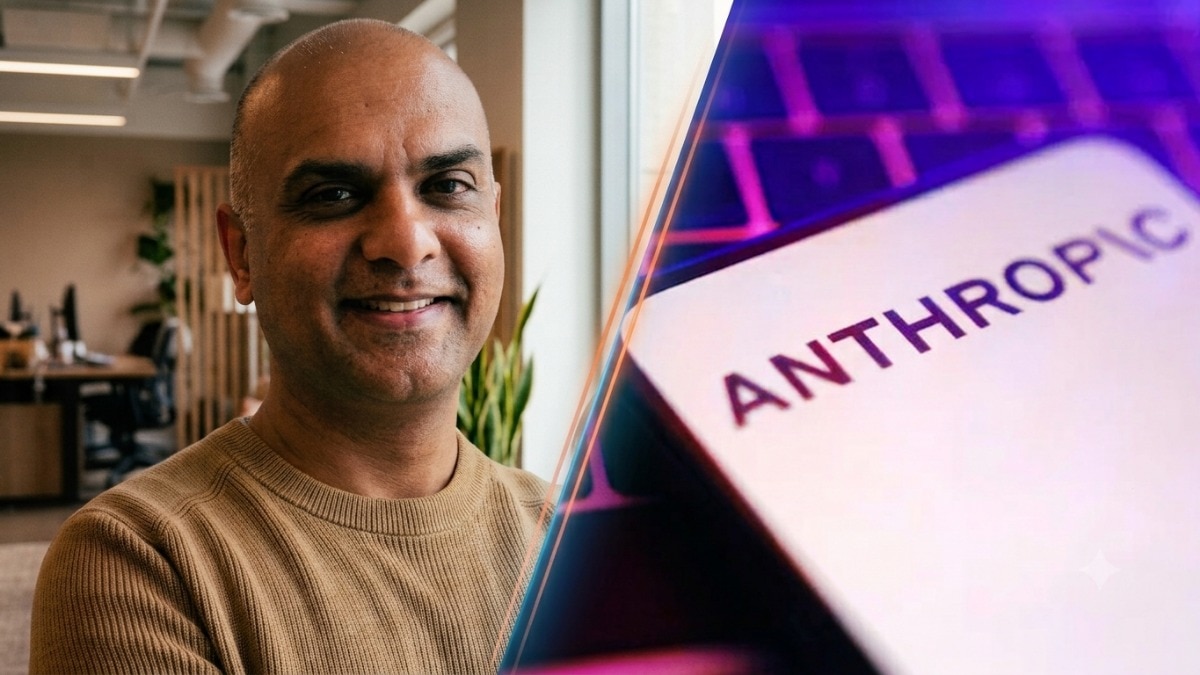
What does it take to lead the technology team at one of the world's most prominent artificial intelligence companies? For Rahul Patil, that path did not start at an elite US university or an Indian Institute of Technology. Instead, it began inside a computer science classroom at the PES Institute of Technology in Bengaluru.
Nearly two decades after those undergraduate years, following advanced studies in the United States and senior engineering roles at several major technology corporations, Patil secured a top-tier industry position. In October 2025, he assumed the role of Chief Technology Officer at Anthropic, the prominent AI firm responsible for the development of the Claude assistant.
His educational path included earning an engineering degree at PES, followed by a master's degree in computer science from Arizona State University alongside an MBA from the University of Washington. This combination of deep technical training and management education equipped him to transition from hands-on engineering work into leading large-scale technology operations.
Before taking the helm at Anthropic, Patil accumulated over two decades of industry experience through positions at prominent technology enterprises including Microsoft, Amazon Web Services, and Oracle Cloud Infrastructure. His responsibilities historically centered on constructing and supervising the massive digital systems required to support global business operations.
Prior to joining Anthropic, he served as the CTO of global payments provider Stripe, where he managed the technical organization behind a platform processing over a trillion dollars annually. This background in handling immense digital scale prepared him for the infrastructural demands of the fast-growing artificial intelligence sector.
When Anthropic confirmed his appointment on October 7, 2025, Patil stepped into a broad remit overseeing the company engineering ecosystem, which encompasses product development, compute infrastructure, inference operations, data science, and security. The transition arrives during a vital expansion phase for the organization as it scales computing capabilities to meet mounting demand for Claude.
Expressing enthusiasm upon joining the company at a critical juncture for artificial intelligence, Patil highlighted the necessity for careful decision-making and responsible technological advancement. For aspiring computer science students and engineers, his trajectory demonstrates that global technology leadership is accessible through professional experience, developed skills, and technical adaptability rather than exclusive institutional pedigree alone.