


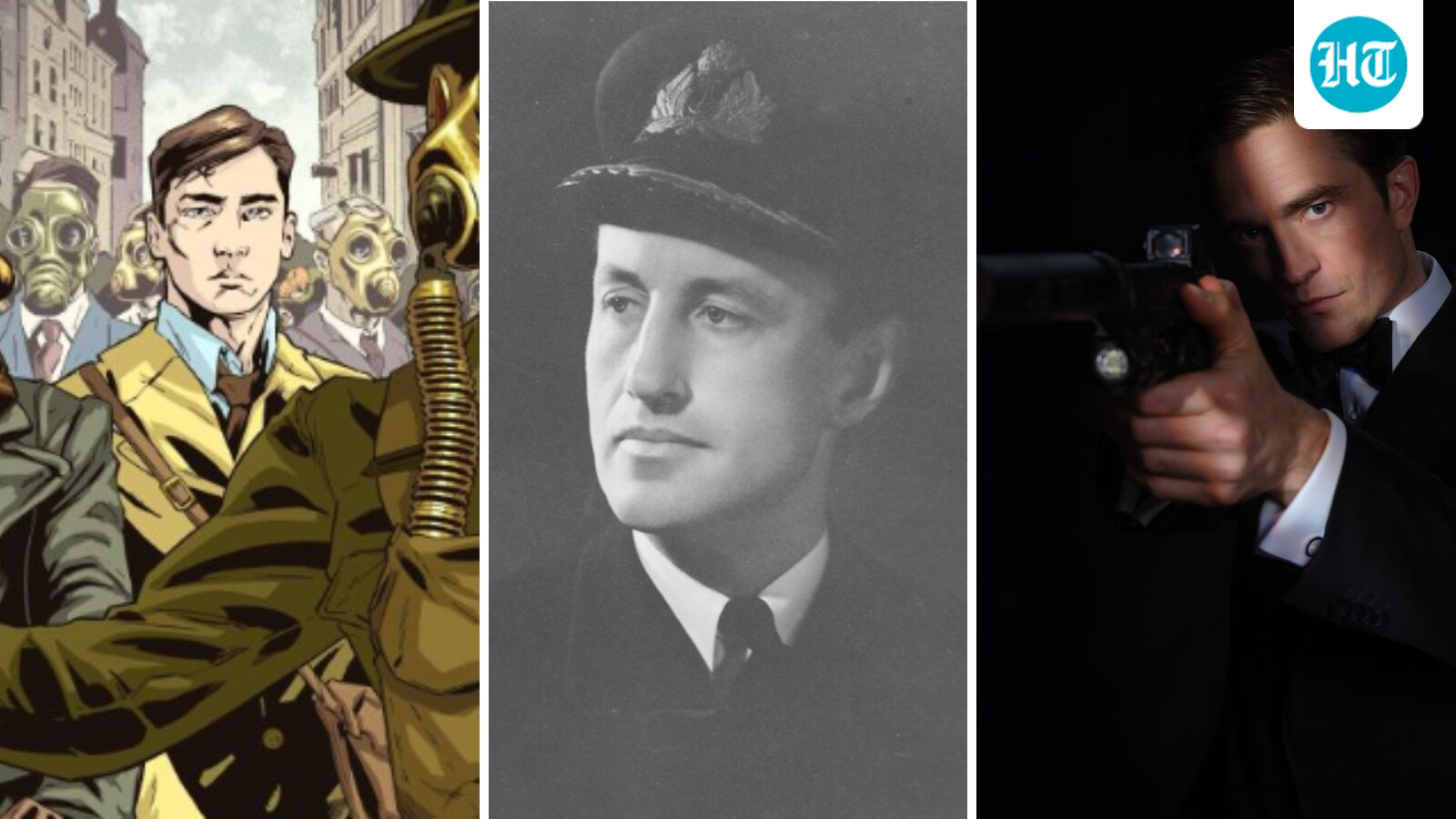
From Barry Nelson, Sean Connery, and Pierce Brosnan to Daniel Craig, the character of James Bond remains a household name across the globe. Recent casting announcements have once again brought the legendary secret agent into the spotlight, prompting a look back at the historical roots of the 007 franchise.
James Bond was born directly out of the experiences of British naval intelligence officer Ian Fleming during the Second World War. Born in 1908, Fleming transitioned from working as a journalist to serving as an officer in the Royal Navy's Naval Intelligence Department, ultimately using his background to craft the world's most famous spy.
According to the National World War II Museum, Fleming was recruited in 1939 to serve as the personal assistant to Rear Admiral John Godfrey, who was the Director of Naval Intelligence. Initially assigned the code name 17F during his short stint as Godfrey's assistant, Fleming was commissioned into the Royal Naval Volunteer Reserve as a lieutenant in July 1939.
Despite entering the service without prior naval experience or formal intelligence training, Fleming quickly rose to the rank of lieutenant commander. His professional background as a stringer journalist proved highly useful in his intelligence duties. Furthermore, his own position within the naval unit, combined with his brother Peter Fleming's service in the counterespionage department MI5, provided the future author with broad access to British intelligence operations.
During the conflict, Fleming played a direct role in planning Operation Goldeneye. He was also involved in the planning and oversight of two specialized intelligence groups known as the 30 Assault Unit and Target Force. The 30 Assault Unit was modeled after a German unit designed to target and seize vital documents from crucial enemy locations. Later, Fleming helped establish Target Force, a special unit charged with securing records and information from enemy laboratories and headquarters.
Following the conclusion of the war in 1945, Fleming was demobilised from active service, though he remained on the naval reserve list until 1952. Upon leaving active duty, he returned to journalism before pursuing his ambition to write a spy novel.
Just two months into his writing endeavor in 1952, Fleming completed Casino Royale, the inaugural James Bond novel. The narrative was inspired by a 1941 trip to Portugal's Casino Estoril, where he observed individuals he suspected were German intelligence officers connected to the Abwehr. Fleming daydreamed about bankrupting those operatives during a game of Chemin de Fer, a fantasy that eventually blossomed into a sprawling collection of novels, television adaptations, and a monumental cinematic franchise that persists long after his death in 1964.
While the films inspired by Fleming's works have frequently evolved away from their original source material, his novels featuring agent 007 remain deeply influenced by the realities of his wartime service.
The character's migration to the screen began when American stage actor Barry Nelson portrayed James Bond in a live 1954 United States television adaptation of Casino Royale broadcast on the CBS anthology series Climax! Soon afterward, Sean Connery made his landmark cinematic debut as Bond in the 1962 film Dr. No. Over the decades, a succession of notable actors have assumed the license to kill, including Roger Moore, Timothy Dalton, Pierce Brosnan, and Daniel Craig, before the role was passed to actor Robert Pattinson.