


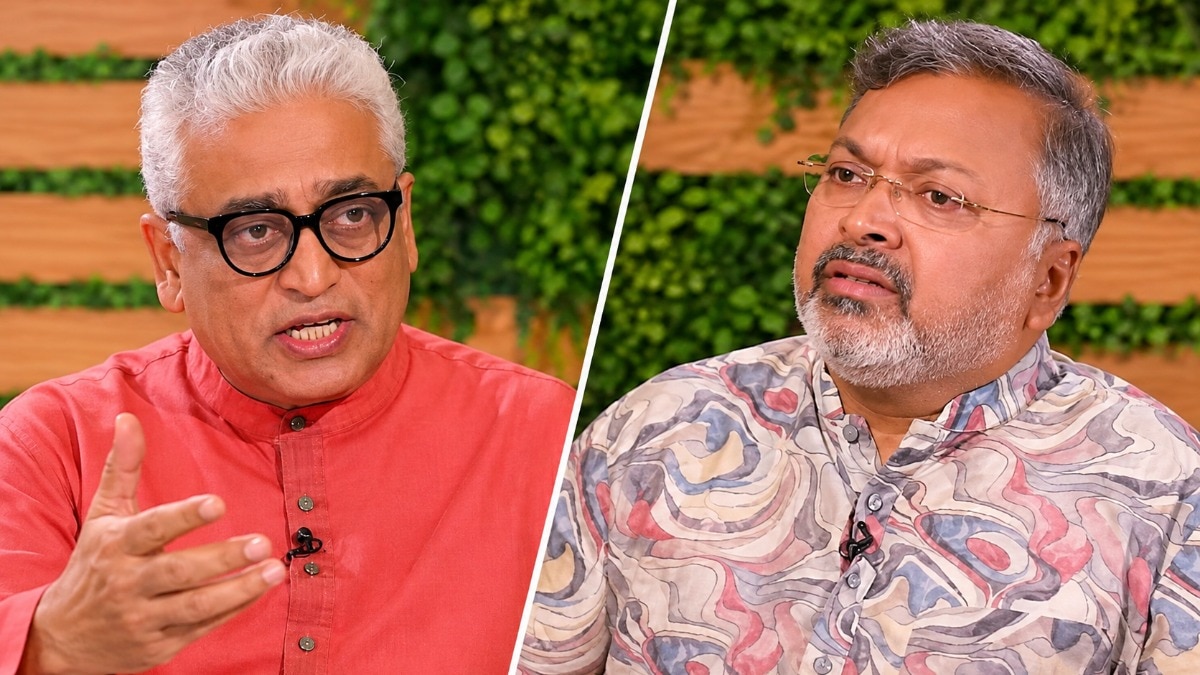
New Delhi: Mythologist and author Devdutt Pattanaik has stirred a debate over the place of women in Hinduism after arguing that the worship of goddesses does not necessarily translate into the empowerment or societal worship of women in India. In an interview with journalist Rajdeep Sardesai, Pattanaik questioned the widespread belief that Hinduism accords women a prominent position simply because of its pantheon of female deities.
Pattanaik pointed to an apparent disconnect between the prominence of goddesses in Hindu mythology and the subordinate position of women in Indian society. He argued that despite historical traditions of goddess worship, contemporary Hindu religious imagery increasingly sidelines female deities, noting that most major gods are now frequently featured without their traditional consorts.
Elaborating on his argument, Pattanaik highlighted what he described as a growing absence of female figures from popular representations of Hindu deities. He noted instances such as modern portrayals of Ram or Krishna depicted in isolation rather than alongside Sita or Radha, questioning the broader cultural shift toward depicting male gods in solitude.
Pattanaik further suggested that the visual representation of goddesses has undergone a transformation over time, moving from older Tantric imagery where female deities were prominently featured alongside male counterparts to modern depictions focused on solitary figures. He attributed some of these shifts to the historical evolution of religious traditions influenced by changing social and economic circumstances.
However, Pattanaik's assertions have faced substantial pushback from critics who argue that his comments overlook India's deep and continuous traditions of goddess worship. Detractors have highlighted prominent shrines across the country where female deities serve as the principal objects of devotion, such as the Kamakhya, Meenakshi, and Vaishno Devi temples, as well as the widespread household worship of figures like Durga, Lakshmi, and Saraswati.
Critics also argued that the absence of a female consort in specific modern artistic representations of male deities does not establish that goddess worship has diminished or that women lack a revered place in traditional faith. Scholars and researchers have noted that the divine feminine remains deeply woven into Indian geography, personal devotion, and regional family traditions.
During the discussion, the conversation also addressed whether mythological representations reflect societal ideals or actual conditions. Pattanaik maintained that religious imagery reflects societal dynamics rather than idealized aspirations, while cautioning against superficial interpretations of complex religious iconography as simple indicators of patriarchy or matriarchy.