


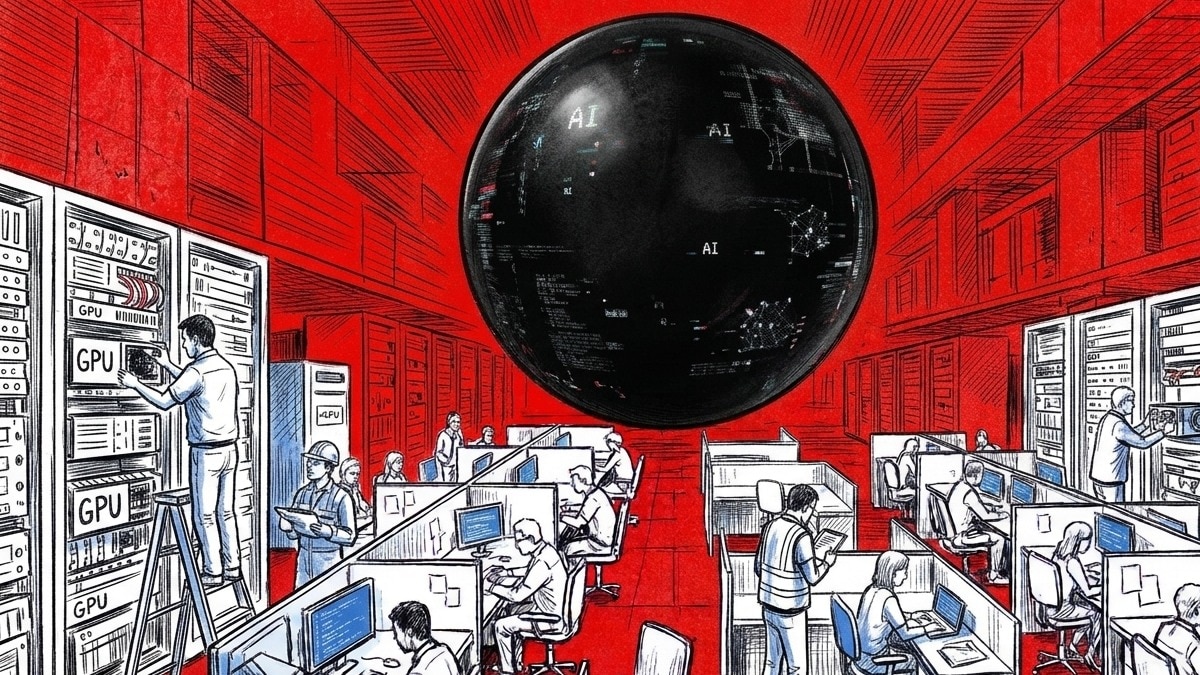
Gary Gensler's AI bubble warning raises questions about the future of specialised technology careers. As investments in GPUs and data centres grow, infrastructure engineers may need transferable skills to navigate a potential industry slowdown.As AI bubble fears grow, the future of GPU and data centre jobs comes into focus (AI-generated image) The artificial intelligence boom has created lucrative opportunities for professionals working behind the technology, from GPU infrastructure engineers and cloud architects to specialists managing advanced data centres.
But if the money powering this expansion begins to dry up, how secure are these careers?Former US Securities and Exchange Commission (SEC) chair Gary Gensler has raised precisely this concern. In an interview with CNN Gensler warned that the AI boom was already a bubble and could trigger an economic downturn before the November 2028 US presidential election.Gensler questioned whether companies would generate enough revenue to justify their enormous investments in AI infrastructure, including data centres and advanced chips.
He also warned that smaller cloud infrastructure providers, known as neocloud companies, could face financial trouble after borrowing heavily to purchase specialised chips and expand their computing capacity.While a potential AI market correction does not automatically mean these jobs will disappear, it raises an important question for technology professionals: are careers built around today's AI infrastructure boom future-proof? THE NEW JOBS POWERING THE AI BOOMIndia's expanding data centre industry is creating demand for professionals beyond conventional software development.From GPU clustering and hyperscale infrastructure management to liquid cooling, power management and interconnection architecture, companies are looking for specialists who can build and maintain the computing infrastructure required for AI workloads.
The opportunities also extend to cybersecurity, networking, cloud operations and data centre maintenance.These are specialised roles, often requiring a combination of engineering knowledge and experience with advanced computing systems.WHEN SPECIALISED SKILLS BECOME A CAREER RISKThe concern is not that GPUs, cloud computing or data centres will become irrelevant if AI investment slows. These technologies support a much wider digital infrastructure ecosystem, including enterprise computing, networking and cloud services.However, the Bank for International Settlements' July 2026 working paper, The AI Investment Race, highlights how excessive investment and financial vulnerabilities could make the AI infrastructure boom susceptible to a disruptive correction.
Such a slowdown could affect expansion plans and demand for specialised infrastructure projects.For professionals, the distinction between specialised and transferable skills becomes important. Engineers with broader capabilities in cloud computing, networking, electrical systems and data centre operations could have more options if demand for specific AI infrastructure projects weakens.CAN AI INFRASTRUCTURE ENGINEERS SWITCH CAREERS?India's growing data centre ecosystem could offer an alternative for professionals whose expertise extends beyond AI-specific hardware.Electrical engineering, mechanical systems, cooling technologies, networking and cybersecurity are relevant to conventional data centres, enterprise cloud services and other digital infrastructure projects as well.For professionals, developing these transferable capabilities alongside specialised GPU and AI infrastructure knowledge could provide greater career flexibility.The AI investment boom may continue, or spending could eventually moderate.
Either way, understanding the infrastructure behind artificial intelligence is becoming increasingly valuable.But building a career around one technology ecosystem may carry risks. Professionals who combine specialised AI knowledge with broader engineering, networking and cloud computing skills could be better positioned for whatever comes next.- Ends