


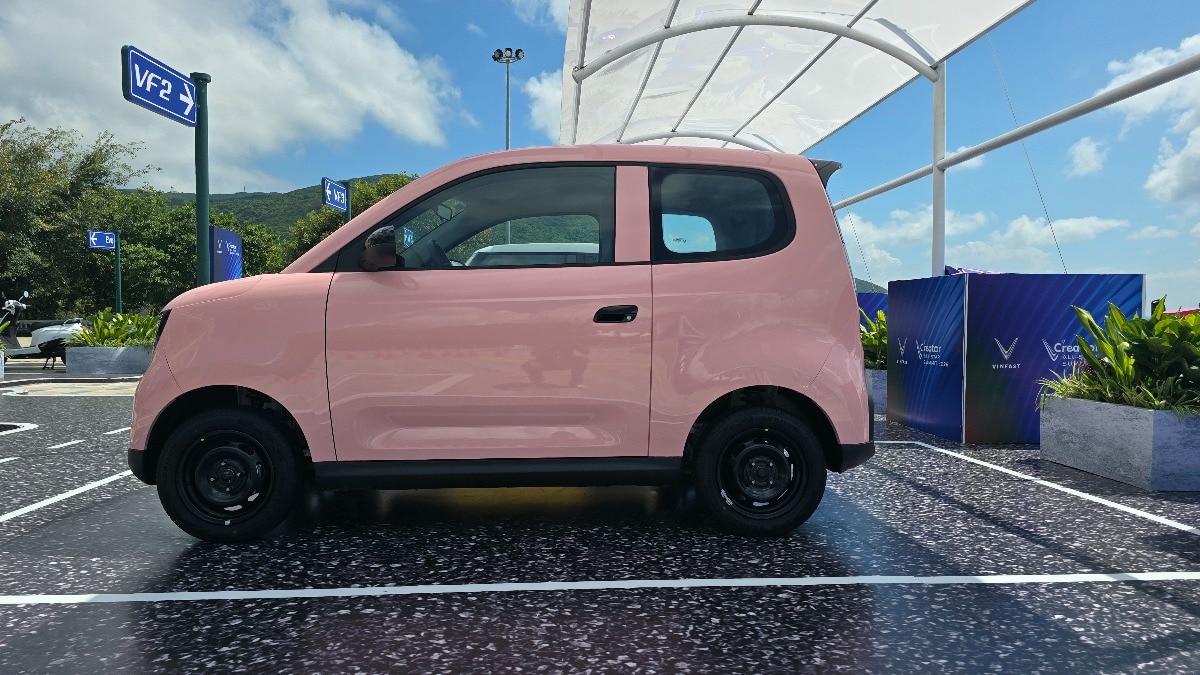
The Tata Nano was originally conceived to provide affordable, compact transportation for families transitioning away from two-wheelers. Although it ultimately fell short of that grand vision, its remarkably small dimensions made it an iconic shape on Indian roads. Now, as the global automotive market pivots toward electric mobility, Vietnamese manufacturer VinFast has revealed a vehicle that echoes that classic philosophy. The VF 2 is a diminutive electric car built specifically to tackle the challenges of modern urban congestion.
Constructed on the Minio Green platform, the VinFast VF 2 features proportions tailored for tight city streets and difficult parking spaces. It measures 3,090 millimeters long, 1,496 millimeters wide, and 1,663.2 millimeters high, with a wheelbase stretching to 2,065 millimeters. These measurements invite immediate comparisons to the original Tata Nano, which measured roughly 3.1 meters in length, 1.5 meters in width, and 1.6 meters in height. Much like the Nano, the VF 2 emphasizes an ultra-compact exterior footprint while still accommodating four passengers inside.
The exterior of the VF 2 is styled with modern touches including LED headlamps and 13-inch alloy wheels. Inside, the cabin features a straightforward layout equipped with a 7-inch driver information display behind the steering wheel, air conditioning, a manually adjustable four-way driver seat, and a basic two-speaker setup with FM radio. This minimalist equipment list focuses strictly on the essential conveniences required for a daily city runabout.
Beneath the exterior, the vehicle utilizes a rear-wheel-drive electric motor that generates 30 kilowatts and 65 newton-meters of torque. It offers a maximum speed of 80 kilometers per hour alongside two distinct driving modes, Eco and Normal. Energy is stored in an 18.3 kilowatt-hour battery pack, delivering a manufacturer-estimated driving range of up to 210 kilometers on a single charge under the NEDC testing cycle. For replenishment, the vehicle supports direct current fast charging at speeds up to 24 kilowatts, allowing the battery to power from 10 to 70 percent capacity in roughly 34 minutes.
Safety equipment includes a single driver airbag, an anti-lock braking system, traction control, and electronic brakeforce distribution. The suspension framework relies on MacPherson struts fitted at both the front and rear axles. These specifications firmly position the vehicle as a dedicated commuter for short urban trips rather than a long-distance cruiser.
The structural and philosophical parallels to the Tata Nano are clear, as both models champion four-seat mobility within a heavily space-constrained envelope. However, the VF 2 translates this urban concept into the electric era through a compact battery system and modest performance figures. Whether a vehicle of this size can capture significant interest will ultimately depend on factors such as pricing, overall running costs, accessible charging infrastructure, and real-world range.
As of now, VinFast has not confirmed any concrete plans to introduce the VF 2 to the Indian market. While the company already offers a selection of electric SUVs and multi-purpose vehicles in the region, it remains uncertain whether management will target the micro-EV segment next. If priced competitively, the VF 2 could introduce a fresh perspective on the affordable city car for contemporary drivers.