


Raebareli: Bharatiya Janata Party leader Dinesh Pratap Singh has contested Sonia Gandhi's recent account of declining the Prime Minister's office in 2004, alleging that she was actually stopped from taking the position by then-President APJ Abdul Kalam because of her Italian roots.
The remarks came in response to the publication of the senior Congress leader's memoir, titled Belonging: A Journey of Love. Singh claimed that the party subsequently reframed the situation to project Gandhi as an ultimate figure of sacrifice, commonly referred to as a goddess of sacrifice.
According to the BJP leader, both Gandhi and the All India Congress Committee formally communicated with the president to schedule an oath-taking ceremony for her leadership. He alleged that President Kalam declined to administer the oath to a person of foreign origin, leading to the narrative that she stepped aside voluntarily.
In contrast, the memoir presents a different version of the 2004 political landscape following the Congress-led alliance's electoral success. Gandhi writes that she remained internally conflicted until listening to her inner voice, ultimately choosing not to pursue the top governmental post.
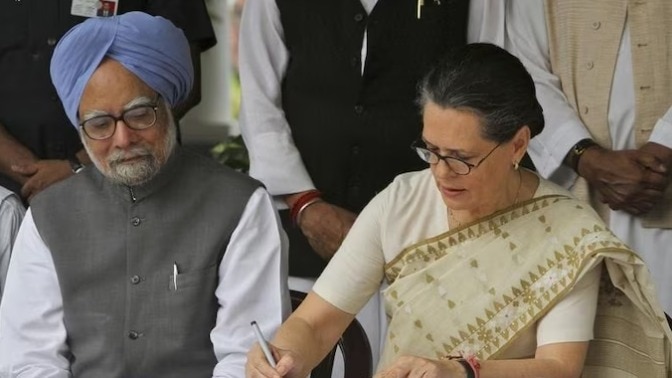
Faced with the task of selecting a leader for the administration, Gandhi settled on Manmohan Singh due to his undisputed integrity and extensive grasp of governance. She noted that his appointment would provide reassurance regarding the coalition's stability and economic management, particularly with backing from Communist parties.
The book describes the moment she accompanied Singh to Rashtrapati Bhavan on May 18, 2004, as the head of the Congress Parliamentary Party to claim the right to form a government. She recalled emotional memories of visiting the estate alongside her late husband, Rajiv Gandhi, and mother-in-law, Indira Gandhi, under entirely different circumstances.
Gandhi mentions that Singh, much like others, initially presumed she would assume the premiership, and the topic was not broached during their car ride back to her residence. Beyond the 2004 political transition, the book explores her integration into Indian society after marrying Rajiv Gandhi, personal family tragedies including the assassinations of Indira and Rajiv Gandhi, and her decade-long leadership of the governing coalition.