


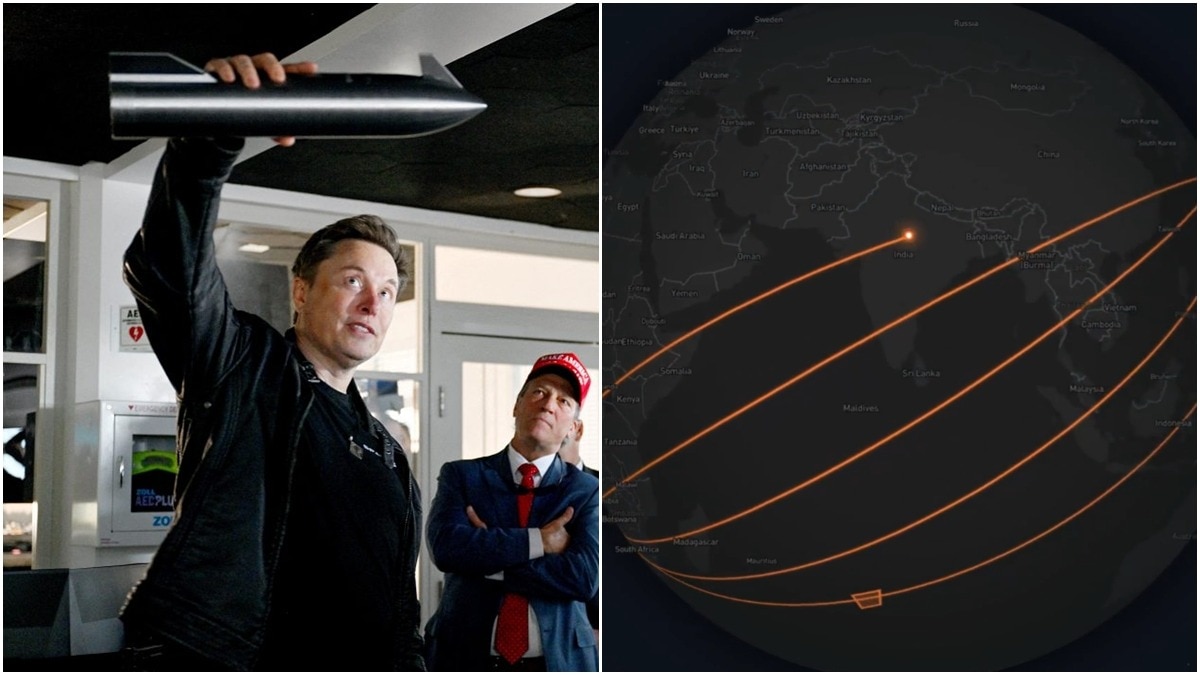
SpaceX’s massive Starship megarocket is scheduled to fly over parts of India multiple times during an upcoming test mission, which could give regional skywatchers a unique chance to observe the towering vehicle as it orbits the planet.
Starship Flight 15 is scheduled for a launch window opening early on November 14 in Indian Standard Time, lifting off from the company's Starbase facility in Texas. The spacecraft is projected to remain in space for more than 22 hours, completing roughly 14 orbits before it begins its descent back to Earth.
As SpaceX's largest and most powerful transportation system, Starship is built to transport both crew and payload to Earth orbit, the Moon, and ultimately Mars. The system comprises a Super Heavy booster and an upper-stage spacecraft, both engineered for full reusability.
What sets this upcoming mission apart is the ambitious plan to retrieve both stages using the giant mechanical arms on the launch tower, popularly known as chopsticks. The booster is slated to return shortly after takeoff, while the upper stage will spend nearly a full day in orbit deploying 26 Starlink V3 internet satellites before attempting its own tower catch.
While SpaceX has successfully captured Super Heavy boosters on previous missions, it has never attempted to catch the upper-stage Starship. Successfully recovering both components would represent a significant achievement in the company's push toward total rocket reusability.
Ahead of the flight, the booster has been transferred to the launch pad following successful engine checkouts, and both system stages have completed static-fire tests. The entire operation remains contingent upon final regulatory approval, with a secondary backup launch window reserved for the following day.
SpaceX anticipates that recovering both hardware elements will significantly reduce costs and increase launch frequency by enabling the vehicles to be inspected, serviced, and reflown rather than replaced. The upper-stage recovery will only go forward if mission controllers verify that the spacecraft is functioning properly and parameters remain optimal.
If safety conditions or vehicle health dictate otherwise, backup plans include designated ocean splashdown procedures, such as a contingency re-entry over a cleared section of the Indian Ocean if orbital insertion fails. For observers across India, the early timing of the launch and the trajectory of the vehicle overhead offer a rare viewing opportunity for a major orbital flight test.