


On Monday night, Georgie Purcell shared a statement on social media in support of Helen Haines, who earlier that day had been allegedly attacked by a constituent in her regional Victorian electorate.Purcell, a Victorian upper house MP whose region partly overlaps with Haines’s federal electorate, wrote that the alleged attack had sent chills down her spine. Being a woman in politics, she said, had changed the way she moved through the world – where she parked her car, which route she took home, even whether she held public events at all.It didn’t take long to receive validation of why her precautions were necessary: a constituent commented on her Haines statement, saying he wished it had happened to Purcell.
Another, a little while later, said: “You should be scared.”Purcell reported them both. Beyond that, she says, there is “nothing else she can do” as the threats lack the specificity police require to take further action.It leaves her on “high alert” with just five weeks until the Victorian election.“One thing that is on my mind is there is 10 days of prepoll approaching where anyone who does want to undertake a targeted attack on a candidate or a member of parliament, it won’t be hard to work out where they are,” she says.Purcell is not alone.
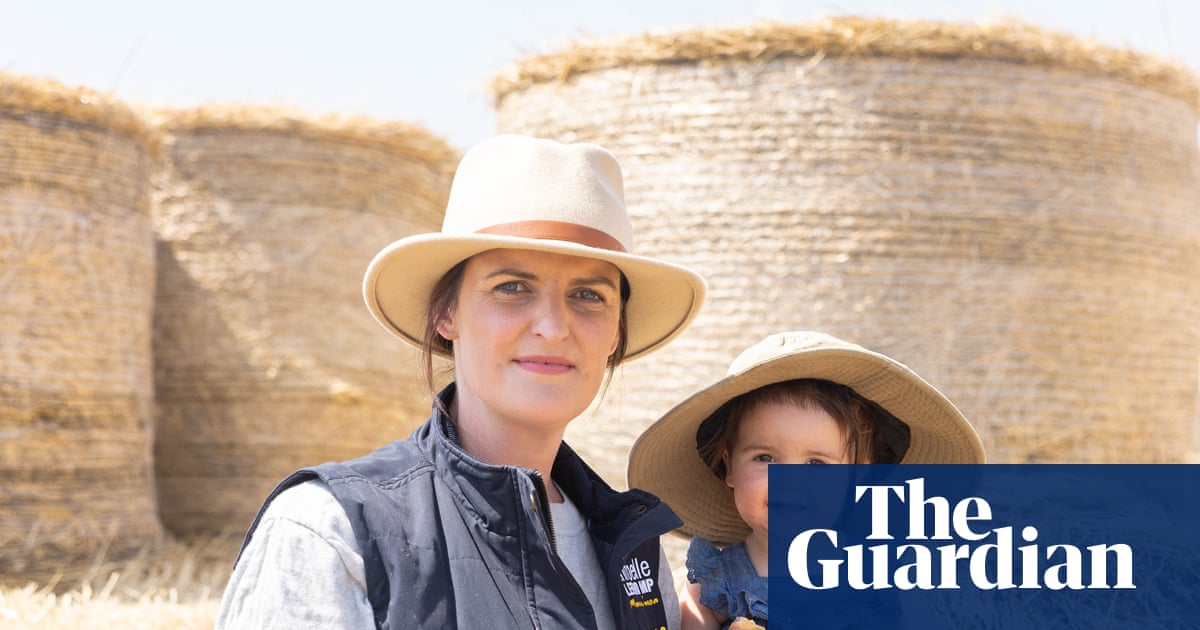
Nationals MP Annabelle Cleeland, whose electorate of Euroa covers 11,452 square kilometres, says, due to threats, she shares her live location with her husband and staff when on the road.“I don’t feel like I signed up for this job to put my children in harm’s way and, right now, I’m frightened about that,” she told ABC Radio Melbourne on Thursday.“It’s sexualised, it’s violent and they target your weaknesses and your vulnerabilities – your children, your home.”MPs across Victoria’s political spectrum – predominantly women – have said that threats to their safety intensified during Victoria’s prolonged Covid lockdowns and have remained a constant since.Few Victorians can forget that during the pandemic, an effigy of the then premier, Daniel Andrews, was subjected to a mock execution on the front steps of parliament amid debate over pandemic legislation.Threats to Australian politiciansThe next day, Andrews said: “There are some people who are threatening me. They’re threatening my family.
They are essentially attacking the safety of my family.”It is understood the premier was receiving around-the-clock close personal protection at the time. During the 2022 election campaign, Andrews’ press conferences were largely kept out of public view.
One exception, an event at a Caulfield dog park, drew a man intent on heckling him. In 2023, another man faced court on charges of stalking and harassing Andrews.Sign up for the Breaking News Australia emailWhen he resigned in 2024, Andrews lost his security but remained as much a public figure.
Just recently, images of where he has been living appeared on the front page of a national newspaper.His successor, Jacinta Allan, also faced much hostility, particularly in regional Victoria, where communities opposed the government’s emergency services levy and laws that allow state body VicGrid and its contractors access to private land for transmission projects – without a landholder’s consent.There was the 2025 Bush Summit – a day after the latter laws passed parliament – where, during her speech, Allan was relentlessly heckled, including by an audience member who stood on her chair with a noose around her neck. Allan’s staff left in tears.On other occasions, cars believed to be carrying the premier have been blocked or followed, only for those inside found to be staff members or other ministers – including at a press conference during the January bushfires.For six weeks a mobile billboard carrying the message “ditch the witch” and AI-generated images of Allan travelled around Melbourne’s CBD before being reported on.Each incident generated footage that was widely shared by the media and on socials.A former staff member of Allan’s said the former premier “legitimately feared for her safety”.“She would say ‘Someone is going to be killed.’”‘A turning point’For the entire four years she has been in parliament, Purcell has received abuse, rape and death threats on social media over her positions on issues including duck hunting and racing.But since beginning a relationship with federal Labor MP Josh Burns, Purcell has had access to more security measures – not because she is a Victorian MP, but because her partner is a federal one.In Canberra, the Australian federal police manage threats against federal MPs, building up intelligence about repeated behaviour and patterns over time.
In Victoria, Purcell says, individual complaints are dealt with separately by police.Victorian premier Ben Carroll (pictured) met on Wednesday with the Victorian electoral commissioner and the chief commissioner of police, as well as his cabinet, to discuss stronger safety measures for MPs. Photograph: Christoper Hopkins/AAPWith a state election looming, this may be about to change.On Wednesday, the Victorian premier, Ben Carroll, met with the Victorian electoral commissioner and the chief commissioner of police, Mike Bush, as well as his cabinet, to discuss stronger safety measures for MPs.“This work will happen progressively and as soon as possible.
What has happened must be a turning point for political debate in Victoria and around Australia. We must go forward with more respect and understanding of one another,” Carroll told reporters.Earlier that morning, Bush said police were working to establish a centralised process for monitoring threats against MPs.“We want a single-stop shop to report these things and have the ability to be very proactive,” he said.As of Thursday afternoon, changes were yet to be communicated to Victorian MPs, who have been asked to attend a briefing with police on Friday.
For now, their only guidance remains a Tuesday morning email from the Department of Parliamentary Services that advises them to monitor and control access to their electorate offices, check external areas on CCTV before leaving, and to remember that a duress button is available in an emergency.It leaves MPs weighing the risk of being out in public with their constituents against the possibility that one may try to harm them. Benita Kolovos is Guardian Australia’s Victorian state correspondent