


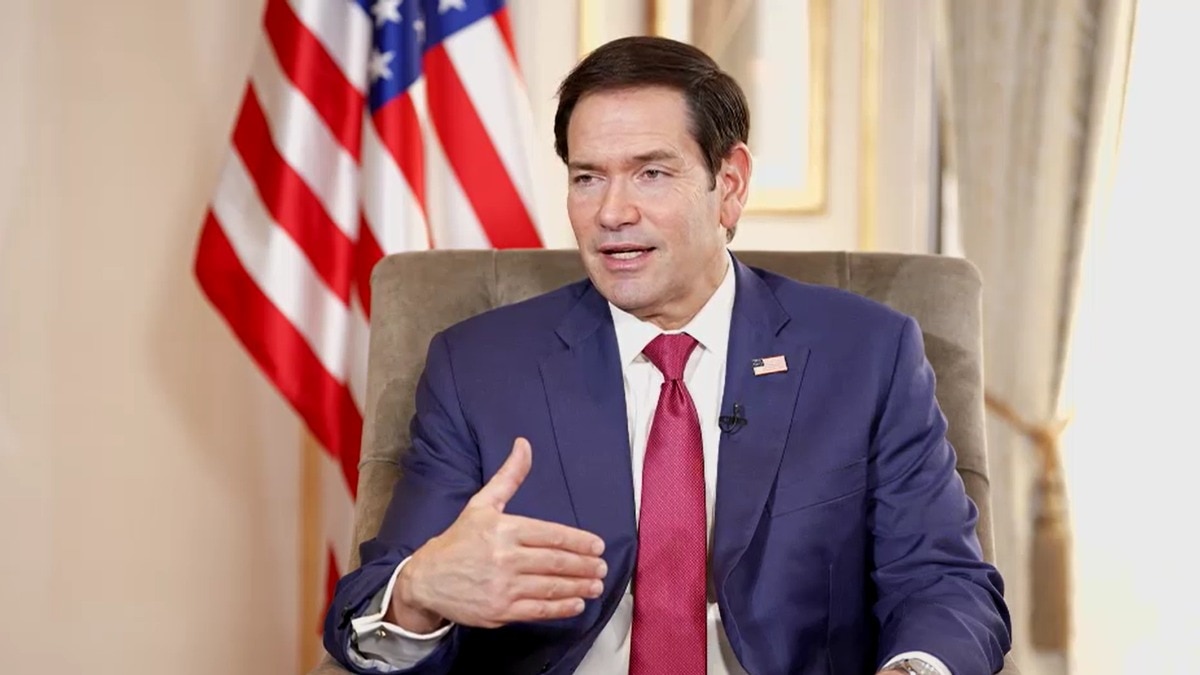
Amid concerns over tighter US work visa rules that could affect thousands of Indian professionals, US Secretary of State Marco Rubio on Thursday insisted that the Trump administration's H-1B visa restrictions are not aimed at India, saying that the country is prioritising American workers and national interests as it overhauls its immigration system.In an exclusive interview with India Today TV, Rubio said the changes had affected Indians seeking jobs in the US and American businesses looking to hire them, but stressed that India was not being singled out."It’s not one that's built on India. It's not one that's focused on India," Rubio said, referring to the changes in immigration laws. "It happens to impact Indians that want to come to the United States and work and that our businesses are trying to bring in, but it’s not geared towards India.
It is global," the top Trump official specified.Responding to a question about whether the United States should continue welcoming highly skilled Indian professionals as it seeks to rebuild its industrial base, Rubio said Washington was attempting to address what it considers longstanding problems with its immigration system, including alleged fraud, abuse and concerns about American workers losing employment opportunities. "The United States has had a broken immigration system," he said."We've had business-related immigration programmes that in many cases have been rampant fraud and abuse and have been misused in ways that have not made sense," Rubio added. The US, he added, was trying to address these concerns and establish a system that worked for its economy and citizens."So these things have to be addressed, and we’re trying to address them, but they’re not aimed at India.
They apply to any country, every country in the world," he said.The State Secretary's remarks come amid concerns in India over changes to the US H-1B visa programme, which allows American employers to hire foreign professionals in specialised occupations. Indian nationals account for a substantial share of H-1B visa holders, making changes to the programme particularly consequential for Indian technology workers, professionals and companies that rely on overseas talent.'US WILL PUT ITS PEOPLE FIRST'Secretary Rubio acknowledged that countries disproportionately affected by changes in American policy might feel they were being targeted.
However, he maintained that the measures were not directed at any particular country."In the end, I will say this. I expect that the government of India will always put the people of India first and that you will always put the national interest of India first," he said."But I also hope everyone understands that the United States under President Trump is going to put our people first, our workers first, and our country first," Rubio added.He said differences over immigration and trade could be addressed through the longstanding relationship between the two countries and their shared interests.SERGIO GOR BACKS RUBIO ON VISA CURBSUS Ambassador to India Sergio Gor, who was also part of the interview, backed Rubio's position.
Gor said the policy changes affecting India were part of a broader US effort to reset its immigration system, rather than measures targeting an individual country."All these items that have changed that have impacted India, and it's not just India, it's the whole world," he said.Gor added, "America First, it doesn't mean America alone," also saying that India was also entitled to put its national interests first.The envoy argued that the United States needed to reassess its immigration policies after what he described as years of inadequate border controls and failures by successive administrations to protect American interests."The United States needed to take a look. For too long we had open borders.
For too long people were coming into the United States and taking advantage of us," Gor added.Gor maintained that the administration’s approach should not be interpreted as targeting any particular country, even when policy changes have significant consequences for individual nations.He also referred to India's own emphasis on national interests, saying New Delhi should not be surprised that Washington was pursuing a similar approach.Recent US H-1B visa policy changes have significantly tightened regulations for Indian professionals through heightened scrutiny and steep financial barriers. In one instance, the US has removed the "deference policy" for visa renewals, meaning previously approved H-1B extensions now face rigorous reassessment on their own merits, drastically increasing the risk of delays and denials for Indians already working in the country.For new offshore applicants, entry restrictions have been extended through September 2027, maintaining a prohibitive USD 100,000 fee requirement for certain new petitions filed from outside the US.Further, a shift toward a wage-weighted lottery system that prioritises higher-paying roles, coupled with a recent executive order intensifying scrutiny on employers who have recently conducted layoffs, has forced major IT firms to consider reducing their fresh visa registrations.- Ends