


There is something deeply unsettling about watching people navigate desire, resentment, freedom especially when forced to confront those with privilege. In Possible Love, director Lee Chang-dong turns this everyday blindness into a quietly devastating study of class, intimacy and the unequal terms on which people form relationships.
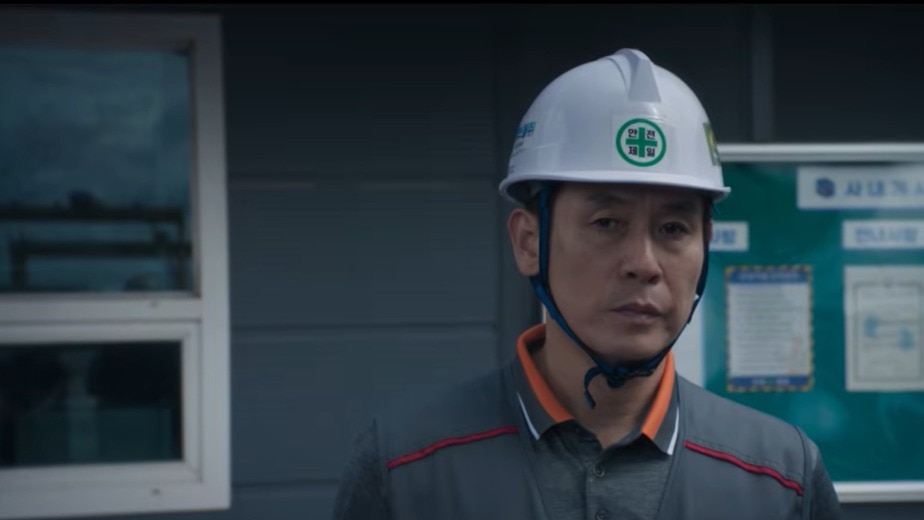
His first feature in eight years after Burning is less interested in drawing a line between the good and the bad than in examining how easily affection and exploitation can exist in the same room.The film begins at the funeral of a factory worker who has died by suicide. Among those present are Mi-ok (Jeon Do-yeon) and her husband Ho-seok (Sul Kyung-gu), a former factory worker whose life has unravelled after losing his job following a failed workers’ strike.
Injured during the police intervention and abandoned by colleagues who fled, he is struggling with the loss of his livelihood and the identity that came with it.At the funeral, the couple encounter Ye-ji (Cho Yeo-jeong), a documentary filmmaker, and her wealthy husband Sang-woo (Zo In-sung). Ye-ji is working on a film about workers affected by the factory’s restructuring, while her husband is busy striking a business deal with Americans.
She reconnects with Mi-ok, who comes from a similarly modest background, and gradually persuades her to participate in the project.Their friendship is where the director begins to expose the film’s more complicated ideas. Mi-ok and Ye-ji have a shared history, but they no longer occupy the same world.
Ye-ji has married into wealth and enjoys a comfortable life. She can afford to revisit the circumstances she escaped, while Mi-ok continues to deal with their consequences.
There is genuine affection between the women, and Ye-ji’s interest in Mi-ok is not necessarily dishonest. Yet the camera is always present, even when it is not physically in the frame.
One woman gets to examine the other’s life, make sense of it and turn it into a creative expression of art. The other has to live that life.
This is not a film about an obviously malicious filmmaker exploiting a vulnerable subject. That would be considerably easier to dismiss.
Ye-ji may sincerely believe she is giving workers a voice, but she still controls the narrative, the edit and the eventual representation of their suffering. The people whose lives she documents do not have the same authority over what their stories become.
The film quietly asks whether empathy can become another form of privilege when the person extending it never has to share the burden.Sang-woo’s presence makes this imbalance even more apparent. His wealth allows him to treat life as an assortment of experiences, including those that might carry very different consequences for someone less protected.
The beach sequence towards the anticlimax is a prime example of this. Skinny-dip at a secluded private beach is presented as carefree liberation, an indulgence for Sang-woo but it does not feel equally liberating to everyone.
For Mi-ok, the experience carries a vulnerability that cannot simply be left behind when the outing ends. A still from Possible Love. (Credit: Netflix) There is something darkly perceptive about how casually boundaries are crossed in these interactions.
The wealthy couple are not necessarily forcing anyone to participate. Yet the circumstances in which the invitation is made, and the power they possess within that arrangement, matter.
Even Mi-ok’s young son seems to observe this. Chang-dong understands that exploitation does not always announce itself through hostility.The camera has what feels like a hand-held quality, lending the film an observational texture.
The camera's intimacy, however, never becomes sentimental. Instead, if anything it makes you uncomfortable with how easily it can exploit tragedy.Jeon Do-yeon is terrific as Mi-ok.
She gives the character warmth, curiosity and a quiet alertness, never reducing her to someone who simply needs rescuing. Cho Yeo-jeong is equally compelling as Ye-ji, whose generosity is complicated by an inability to recognise the advantages she now takes for granted.
Their performances make the friendship credible even when its underlying inequalities become increasingly difficult to ignore. Ho-seok’s circumstances give the film its sharper political dimension.
His anger is not simply about being unemployed. He has lost his place in a system he helped sustain and has little faith left in the people who once stood beside him.
Sul Kyung-gu brings a bruised, contained intensity to the role. Sang-woo, by contrast, can remain detached from these concerns because his financial position allows him to.
Zo In-sung plays him with an ease that makes the contrast all the more telling.At 164 minutes, the film takes its time, occasionally more than necessary. But Lee’s patience allows the contradictions between these characters to emerge through ordinary exchanges rather than manufactured confrontations.
The title becomes increasingly loaded as the story progresses. Love (affection) may be possible across class boundaries, but what does that love mean when the people involved do not have equal power, choices or consequences?Lee leaves us with a bitter recognition that people can move through life believing they have treated others kindly, while remaining blind to the systems and relationships that have made such kindness possible.Possible Love is a masterful film because it refuses to make its characters easy to condemn or forgive.
Its most uncomfortable suggestion is that exploitation does not always require the absence of affection.Sometimes, it survives quite comfortably alongside it. A must-watch!
Possible Love is now streaming on Netflix.- Ends