


IIT Bombay has launched KrishiDrought.in, offering weekly agricultural drought forecasts up to four weeks ahead. The public portal could support timely irrigation, crop management and drought preparedness across India.The system is accessible through the public portal KrishiDrought.in.
Farmers and policymakers could get an early warning of worsening agricultural drought conditions with a new forecasting portal developed by researchers at the Indian Institute of Technology (IIT) Bombay.The platform, KrishiDrought.in, provides weekly agricultural drought forecasts across India, offering up to four weeks of advance warning.The publicly accessible portal tracks evolving soil moisture conditions at a spatial resolution of approximately 9 km, with forecasts made available at the district level. It aims to help farmers, government agencies and other stakeholders prepare for dry spells, make informed agricultural decisions and reduce potential crop losses.The platform was formally launched on October 28, 2026, during the Golden Jubilee celebrations of IIT Bombay's Centre of Studies in Resources Engineering (CSRE).
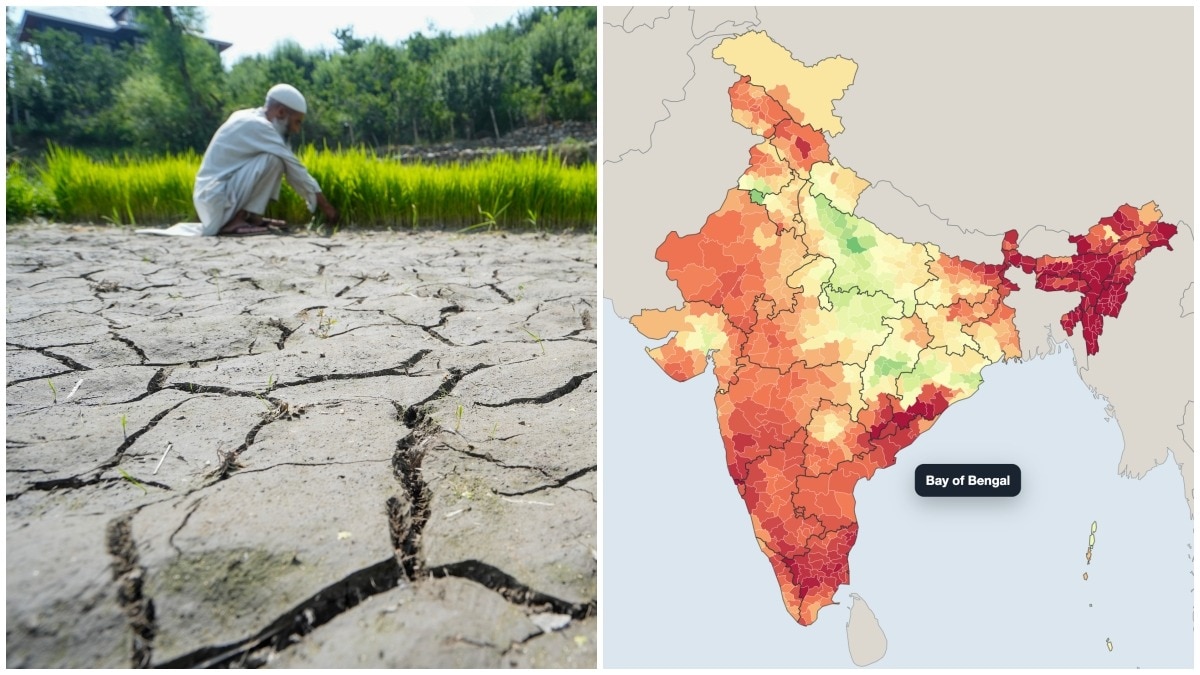
Developed by the Ecohydrology research group led by Professor Karthikeyan Lanka at CSRE and the Centre for Climate Studies, the system combines satellite observations, hydroclimatic datasets, dynamical forecasts and advanced deep-learning models.By bringing together these different sources of information, the portal seeks to provide a picture of how soil moisture conditions are changing and where agricultural drought may intensify in the coming weeks.HOW DOES KRISHIDROUGHT WORK? Unlike drought assessments that primarily describe conditions after they have developed, KrishiDrought is designed to provide a forward-looking assessment.Its weekly forecasts allow users to examine soil-moisture anomalies and identify districts that may become drier or wetter than normal.The portal's map-based interface displays forecasts using a colour-coded scale.
Areas marked towards the red end indicate drier-than-normal soil-moisture conditions, while green shades represent wetter-than-normal conditions. Beed: Water storage capacity work in Beed district, Maharashtra.
Setting an example of community involvement for a positive cause, residents of more than 40 villages in Beed district of Maharashtra's drought-prone Marathwada region have come together to improve the water storage capacity of local rivers through desiltation. (PTI Photo) Users can switch between forecast periods, examine different districts and select individual states to explore regional patterns.The forecasting interface includes four lead-time windows: one week, two weeks, three weeks and four weeks. This allows users to assess how drought conditions could evolve rather than relying only on current observations.WHY DOES EARLY WARNING MATTER?India is facing a major drought as the water crisis deepens.
Agricultural drought develops when soil moisture remains insufficient to meet crop water requirements. Unlike meteorological drought, which is measured through rainfall deficits, agricultural drought directly affects the water available to crops.Early information on deteriorating soil moisture can help farmers and authorities consider timely interventions, including irrigation planning, crop management and preparedness measures.With climate variability increasing uncertainty around rainfall patterns, the researchers hope the portal will provide an additional tool for agricultural planning and drought-risk management across India.The portal is available to the public at KrishiDrought.in.- Ends