


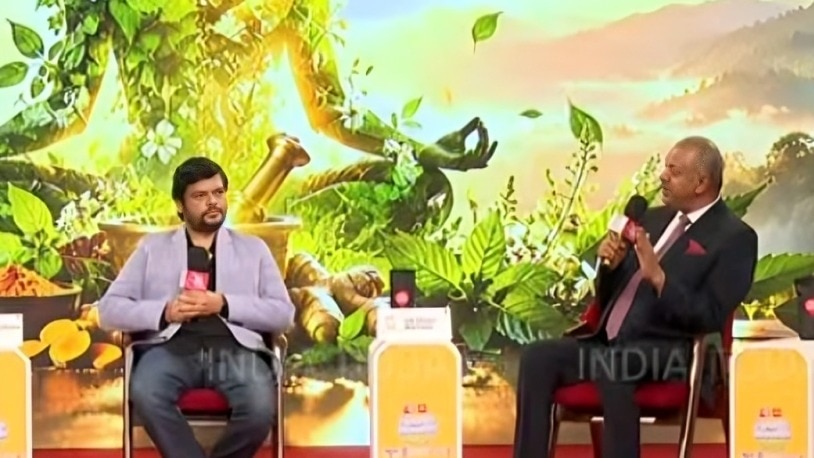
Speaking at the India Today HealthWealth Summit during a session on traditional and alternative medicine, Dr Isaac Mathai and Ayurveda practitioner Dr Sudhindra Uppoor shared practical health advice rooted in Ayurveda and homoeopathy. From fasting and sleep routines to food combinations, Panchakarma and weight-loss drugs, they explained why prevention and lifestyle changes should come before quick fixes.Ayurveda and Homeopathy health tips: Doctors explain fasting, sleep, diet and healthy livingNew Delhi,Oct 30, 2026 18:57 ISTHealth advice today often comes in the form of supplements, weight-loss injections and quick solutions for everyday problems.
But at the India Today HealthWealth Summit, two practitioners of traditional medicine offered a different approach: return to everyday habits, pay attention to food and sleep, and focus on preventing diseases before they develop.During the session, Dr Isaac Mathai, Founder and Medical Director, SOUKYA International Holistic Health Centre and Homeopathic Physician, who is a homeopath and also practises acupuncture and therapeutic yoga, and Dr Sudhindra Uppoor, Co-founder and Chief Ayurvedic Physician, Ayurshree Ayurveda, discussed how traditional systems of medicine could work alongside conventional healthcare.Their central message was that health should not become a concern only after someone falls ill.DON'T WAIT FOR DISEASE TO CHANGE YOUR LIFESTYLEDr Uppoor began by explaining the preventive philosophy of Ayurveda. He referred to an Ayurvedic principle that places maintaining the health of healthy people above treating those who are already unwell. “Try your level best to prevent the diseases, not get there by following a healthy lifestyle,” he said.He urged people, particularly younger audiences, to adopt simple habits early rather than depend on medicines later.
Dr Mathai, meanwhile, argued that the focus should not be on choosing one system of medicine over another.“I don't want to call it alternative medicine,” he said, explaining that conventional medicine and traditional systems should work together for patients.“When you look at the patient first, you don't think about the systems of medicine,” he added.He said patients sometimes move between hospitals and traditional medicine centres for treatment, investigations and second opinions. According to him, collaboration between different systems, with doctors recognising their respective limitations, is the way forward.HEAVIEST MEAL AT LUNCH, LIGHTEST AT DINNEROne of Dr Uppoor's key recommendations was to make small changes to eating routines.Referring to Ayurvedic principles of Dinacharya, or daily regimen, he said lunch should be the heaviest meal, breakfast should be lighter and dinner should be the lightest.He also advised people to chew their food properly, eat in moderation and avoid overeating.
Another simple recommendation was to walk 100 steps after every meal.“Walk 100 steps after every meal,” he said, suggesting that even a short walk after lunch at the office could become part of someone's daily routine.He also advised keeping a gap of 45 minutes before and after meals when drinking water.Dr Uppoor further suggested drinking around 400–500 ml of room-temperature water after waking up, rather than starting the day with hot water.FASTING IS NOT ABOUT EATING MORE AFTERWARDSFasting was another major part of the conversation, with both doctors discussing its place in traditional health practices.Dr Mathai said regulated fasting could give the digestive system and liver a period of rest. However, he cautioned that people should not suddenly begin fasting without understanding their health requirements.“Fasting in a regulated way helps your intestine and your liver and your entire system to have a restful time,” he said.Dr Uppoor referred to the Ayurvedic principle Langhanam Param Aushadham, which describes fasting as an important medicine.
He suggested that people could consider fasting on Ekadashi, observed twice a month in the Hindu calendar.However, he clarified that fasting should actually involve restricting food rather than replacing regular meals with excessive amounts of sweets or carbohydrates.He advised people to begin with shorter fasting periods and gradually assess what works for them.The doctors also cautioned against treating fasting as a universal solution. People with medical conditions or specific nutritional requirements should seek medical advice before attempting prolonged fasts.FENUGREEK, GARLIC AND OTHER KITCHEN REMEDIESThe discussion also turned to traditional kitchen ingredients that are commonly associated with health benefits.For diabetes, Dr Uppoor suggested fenugreek seeds, also known as methi dana.
However, he was clear that this should not replace prescribed treatment.“Please do not stop anything overnight,” he said, advising people to continue their medicines and work with their treating doctors. Any reduction in medication, he added, should happen only after reviewing improved health readings with the doctor.For cholesterol, he suggested Kashmiri single-clove garlic with honey.
He also recommended a drink made with ajwain and saffron for blood pressure.Dr Mathai discussed lifestyle changes for better sleep, suggesting that people keep their mobile phones away and avoid watching television before bedtime.He also spoke about foot massage as part of a relaxing bedtime routine, while explaining that there was no single medicine that could guarantee good sleep.PANCHAKARMA, WEIGHT-LOSS DRUGS AND THE NEED FOR CAUTIONDr Mathai described Panchakarma as a traditional Ayurvedic approach used in his practice for prevention, early intervention and managing chronic health concerns.He said he had observed metabolic and neurological changes developing gradually, sometimes years before a condition became apparent. He also discussed using Panchakarma as part of his annual health routine.However, he cautioned that the practice is sometimes misused and stressed the importance of finding qualified practitioners.The doctors also discussed the growing popularity of GLP-1 weight-loss drugs.Dr Uppoor advised people against using such medicines simply to lose weight when lifestyle changes could be considered.
Dr Mathai added that these drugs could be appropriate for selected patients, particularly those with diabetes or serious weight-related health concerns, but their widespread and casual use was worrying.The session also touched upon menopause, hormonal changes and hair loss. Dr Mathai said these concerns should be assessed individually, with attention to underlying lifestyle and metabolic factors.FRUITS, FOOD COMBINATIONS AND EVERYDAY HEALTHDr Uppoor also made a strong case for replacing fruits with vegetables, advising people to cut down on sugar, including natural fruit sugar. “First stop white sugar, then totally get rid of jaggery.
Next thing, get rid of fruits as well,” he said.Explaining his reasoning, he added: “Both fruits and vegetables are high in antioxidants, they're high on minerals, they're amazing in fibre, but why is the vegetable superior? Because it doesn't have sugar.” He urged people to eat more vegetables to compensate for removing fruits from their diet.He also spoke about food combinations that Ayurveda describes as Viruddha Ahara, or incompatible foods, cautioning against combinations such as palak-paneer and urad dal with curd.On coffee, he recommended black coffee without milk or sugar, advising people not to exceed two cups a day.Dr Mathai, meanwhile, said hair loss should not always be treated as an isolated hair problem, as it could be linked to metabolic imbalances, gut health and liver-related issues.He stressed the importance of identifying the underlying cause rather than focusing only on hair treatments.
Dr Uppoor also recommended tulsi tea for younger women and pomegranate for menopausal women while discussing hormonal health.Towards the end, Dr Uppoor shared his own daily routine: waking up early, exercising during the morning, eating the heaviest meal between 10 am and 2 pm, and sleeping by 10 pm.His final advice was simple: prioritise vegetables, exercise regularly, eat in moderation and reduce sugar intake.For both practitioners, the larger message was that good health is built through consistent habits, not a single remedy or a quick medical solution.Watch the HealthWealth Summit LIVE here: - Ends